SEARCH RESULTS FOR:

Search Results

The College of Social Work and Kentucky Kinship Resource Center Honor National Kinship Month

By Sheila Rentfrow, Kentucky Kinship Resource Center Program Coordinator

For many children, living with a relative or someone close to them, instead of their mother or father, is not unusual.  Getting off the bus from school at grandma’s house instead of their parent’s house is just what they do everyday. Answering questions from friends and school mates about where their mom or dad is, or why they live with their aunt or uncle can be a difficult question for children to maneuver. Whether they know the reason why they live with a relative or family friend, they do know that they are with family, and they are loved and cared for.

Across the nation, nearly 2.7 million young people are being raised by a relative. This care arrangement, referred to as kinship care, is necessary when parents are unable to safely care for children in their home. It is estimated that Kentucky has one of the highest rates of kinship care in the country. Kinship care also includes fictive kin care, which is a child being cared for by a close family friend

For these families, their situation is often necessitated by difficult and challenging circumstances. From abuse and neglect, to parental substance use, incarceration or death, children in these situations are left in need of a home where they can experience the love and care that every child requires. 

Research into kinship care overwhelmingly suggests that children raised in a kinship family experience many benefits including the preservation of family culture and increased feelings of belonging and community. In addition, kinship care leads to reduced trauma, improved overall well-being, better mental health and behavioral outcomes, and higher placement stability and improved permanency (Kinship Care is Better for Children and Families, Heidi Redlich Epstein; Factsheet: Children Thrive in Grandfamilies, Generations United).

But, as rewarding as it is for children, kinship care often poses many challenges for caregivers.  Because caregivers often have to step in as caretakers in emergency family situations, often with little advanced notice, they don’t have time to prepare financially, emotionally, and even physically. For many caregivers, concerns of financial stress in caring for their expanded family, personal health conditions, family relationships, and other concerns can become paramount for these caregivers. In addition to these concerns, these caregivers must learn to navigate child welfare systems and identify and utilize critical supports to care for their kinship children.

However, given these and many other challenges, these caregivers step forward without a moment’s notice, without hesitation, because these children are family, as in the case of fictive kin caregivers, are like family. They not only step in, but they stay in, committing for the next several years in spite of the challenges, to ensure that child grows up in a happy home, surrounded by family and people who love them.

That’s the part that never ceases to amaze me. After speaking with countless caregivers  and hearing the challenges they are facing, the worries they have, the frustrations they experience, I also hear the love, the care, and the determination to make sure that child knows they are loved and cared for — despite the past situations that led them there. 

Growing up very close to my grandparents, I learned firsthand the love that comes from family. It really is no surprise to me, reading the research regarding the benefits of kinship care or how important it is to maintain kinship connections.  For me, my grandparents provided a solid foundation that enabled me to have a full life.  The greatest gift we can give children is the sense of belonging, connection, value, and love. I am forever grateful to my grandparents and my parents that they provided these for me.

Moving forward now means empowering kinship families, helping them navigate systems, and helping caregivers build personal confidence in their ability to care for the children in their lives. Equipping Kentucky’s grandparents, aunts and uncles, cousins, siblings, family friends, coaches, neighbors, and the litany of various types of caregivers stepping in and stepping up for their kids has to become our focus and our mission.

The Kentucky Kinship Resource Center (KKRC) was designed for just this mission. The KKRC provides a continuum of services to meet the unique needs of kinship providers across the Commonwealth, including one-on-one peer support, support groups, and online webinars and trainings. Recently, the KKRC expanded and will now serve all caregivers, whether they have custody, are fostering, or are caretaking for a family member or friend’s child.

Creating a safe, supportive community for kinship caregivers, where they can experience support, find resources, and gain knowledge is one of the main goals at the KKRC and with the expansion, the foster care side of the kinship population will be integrated into the program, allowing for more resource sharing and community building. For more information on the KKRC and its programs, please visit the KKRC website.

Medically Complex Training Program utilizes online training options for caregivers

LEXINGTON, Ky. – Technology plays a crucial role in the Medically Complex Training Program at the University of Kentucky College of Social Work, allowing the program to support caregivers in the comfort of their own home. 

The Medically Complex training program offers training for prospective foster parents who have a desire to work with medically complex children. These children in need of care pose unique challenges and rewards for foster parents. The Medically Complex Training program exists to give caregivers both initial training and continuing education on a yearly basis to assist them with taking care of these children.  

Additionally, the Medically Complex Training program networks with the Department of Community Based Services and private foster homes in order to assist with training and questions about these processes. 

Online training has been a necessity for both ease and higher levels of engagement for these caregivers. 

“Utilizing an online component is deeply important for a few reasons, allowing us to serve more prospective parents at once,” Dave Giannini, Medically Complex program coordinator, said. “Given the ability to take this training from the comfort of their homes, it also removes the need to find a physical space. This is especially important as we serve parents across the Commonwealth, not just in the Lexington area.” 

The program uses online methods for the Join Hands Training (initial training) and for half of the annual trainings. The initial trainings are offered monthly for both parents and social workers via Zoom, with the program coordinator and the Medical Support Section from DCBS. 

The annual trainings have four sessions that are online and then a full-day session, which is in-person. We feel that this strikes a good balance for engagement and is also respectful of foster parents’ time. 

Providing support and helping those youth in need are the priority for the Medically Complex Training program. 

“The impact of the Medically Complex Training Program is twofold. First, I hope that caregivers find these trainings easy to access and move them closer to helping children that are at our highest acuity of need. Secondly, I hope that the trainings impact them in a way will assist them the best in the future care of these children,” Giannini said. 

Moving towards a more technologically based program in the future, Giannini expects that a large portion of the Medically Complex Training will be available to complete online for foster parents. 

“Our goal is to have the entire Join Hands Training be engaged with in modules online. This way, parents can complete this on their own schedule. It will also allow us to serve more parents, Giannini said. “Currently, our classes are consistently full, with some parents on waiting lists. Hopefully, this will remove that aspect entirely.” 

Technology has helped the Medically Complex Training Program reach more caregivers in the state of Kentucky and ensure that they are getting the most up-to-date information in order to provide for the youth in their care. The program provides numerous opportunities for parents, nurses, social workers and case managers to improve their base of knowledge. This will assist in the care of children who need it the most. 

“Given the psychological, physical, and medical needs of these children, the parents who are willing to do this work are truly people that should be congratulated and thanked. The Medically Complex Training Program aims to make their lives just a little bit easier and guide them in a difficult and rewarding process,” said Giannini. 

For more information on the Medically Complex Training Program, please contact dave.giannini@uky.edu or visit the Medically Complex website. 

Adoption Support for Kentucky uses Virtual Reality to support foster and adoptive families

LEXINGTON, Ky. — Adoption Support for Kentucky (ASK) is an award-winning program housed at the UK College of Social Work (CoSW), meeting caregivers where they are. One way ASK has done so is through Virtual Reality (VR). 

ASK provides engaging trainings and inclusive peer support groups for foster, adoptive, and kinship caregivers across the Commonwealth. The program works to strengthen families by reducing caregiver stress and increasing parental competence through training and support groups from seasoned facilitators and trainers who have lived experiences with foster and adoptive care.  

These groups help adoptive and foster families form communities and create safe spaces to discuss topics such as difficult family situations, in addition to finding solutions for addressing legal and financial issues related to caregiving.  

In 2020, the ASK team made the pivot from in-person to online programming, understanding that participants who are homebound, have social anxiety, live in rural areas, have busy schedules, or prefer anonymity would still appreciate the opportunity to connect with mentors and peers. Meeting people where they are, when it is convenient in their schedules, can make a big difference in helping them to build better relationships and community connections.   

In response to the online component, the ASK team deployed a reimagined program using Oculus Virtual Reality headsets as a platform to better serve foster and adoptive families through the spring of 2023.   

“The purpose of launching this program in a new, innovative way is really two-fold,” explained Jay Miller, dean of the CoSW. “First, we wanted to come up with a way to ensure that foster and adoptive parents have access to the support services they need when they need them. Second, we wanted to engage caregivers who might not typically reach out for services delivered via traditional methods. Tech is a tool that served both goals.”    

Research has shown that adoptive fathers may be hesitant to reach out for support services or perceive that services aren’t designed to meet their needs.   

The first VR pilot support service group – which came to adopt the unofficial moniker of Digital Dads – launched in the fall of 2022. Josh Lynch, an adoptive father of two, facilitated the group.     

“It was neat as far as us just getting to explore supports through technology because none of the dads had done anything like this before,” explained Lynch. “It was all kind of new territory as far as virtual reality space goes for us. So that was fun just navigating that together.”    

The program also added a new demographic to the fold, with ASK Teens Virtual Reality Support Groups for teenagers ages 14-17 who are currently in foster care. ASK Teens launched in 2023 with sessions co-facilitated by both licensed clinicians and former foster youth.  

The ASK-VR program is an innovation from Dean Miller’s CoSW eService Initiative. This initiative, which was announced in 2022, is designed to prepare future social, mental, and behavioral health professionals to engage with — and deploy — innovative services through technology solutions.  

Additionally, the eService Initiative offers training for program participants to reduce barriers to tech engagement.    

“The future of service is technology,” Miller said. “If we are to actualize the promise of ensuring efficacy, efficiency, and accessibility to those in need of services, we must ensure that our workforce is prepared to use, assess and improve that tech. That is what our eService Initiative is all about. We have been extremely fortunate to engage with some great partners in making this work happen.”   

UK Social Work’s e-Service initiative looks to streamline training of social workers across Kentucky

LEXINGTON, Ky. – From the knock on the door to the critical conversations that follow, social workers are trained on best practices to engage and provide support for families in need. Erin Mayhorn, Child Welfare Workforce Development Manager at the College of Social Work (CoSW), is working to streamline that training through an eService initiative.  

While pursuing her doctoral degree, Mayhorn focused on research surrounding child welfare training and education, more specifically using virtual reality (VR) in training and education.  

“There’s a lot of research out there on how successful virtual simulation has been in aviation, the medical field, and even retail. These groups are using virtual simulation in high-risk situations, and it makes sense to utilize this technology for child protective service (CPS) workers as well,” Mayhorn said. 

The cutting-edge, VR technology offers “hands on” training — providing learners the opportunity to interact with and adapt to fluid scenarios. Additionally, the simulations were built in partnership with practitioners who have decades of experience. 

The goal is to help current and future social workers build competency and confidence. 

During the simulation, participants initiate virtual home visits, conduct interactive interviews, and assess risks and symptoms of child maltreatment. The VR experience also incorporates multiple knowledge checks and learning scenarios designed to match the participants expertise, as well as provide real-time feedback. 

“To be clear, no one can ever be fully prepared to conduct a child abuse investigation,” Jay Miller, dean of the CoSW, said. “But this simulation project allows one to garner experience with best practices, and it affords child welfare researchers and supervisors the insights to more effectively support children and families.” 

With VR training, the supervisor can program the experience to reflect a diverse experience that participants will face while out in the field. There is also the ability to choose an entry level training and up to an expert level, providing different situations that CPS workers may face.  

“Most of the research suggests adding virtual reality in addition to the traditional methods like role playing. You can also use the trainings as an introduction to child welfare so students can get that experience as early as the beginning of a students’ degree,” Mayhorn said.  

The consistency of the training across 120 counties in the state of Kentucky is also a benefit of virtual reality. With this technology, training can be updated in the program and sent across the state with the push of a button. 

Novelty aside, Miller knows the benefits and potential of using cutting-edge technology in the classroom. 

“At the end of the day, we are crystal clear about the purpose of this project, as well as the entire eService Initiative, more broadly,” Miller said. “We are preparing people to engage with, serve, protect and treat the most vulnerable Kentucky children and families. Ultimately, this simulation initiative is yet another tool to help us do that in the most skillful way possible.”   

UK Social Work’s Foster Parent Mentor Program and Foster Parent Training Program invest in foster families

LEXINGTON, Ky. – In an effort to support the launch of the National Training Development Curriculum (NTDC) for prospective foster parents, the Foster Parent Mentor Program at the University of Kentucky focused its Spring Enrichment Session on equipping mentors about the tenants of the training so that they can effectively reinforce what is being taught throughout their mentoring experiences with newly approved foster parents. 

The NTDC is a research-based curriculum developed by Spaulding for Children and funded by the Children’s Bureau for the Department of Health and Human Services. Creators sought the insights of child welfare experts, foster and adoptive parents, and former foster and adopted youth to bring a well-rounded view of out-of-home care for families in the child welfare system. 

During the FPMP annual Spring Enrichment Session for mentors this May, Jeff Damron and Tamikia Dumas, FPMP coordinators, invited Jennifer Barr, the Cabinet’s Social Services Training Specialist, to present on the new Foster Parent initial training series, NTDC.  

“At the Spring Enrichment Session, mentors learned how to navigate the new training now posted on their Mentor Dashboard and were encouraged to envision additional mentoring initiatives to help reinforce skills presented in the NTDC,” Damron said. 

In Kentucky, the training includes six three-hour sessions designed to build a solid foundation for parenting another’s child in temporary care. Broad training topics include healthy child development, building healthy relationships with children and attachment, behavior management and the impact of grief and loss, mental and emotional health, and racially and culturally sensitive parenting. 

Mentors were also provided an update on the Kentucky Just in Time training, a resource with hundreds of training courses that speak to needs that foster parents face in providing out-of-home care. These trainings can be accessed at any time, with no cost for the caregiver.  

The Kentucky Department for Community Based Services also provides an array of resources and programs that address the needs of the teen population in foster care, beginning at age 16. These resources are called KY RISE (Resources for Independence, Success, and Empowerment). Mentors were given a tour of the KY RISE website so that they are better equipped to support and empower new mentees working with teens. 

Self-care was another important topic at the Spring Enrichment Session, as well as increased mentee engagement. 

“Mentors were briefed on plans currently being considered to better promote mentee engagement during their six-month mentoring period and provided a strong encouragement to remember the importance of caregivers engaging in self-care,” Damron said. 

Through these trainings, the FPMP looks to prepare mentors to provide newly approved foster parents with a wide range of information concerning resources available to meet the needs of the children placed in their care. “Remember your training,” is a phrase that mentors often repeat as they help newly approved foster parents navigate a path toward success and satisfaction. 

“One of the goals of the Foster Parent Mentor Program is placement stability and prevention of disruption. The Spring Enrichment Session is one way to provide information and encouragement to mentors while they are supporting newly approved foster parents during the mentor match,” Damron said. “Mentors appreciate the opportunity the Spring Enrichment Session allows to share strategies that have proven to be successful in helping newly approved foster parents stay the course during difficult and trying moments with placements.” 

The Foster Parent Training Program also launched the Critical On-going Resource Education (CORE) Teen Training program in 2022, now being taught throughout the state of Kentucky due to its success. Foster parents now have the opportunity to attend sessions offered at various locations, modalities and times. 

CORE Teen is a trauma-informed, evidence-based training program for new and existing foster parents. CORE Teen educates parents on how to increase resiliency and parent towards the behavioral needs of foster teens with moderate to severe emotional and behavioral needs. 

The training program was developed by Spaulding for Children—in partnership with the ChildTrauma Academy; the Center for Adoption Support and Education; the North American Council on Adoptable Children; and the University of Washington— and was awarded a three-year grant from the Children’s Bureau, Administration on Children, Youth and Families to create the curriculum. 

“Behaviors resulting from moderate to serious emotional health challenges and past trauma make it more likely teens will be placed in restrictive settings and age out of the child welfare system without achieving permanency. In an effort to keep youth with higher needs in families, resource parents must have specialized knowledge and skills. The development of effective trauma-informed and culturally responsive training will reduce the risk of placement disruptions and increase permanency options, while also helping recruit new resource parents,” Spaulding, 2022. 

The FPTP, in collaboration with the Department for Community Based Services (DCBS), hosts seven sessions, each ranging from 2-2.5 hours. 

  • Session 1 – Introduction & Understanding the Impact of Trauma on Youth in Foster Care  
  • Session 2 – Parenting Youth Who Have Experienced Trauma  
  • Session 3 – Developing and Sustaining a Healthy and Supportive Relationship with Your Youth  
  • Session 4 – Nurturing Youth’s Cultural/Racial/Ethnic Needs and Sexual Orientation/Gender Identity and Expression  
  • Session 5 – Understanding and Managing Youth’s Challenging Behaviors – Part 1  
  • Session 6 – Understanding and Managing Youth’s Challenging Behaviors – Part 2  
  • Session 7 – A New Suitcase of Parenting Knowledge and Skills 

The collaboration with DCBS is important as it helps to increase parental involvement throughout the Commonwealth. 

“DCBS foster parents are required to actively participate in ongoing foster parent training credit for their yearly requirements. This not only ensures that we have adequate participation, but also that Kentucky foster parents are equipped to parent youth who experience the foster care system,” Carla Jordan, FPTP coordinator, said. Foster Parents are able to help to mitigate trauma and teach skills that will enable their youth to live healthy, successful lives. 

FPTP invests in the community by ensuring that foster youth receive adequate care and support through its commitment to providing training services and support by trained professionals. 

“We offer CORE Teen Training Programs as well as a CORE Teen Support Group is also offered through the Training Resource Center. The support group meets as an extension to the class and offers real-time support and solutions to parents who may have questions and need additional information,” Jordan said. “The CORE TEEN Support Group also helps foster parents by connecting them with individuals who can provide moral support and share effective strategies when they encounter difficulties at home with their teenagers who might be facing crisis situations. 

The impact of the FPTP and the CORE Teen Training Program is evident across families in the Commonwealth. 

“I loved this entire series of training and learned so much. It opened up communication with us as a group and in general. This should certainly be something that continues for all foster parents and DCBS workers,” a CORE Teen participant said. 

To learn more, or to register for the upcoming training session or support group please visit: https://ceu.uky.edu/kentucky-foster-adoptive-parent-training-and-support/. You may also contact Carla Jordan at 859-257-1228 or via email at Carla.Jordan@uky.edu.  

UK Social Work’s Fostering Success and Earn and Learn provide training and educational resources for foster youth

LEXINGTON, Ky. — Each year, more than 500 young people in Kentucky age out of the foster care system. Because they have not found permanency through parental reunification, permanent legal custody, or adoption, these youth are often left with few safety nets. Years of out-of-home care and the instability of multiple placements means they frequently do not have the skills needed to successfully transition to independent living.  

Compared to their peers, foster youth are less likely to know how to interview for a job, manage a budget, locate housing, or pay bills. This leaves them at a serious disadvantage and puts them at higher risk of unemployment and homelessness. 

Enter the Fostering Success and Earn and Learn programs at the University of Kentucky College of Social Work. Housed in the College’s Training Resource Center, these programs actively seek to empower current and former foster youth to create their own journey to self-sufficiency and stability. 

The 10-week Fostering Success Program is a workforce development initiative aimed at current and former foster youth between the ages 18 and 23. The statewide program is structured to provide youth with the opportunity to develop on-the-job skills through a paid internship at a local business or Department of Community Based Services (DCBS) office. Participants are matched with Job Coaches who assist them with professional development and career planning support.  

“Young people aging out of the foster care system have a need for both job readiness skills and financial resources in the current employment market and economic climate,” Linda Smith, Fostering Success and Earn and Learn program coordinator, said. “Kentucky employers are struggling to find both qualified and job-ready applicants and thus are embracing the opportunity to partner with this program to develop untapped labor markets.”  

The Fostering Success Program is foundationally rooted in the premise that employment, education, and training best occur along a wholistic continuum, and thus positively impact the challenges former foster youth face. 

Earn and Learn, launched in 2020 as a subset of the Fostering Success Program, provides the opportunity for current and former foster youth to boost their earning potential through the completion of short-term vocational training, or by completing their GED. Earn and Learn participants receive support in selecting a vocational program for a high-demand job that matches their skill set and interests.  

Earn and Learn is a key component of Fostering Success as it increases the number of current and former foster youth obtaining post-secondary credentials across the state. Because education and employment are integral to reducing the likelihood of homelessness and poverty among former foster youth, earning these credentials will increase young adults’ capacity to earn a living wage and live independently. 

“Some of these individuals have never had jobs or never thought they could pursue a higher education,” said Smith. “We try to match them with their interests and offer options that will hopefully lead to long term employment. Through these programs, we hope to provide meaningful experiences and teachable moments.” 

UK Social Work, Department for Community Based Services host Southern Bluegrass Self-Care Summit

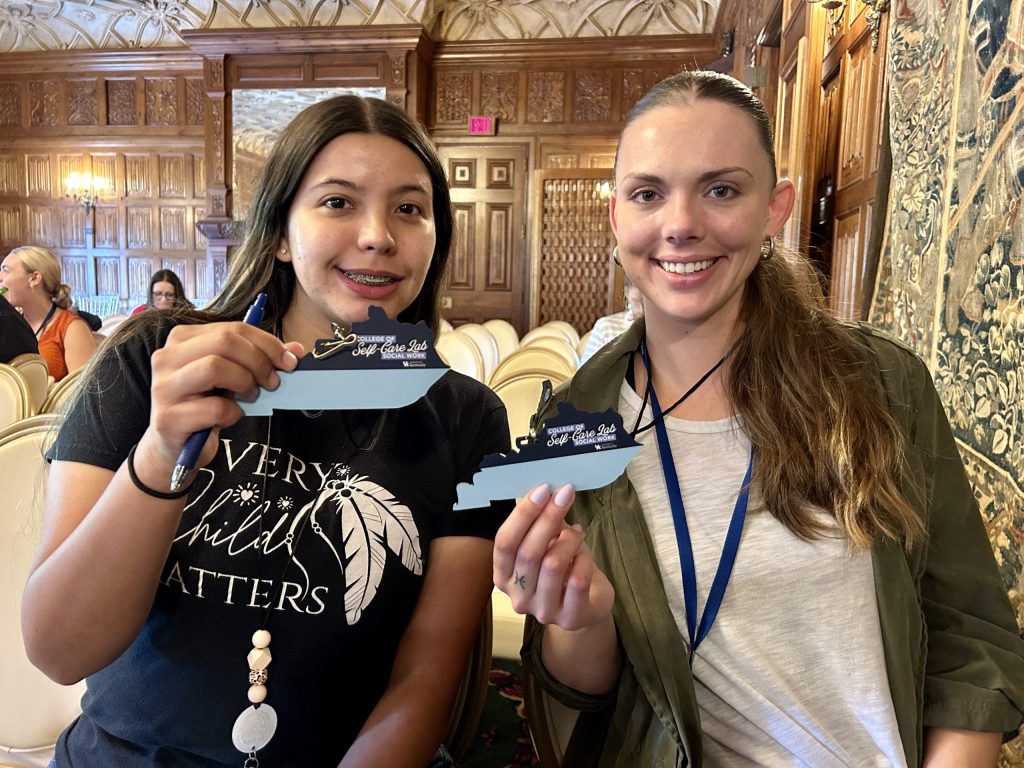
LEXINGTON, Ky. – The University of Kentucky College of Social Work (CoSW) partnered with the Department for Community Based Services  (DCBS) to host the Southern Bluegrass Self-Care Summit, providing DCBS workers a day to take time for self-care in their busy schedules.

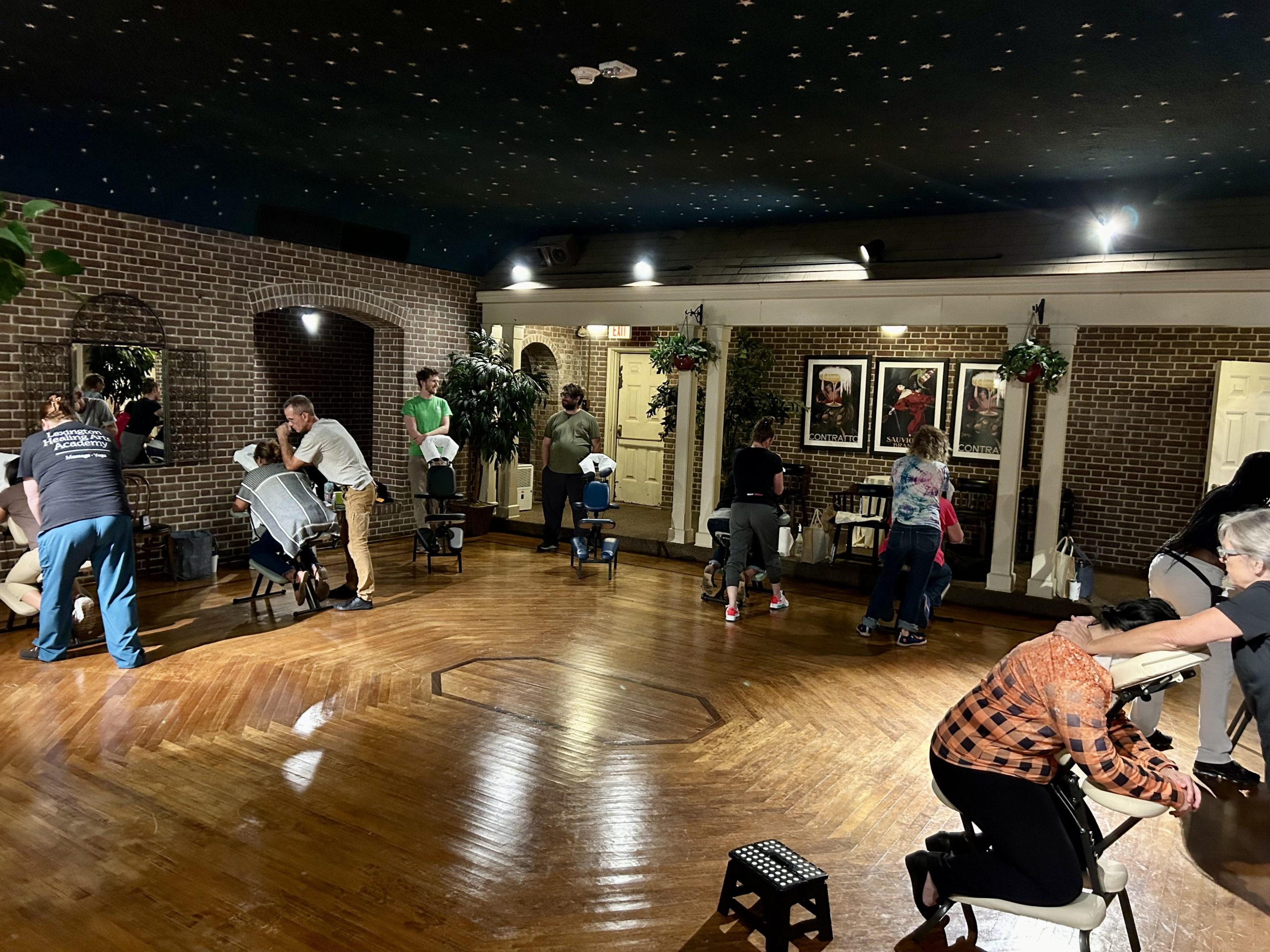
The second annual Self-Care Summit took place on September 11 and 12 at UK’s Spindletop Hall. Dr. Jay Miller, College of Social Work Dean and Director of the Self-Care Lab, spoke on the importance of self-care, in addition to the CoSW providing chair massages to workers and leading attendees through a virtual reality self-care experience.

“These events are so important to recognize, celebrate and acknowledge the hard work that this group puts in to serving the people of the Commonwealth every day. The Self-Care Summit is about giving people a day to relax, have fun, fellowship with their colleagues, and learn self-care practices,” April Davis, DCBS Southern Bluegrass Service Region Administrator, said.

DCBS also provided breakout sessions on self-care for supervisors and working caregivers, as well as using time off and maintaining a healthy weekend to feel refreshed on Monday. Resource tables were also available for participants to learn more about different self-care service providers.

Making self-care a priority can be instrumental in improving mental, physical, and emotional health at work. There are many ways to define self-care, but ultimately it is the practice of taking action to preserve or improve one’s own health. 

This image has an empty alt attribute; its file name is IMG_0250-scaled.jpeg

“The Self-Care Summit and self-care in general is extremely important in maintaining your mental health as a social worker and not overworking yourself,” participant Annabelle Holland, an investigator for Fayette County, said. “Taking these days can ensure you are giving your best work to your clients and to your team members.”

Being mindful of one’s wellness, especially as a social worker, is a crucial aspect of daily life. Practicing self-care enhances life in and out of the office and improves client outcomes.

“The Self-Care Summit has allowed me to reflect on things that I have felt overwhelmed with and how I can manage those things to perform better for my clients and manage my stress at work,” Destiny Arellano-Marquez, Fayette County investigator, said.

Davis hopes that participants will apply the things that they learned at the Self-Care Summit in their daily lives, whether that’s in the office or in their personal lives.

“We had very meaningful workshops over the last two days including financial self-care, self-care for supervisors, and how to relax and enjoy your weekends,” Davis said. “We’ve had lots of good information for people to take with them and I hope they utilize these practices in their day-to-day life.”

Social Work PhD student Receives Association for Gerontology Education in Social Work (AGESW) Fellowship

LEXINGTON, Ky. – Mohammad Sajjad Hossain, a third-year Ph.D. student in the College of Social Work at the University of Kentucky, has been recognized as a pre-dissertation fellow of the Association for Gerontology Education in Social Work (AGESW).

The AGESW pre-dissertation fellowship program provides students with a range of professional development opportunities, including working with nationally recognized faculty experts in Gerontological Social Work.

Students receive ten hours of training at the 2024 GSA Annual Scientific Meeting, three professional development webinars, and ongoing connection, networking and mentoring opportunities through AGESW.

Hossain credits his upbringing in Bangladesh to his interest in Gerontological Social Work.

“In Bangladesh, we have a joint family system. So, I saw how older people in the family could experience abuse, exploitation and neglect. From an early stage of my life, I wanted to do more to help them,” Hossain said.

Being a part of this fellowship and pursuing his PhD at the CoSW means a lot to Hossain, especially being from a country close to 8,000 miles away from the United States. Through his time at the CoSW, he has gained hands-on experience addressing real world social issues through appropriate courses and modules.

During his time as a fellow, Hossain hopes to benefit from the mentorship and guidance from experienced faculty members and researchers in the field of Gerontological Social Work.

“This support will help refine my research ideas and methodology and prepare me for my doctoral research. I will be able to engage with peers, mentors and professionals in aging and social work through workshops, conferences and seminars,” Hossain said. “Building these networks can lead to collaboration, future research partnerships and connections within the academic and professional community.”

Through this fellowship, Hossain will be able to prepare himself for his doctoral studies and a professional role in academia, research institute, policy making organization, or a clinical practice setting focused on aging and social work issues.

“I’m optimistic that this fellowship will inspire innovative ideas for my research and keep me updated with emerging trends, theoretical perspectives and evidence-based practices,” Hossain said.

Sport Social Work Research Lab publishes chapter in book “Positive Youth Development through Sport”

LEXINGTON, Ky. — In a collaborative effort with doctoral students Levone Lee and Anne Stauffer, Dr. Tarkington Newman, Director of the Sport Social Work Research Lab (SSW-RL), at the UK College of Social Work (CoSW) published the SSW-RL’s newest book chapter ‘An experiential approach to facilitative coaching and teaching social justice life skills.’

Their chapter, published by Routledge, appears in the 3rd Edition of “Positive Youth Development through Sport,” edited by Nicholas Holt and Meghan McDonough (University of Calgary). Check out the book here.

The chapter uses experiential learning theory to highlight the importance of the youth sport leader (e.g., coaches, physical education teachers, community recreation staff) when using sport to promote positive youth development (PYD).

“The chapter features the Coaching on the Wave model, an evidence-informed model designed to help coaches teach traditional life skills like self-control, effort and teamwork, as well as social justice life skills like antiracism, allyship, and healthy masculinity, through their facilitative coaching practices in sport,” Dr. Newman said.

From its description, the book brings together high-profile contributors from a diversity of disciplines to critically examine the ways in which sport can be used to promote youth development. PYD through Sport covers a wide range of disciplines including sport psychology, development psychology, physical education, sport development, and sport sociology.

This edition includes brand-new chapters on PYD in schools, in Indigenous populations, and across the lifespan, as well as new material on evaluating PYD programs and new case studies of PYD around the world. Drs. Holt and McDonough procured chapters from the leading international scholars in the intersectional area of youth sport and PYD.

“Given the rich history of the book, being invited to contribute is one of the highest honors the SSW-RL could receive,” Dr. Newman said.

The collaborative writing process between Dr. Newman and Lee (second-year doctoral student) and Stauffer (incoming first-year doctoral student) led to the chapter’s innovative advances for reimagining the potential of youth sport.

“The book’s chapters often featured mentor and mentee collaborations, highlighting historical lineages of scholars and their academic training,” Dr. Newman said. “Such an opportunity to mentor future scholars is one of the greatest privileges bestowed and entrusted to faculty.”

The SSW-RL welcomes students from all majors, disciplines and programs. Each year, the lab hosts 8-12 undergraduate, graduate, and doctoral students from a variety of academic disciplines—most of whom are interested in gaining practical research experience.

The lab also has another book coming soon – Teaching Values and Life Skills through Physical Education and Sport: A Practical Toolkit. The book is edited by Koon Teck Koh (Nanyang Technological University), Dr. Newman, and Muhammad Shufi Bin Salleh (National Institute of Education, Singapore) and will be published by Taylor and Francis.

This book will also feature a chapter written by Lee and Stauffer, as well as recent graduates Sandy Nino (UK Honors) and Ellison Blumenthal (MSW). Their chapter is titled “Understanding youth sport through experiential learning.”

If you are interested in learning more about the Sport Social Work Research Lab, please reach out to Dr. Newman at tarkington.newman@uky.edu.

SWAA kicks off second annual Summer Self-Care Challenge

LEXINGTON, Ky. — Today is International Self-Care Day, and the College of Social Work Alumni Association (SWAA) is excited to celebrate by kicking off the second annual Self-Care Summer Challenge. All College of Social Work alumni are invited to participate. 

Social work is an incredibly rewarding profession, offering many opportunities to support others and help them succeed. It also comes with a great deal of responsibility and, oftentimes, challenges. Research from the UK College of Social Work’s Self-Care Lab suggests that those working in helping professions are more likely to experience high levels of stress, vicarious trauma, compassion fatigue, and more. Some social workers struggling with burnout may have difficulty cultivating the energy and capacity required to approach their jobs with empathy.  

That’s why making self-care a priority can be instrumental in improving the mental, physical, and emotional health of social workers and ultimately lead to improved client outcomes. Self-care can be defined in a variety of ways, but ultimately it is the practice of taking action to preserve or improve one’s own health.   

In 2021, the National Association of Social Workers (NASW) added an amendment to the NASW Code of Ethics encouraging proactive self-care to support a healthy culture among social workers. The amendment describes self-care in social work as “a key component of ethical and professional excellence.” The same amendment also refers to scientific research showing that “proactive self-care reduces the likelihood of impairment and enhances job satisfaction and professional longevity.”  

Let’s be clear: self-care is NOT selfish! Self-care means taking care of yourself so that you can be healthy, which will allow you to tackle everything that life throws your way. By taking the time to invest in self-care, you’ll experience a myriad of benefits, including reduced stress, better sleep, boosted productivity, and a more positive outlook.  

The Self-Care Summer Challenge isn’t about telling you what to do or how to approach your own self-care. Rather, we want to create a space for you to be motivated, inspired, and supported to engage in self-care activities that work for you.   

Sound good? Then let’s get started! Join your fellow social work alumni in the Self-Care Summer Challenge below.