SEARCH RESULTS FOR:

Search Results

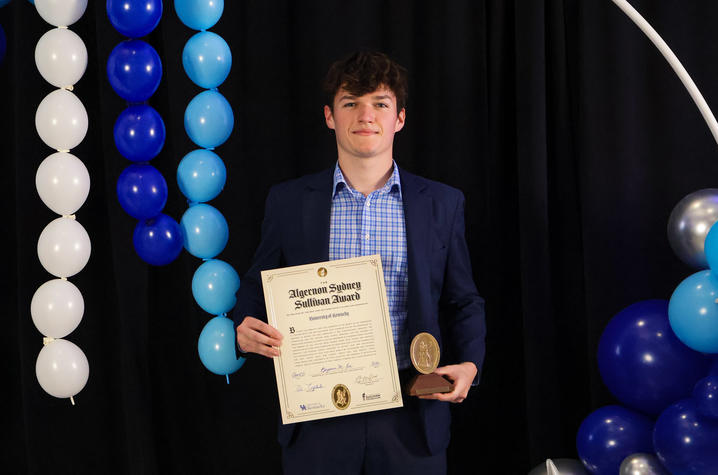
Social Work’s Ben Ison receives 2026 Sullivan Award

This story was originally published in UKNow. Photo by Logan Justice.

LEXINGTON, Ky. (June 4, 2026)โ€ฏโ€”โ€ฏTwoโ€ฏUniversity of Kentuckyโ€ฏstudents, including UK College of Social Work’s (CoSW) Ben Ison, and a faculty emeritus have received UKโ€™s highest honor for humanitarian efforts โ€” theโ€ฏAlgernon Sydney Sullivan Award

Established by the New York Southern Society in 1925 and named for its first president, Algernon Sydney Sullivan, the award recognizes those โ€œwho exhibit Sullivanโ€™s ideals of heart, mind and conduct as evince a spirit of love for and helpfulness to other men and women.โ€ After the society closed, the award has lived on through the Sullivan Foundation and is given at several universities in the South. 

At UK, the Sullivan Award is bestowed each year on two graduating seniorsโ€ฏand one citizen who has a connection to the university. This yearโ€™s Sullivan award student winners areย Morgan David and Ben Ison. Sam Powdrill is the citizen award recipient.ย 

Ison, of Mount Sterling, Kentucky,ย earnedย dual bachelorโ€™s degrees in social work and criminal justiceย in May, along with a minor in criminology.ย 

Throughout his time at UK, Ison has distinguished himself through exceptional academic achievement and a deep commitment to service. A 4.0 student and consistent Deanโ€™s List honoree, he has paired his classroom success with meaningful research, leadership and hands-on experiences that reflect his passion for justice and advocacy. 

Ison has been actively involved in undergraduate research through the College of Social Work, where he serves as a research assistant focusing on juvenile justice. In this role, he has conducted literature reviews, supported data collection and analysis, and contributed to research examining systems that impact youth and communities. His academic interests extend into practice โ€” as demonstrated by his service on the University Appeals Board, where he helped review academic and disciplinary cases and contributed to fair, policy-aligned decisions. 

Committed to applying his knowledge in real-world settings, Ison completed a social work internship with the Exit Crisis Unit at Maxwell Street Presbyterian Church. There, he provided crisis intervention services, helped connect individuals to critical resources and coordinated community outreach efforts โ€” including a clothing drive paired with Narcan training to support harm reduction. 

On campus, Ison is a dedicated leader and advocate for student well-being. As a student ambassador for the College of Social Work, he supports prospective and current students through outreach events, information sessions and community-building initiatives. He has also held leadership roles within Pi Kappa Alpha fraternity, serving as internal vice president and previously as mental health chairman, where he worked to promote awareness and access to mental health resources, including implementing suicide prevention programming. 

Isonโ€™s commitment to service extends beyond leadership roles. He regularly volunteers in the community, including participating in weekly meal programs, and has earned certifications in areas such as QPR suicide prevention and responsible conduct of research. 

โ€œThrough his academic excellence, leadership and compassion for others, Ison exemplifies the spirit of a servant leader โ€” using his education and experiences to create meaningful change in the lives of those around him,โ€ Shelita Jackson, D.S.W., director of undergraduate studies in the College of Social Work, said. He has integrity, conviction, is reliable and has a heart for justice.โ€ 

Reflecting on his philosophy of service, Ison said, โ€œAcross all of my experiences at UK, Iโ€™ve learned that service is ultimately about responsibility โ€” using what youโ€™ve been given to support others in ways that are thoughtful, consistent and grounded in respect. It is less about recognition and more about being present, being willing to learn and being committed to contributing to something larger than yourself.โ€ 

Ison plans to continue his work at the intersection of social work and criminal justice, with a focus on advancing equitable systems and supporting vulnerable populations. 

โ€˜Behind the Blueโ€™: Social Work’s Abbie Latimer on how to support those who are suffering

This article was originally published by UKNow by Kody Kiser.

LEXINGTON, Ky. (June 1, 2026) โ€” When someone we care about is going through something painful, many of us struggle with the same question: what do I say?

On this episode of โ€œBehind the Blue,โ€ Abbie Latimer, Ph.D., an assistant professor in the University of Kentucky College of Social Work, discusses hospice and palliative care, serious illness communication and how people can better support one another during difficult moments. Latimer also holds an affiliate appointment in the UK College of Medicineโ€™s Department of Internal Medicine, Division of Palliative and Supportive Care.

Before joining the faculty, Latimer worked as a palliative care social worker with UK HealthCare, helping build the inpatient palliative care team and supporting patients, families and care teams through some of lifeโ€™s most difficult conversations. Her current work focuses on research and teaching around serious illness, moral distress, communication and psychosocial care.

Latimer recently spoke at TEDxUKY, where she shared the story of a patient she called โ€œFredโ€ and explored questions many people face when someone they care about is suffering:

  • What do I say?
  • Why do I sometimes pull away?
  • How do I find my way back to simply being present?

In the conversation, Latimer explains the difference between hospice and palliative care and discusses the broad role social workers play in helping patients and their care systems, including family members, friends, clinicians and community support networks. She also describes why difficult emotions can cause people to reach for familiar phrases such as โ€œhang in there,โ€ โ€œstay positiveโ€ or โ€œthoughts and prayers,โ€ even when those phrases may unintentionally create distance.

Latimer encourages listeners to focus less on finding the perfect words and more on asking open, compassionate questions. Simple prompts such as โ€œIs it okay if we talk about this?โ€ or โ€œWhat are you most worried about?โ€ can open the door to deeper connection without placing pressure on either person to fix what cannot be fixed.

The episode also explores how silence, presence and listening without an agenda can be meaningful forms of support. Latimer says sometimes the most helpful response is not a solution, but a willingness to sit with someone in the reality of what they are facing.

โ€œBehind the Blueโ€ is available via a variety of podcast providers, including Apple Podcasts, YouTube and Spotify. Subscribe to receive new episodes each week, featuring UKโ€™s latest medical breakthroughs, research, artists, writers and the most important news impacting the university.

โ€œBehind the Blueโ€ is a production of the University of Kentucky. Transcripts for most episodes are now embedded in the audio file and can be accessed in many podcast apps during playback. Transcripts for older episodes remain available on the showโ€™s blog page

This interview has been edited for time and clarity.

As the stateโ€™s flagship, land-grant institution, the University of Kentucky exists to advance the Commonwealth. We do that by preparing the next generation of leaders โ€” placing students at the heart of everything we do โ€” and transforming the lives of Kentuckians through education, research and creative work, service and healthcare. We pride ourselves on being a catalyst for breakthroughs and a force for healing, a place where ingenuity unfolds. It’s all made possible by our people โ€” visionaries, disruptors and pioneers โ€” who make up 200 academic programs, a $1.02 billion research and development enterprise and a world-class medical center, all on one campus.

Inside the clutch March Madness moment: Expert Q&A on high-pressure play

LEXINGTON, Ky. (March 16, 2026) โ€” When the clock ticks down and a game hangs in the balance, some athletes thrive while others falter.

March Madness is full of buzzer-beaters and heart-stopping moments, but what separates a player who rises to the occasion from one who freezes under pressure?

Matt Moore, Ph.D., associate dean of academic and student affairs in the UK College of Social Work, brings nearly two decades of competitive tennis coaching experience to the question. He is co-founder and president of the Alliance of Social Workers in Sports, editor of the Sport Social Work Journal and co-director of the International Institute for Sport and Behavioral Health.

Moore has coached at Butler University, Anderson University and Miami University, racking up more than 250 career dual match wins and helping Miami claim the 2025 Mid-American Conference championship.

But high-stakes moments arenโ€™t just psychological โ€” they are also neurological. Understanding how the brain processes stress, focus and split-second decision-making adds another layer to why some athletes stay composed while others struggle when the stakes are highest.

Thatโ€™s where Taylor Achtyl, Psy.D., a postdoctoral fellow in clinical neuropsychology in the UK College of Medicine, offers insight into whatโ€™s happening inside the brain during those critical moments. She works within the Kentucky Neuroscience Institute, where she conducts neurocognitive evaluations to assist in the diagnosis of neurological disorders.

Achtyl earned her doctorate in clinical psychology from Dโ€™Youville University, where her dissertation research examined executive function and emotion regulation in university athletes with a history of sports concussion; this work was presented at the International Brain Injury Associationโ€™s 15th World Congress on Brain Injury. She also has experience conducting neurocognitive evaluations to inform return-to-play decisions and providing psychotherapy to student-athletes.

UKNow: Why do some athletes seem to thrive under pressure while others struggle?

Moore: Some athletes interpret physical signs of stress as excitement and readiness, while others read the same signals as doubt, overthinking and tightness. Though the shift in mindset may sound simple, itโ€™s more complex than it seems. Often, the difference between rising to the moment and shrinking from it comes down to seeing pressure as a challenge rather than a threat.

UKNow: What actually happens in the brain and body during a high-pressure moment like a last-second shot?

Achtyl: In a high-pressure moment like a last-second shot, the brain quickly prioritizes information that is most relevant to the situation. Attention narrows toward key cues such as the position of defenders, the basket and the remaining time on the clock. Brain regions involved in decision-making and motor planning work together to translate that information into a rapid action. At the same time, the body becomes more physiologically activated, increasing alertness and readiness to move.

Moore: The first thing that happens is that your brain realizes, โ€œthese moments matter.โ€ This activates a response in your body. Your adrenaline kicks in. Your heart beats faster. Your breathing speeds up. Your muscles tighten. Your focus gets sharper. You might also feel nervous. 

UKNow: Is being โ€œclutchโ€ a real psychological trait, or is it something we assign after the fact?

Moore: When youโ€™re in high-pressure moments, thereโ€™s a difference between your body feeling clutch and feeling frozen. A clutch athlete might think, โ€œIโ€™m ready for this,โ€ channeling that energy in a positive way. An athlete who feels frozen might think, โ€œNot me โ€” Iโ€™m nervous,โ€ which can lead to overthinking and tightening up.

Most of the time, we label someone clutch after we see the outcome. In reality, being clutch is about preparation, repetition and confidence built over time. In my opinion, it has far less to do with who you are and far more to do with how you train your body and mind to handle pressure.

Science + storytelling

UKNow: What role do stress hormones like cortisol and adrenaline play in performance?

Achtyl: Adrenaline and cortisol are part of the bodyโ€™s natural response to pressure. When stakes are high, such as during the final minutes of a close game, these hormones increase heart rate, blood flow and alertness, preparing the body to respond quickly. Stress hormones can enhance performance by helping athletes sharpen focus and reaction time, which is why athletes often describe feeling โ€œlocked inโ€ during important moments. However, when stress hormone levels become too high, they can start to interfere with performance. It may become more difficult to concentrate, remember plays or control fine motor movements.

UKNow: How does anxiety affect motor skills and decision-making in athletes?

Achtyl: Anxiety can interfere with athletic performance by affecting the brain systems that coordinate thinking and movement. Skilled motor actions rely on communication between the prefrontal cortex, which supports attention and decision-making, and the striatum, which helps automate well-practiced movements. In high-pressure situations, stress and increased self-monitoring can disrupt this coordination โ€” causing athletes to overthink movements that would normally feel automatic, such as passing or shooting a ball. When that happens, decisions may become slower and movements less fluid, which is often what people are describing when they talk about athletes โ€œchokingโ€ under pressure. Athletes who perform well in these moments are often better able to maintain focus and allow practiced skills to run more automatically.

UKNow: Can pressure ever improve performance? If so, how and why?

Achtyl: Yes, pressure can improve performance. A moderate level of pressure can increase focus, motivation and engagement with the task at hand. In these moments, athletes may become more attentive to relevant cues, react more quickly and perform with greater intensity. Psychological research often describes this relationship using the idea that performance tends to improve as arousal increases, but only up to a certain point. When pressure stays within this optimal range, it can help athletes feel energized and fully focused on the moment.

Moore: Building on everything shared so far, the bodyโ€™s stress response isnโ€™t automatically a bad thing. Adrenaline can sharpen focus, increase energy and prepare muscles to respond quickly. When athletes interpret those sensations as readiness rather than danger, pressure can actually enhance concentration, reaction time and confidence.

The difference comes down to perception and preparation. When pressure is viewed as a challenge and athletes trust their training, it can elevate performance. When pressure is viewed as a threat, that same stress can lead to tension, doubt and overthinking.

Training + preparation

UKNow: Are clutch performers born that way, or can mental toughness be trained?

Moore: Mental toughness is not something you are simply born with. It is a skill that can be developed through intentional practice. It grows when you set clear, achievable goals and challenge yourself to perform under pressure. It grows by learning to manage stress and maintain focus. It grows with integration of evidence-based approaches into your practice regime. Practices such as positive self-talk, visualizing successful outcomes and reflecting on your experiences all strengthen your ability to stay calm and confident when faced with obstacles. Most importantly to me, you have to be able to simulate high pressure moments consistently in your training.

UKNow: What psychological techniques do elite athletes use to stay focused in big moments?

Moore: There are numerous techniques that elite athletes use. What works for one athlete might not work for another. That being said, there are three overarching techniques that I use with my athletes. First, we try to be really intentional with our goal setting. This might also be the social worker in me, but I want my athletes to all have SMART goals โ€” specific, measurable, achievable, relevant and time-bound) that help them stay focused on the controllables. Second, we use mental imagery on a regular basis to rehearse high-pressure scenarios. Third, we try to ensure that each of our players have techniques that help with emotional regulation. Here we are talking about preperformance routines, consistent routines between points and how to utilize changeovers to your advantage. I find these three approaches work together. Clear goals provide direction, rehearsal prepares execution and emotional regulation keeps performance steady.

UKNow: How important are routines, like free-throw rituals or breathing patterns, in managing pressure?

Moore: I find routines to be extremely important. By engaging in familiar actions like free-throw rituals or breathing patterns, an athlete can shift their mind from the stress of the situation to controlled, automatic behavior. It helps to remind an athlete that they have shot thousands of free throws in their lives. Why does this free throw need to be any different than the rest?

Fans + broader relevance

UKNow: Why do fans feel nervous or stressed watching these moments โ€” even though theyโ€™re not playing?

Moore: I am a fan of many teams. I am no different than others. There are days where it feels like I live and die by outcomes. Fans live vicariously through the team and athletes they support. The pressure created on the court extends to those watching. The brain and body responses of a fan, to a lesser degree, can mirror those of the players. Their investment in the outcome creates a sense of personal pressure, even without direct physical involvement.

Achtyl: Even when weโ€™re just watching, our brains respond to the tension of the moment. In close games, the brainโ€™s stress response can activate in ways that look similar to what the athletes are experiencing. Part of this response is related to mirror neurons โ€” a system in the brain that helps us simulate and understand the actions and emotions of others. When we watch an athlete take a high-pressure shot, the brain partially mirrors the action and emotional intensity of that moment. That shared neural response is part of what makes big moments in sports feel so exciting and nerve-wracking for fans.

UKNow: What can everyday people learn from athletes about handling pressure at work or in life?

Moore: Here are a few suggestions:

  1. Focus on controllable actions, not outcomes. Athletes are great at breaking tasks into small, actionable steps to reduce anxiety and to stay present.
  2. Develop consistent routines. Athletes perform best with consistent rituals. These rituals help regulate behavior and provider a sharper focus.
  3. Reflect and learn from experiences. Athletes are required to consistently reflect on what worked and what did not. It helps athletes to create concurrent plans that present option versus the need to feel desperate in a situation.

As the stateโ€™s flagship, land-grant institution, the University of Kentucky exists to advance the Commonwealth. We do that by preparing the next generation of leaders โ€” placing students at the heart of everything we do โ€” and transforming the lives of Kentuckians through education, research and creative work, service and health care. We pride ourselves on being a catalyst for breakthroughs and a force for healing, a place where ingenuity unfolds. It’s all made possible by our people โ€” visionaries, disruptors and pioneers โ€” who make up 200 academic programs, a $476.5 million research and development enterprise and a world-class medical center, all on one campus.

๐Ÿ“ทHighlights: 2025 December Graduation Celebration

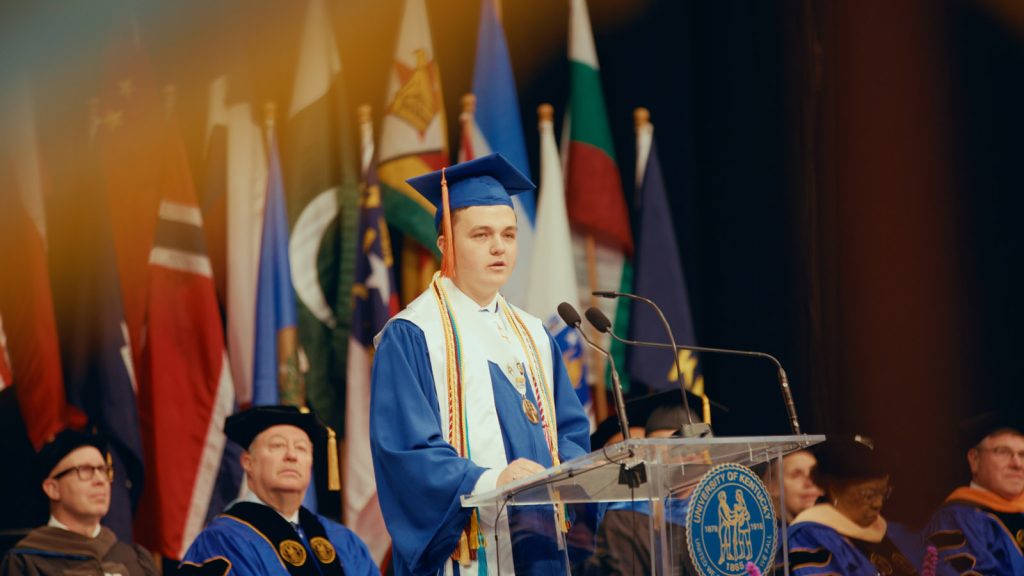
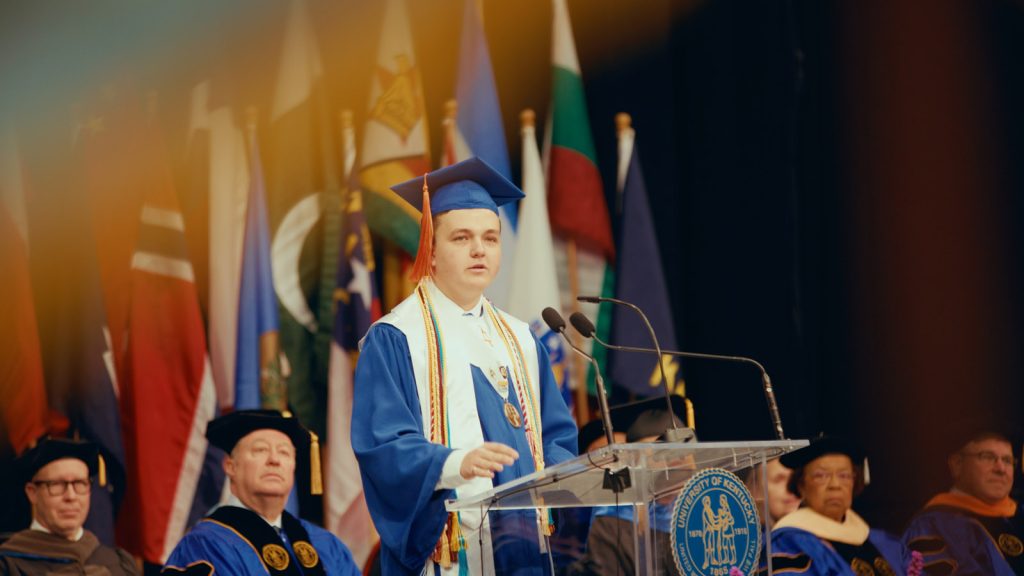
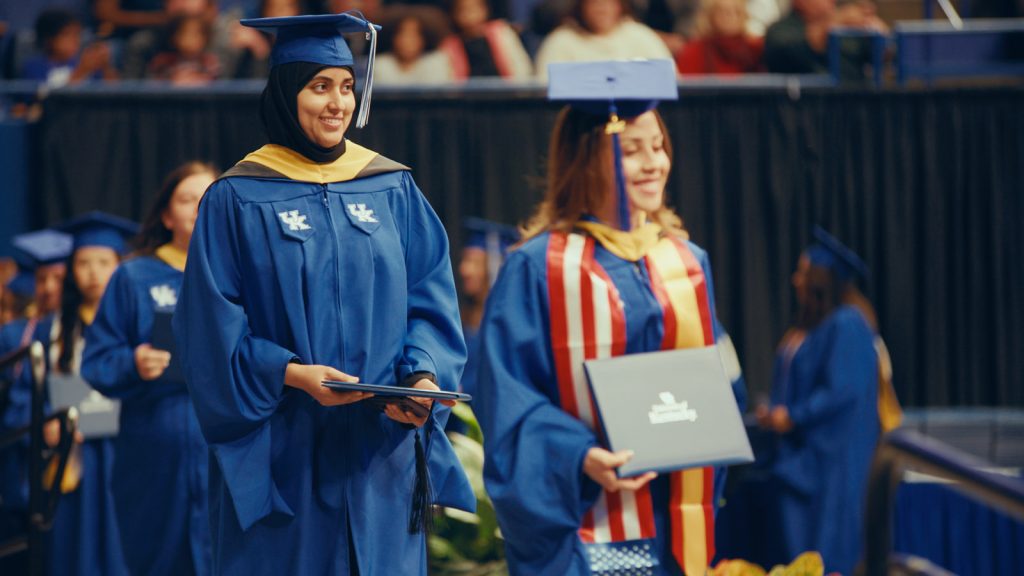
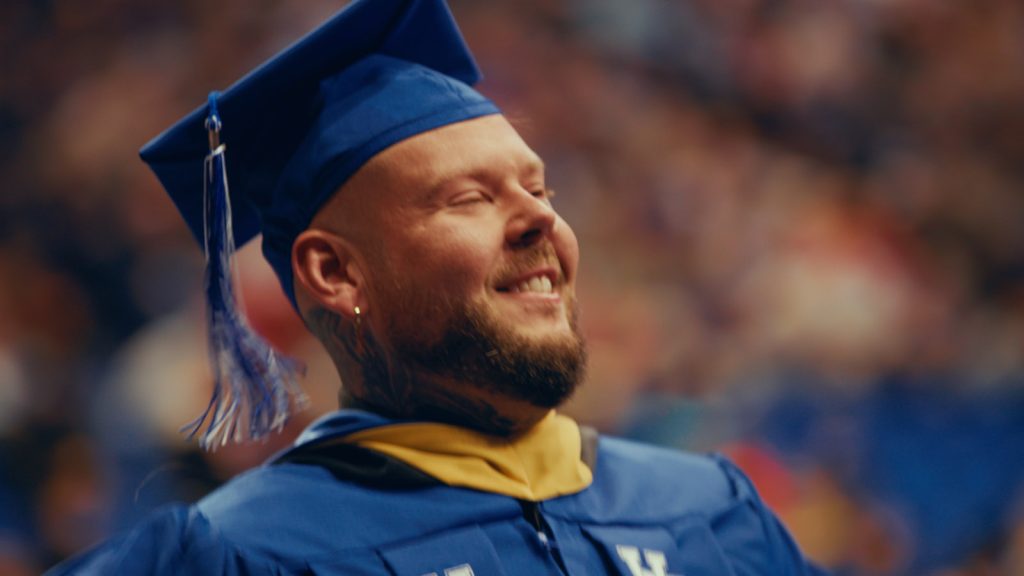
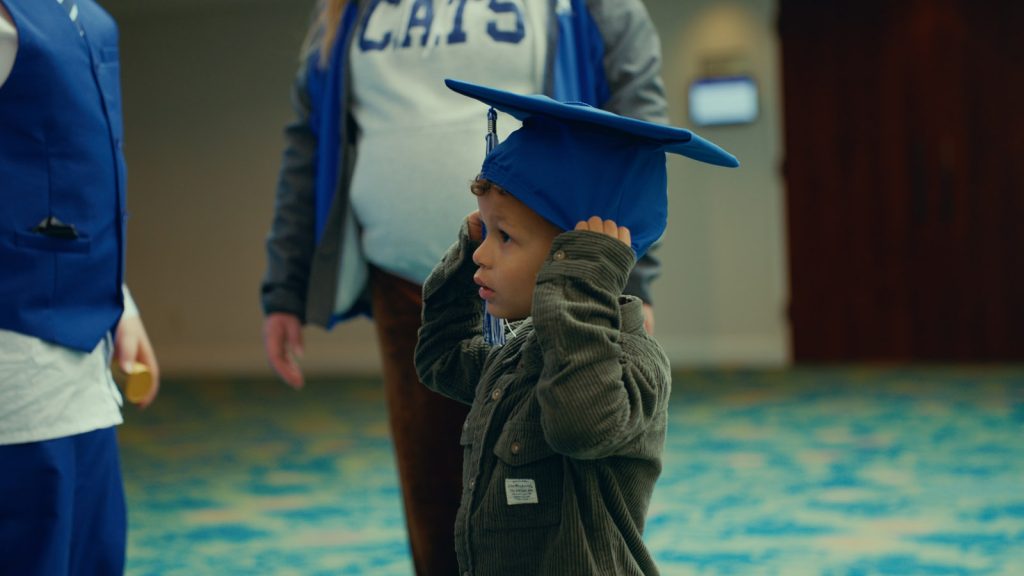
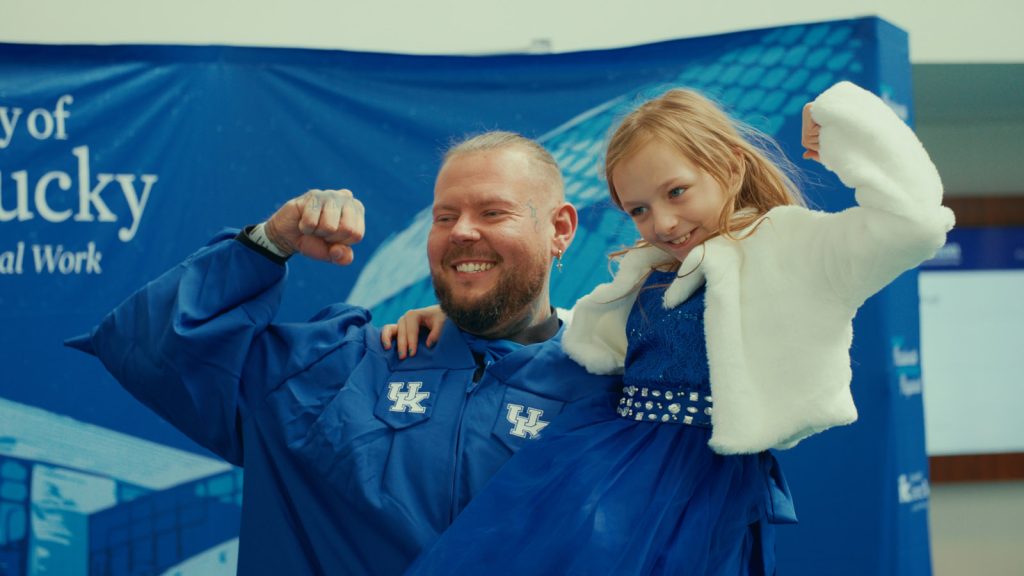
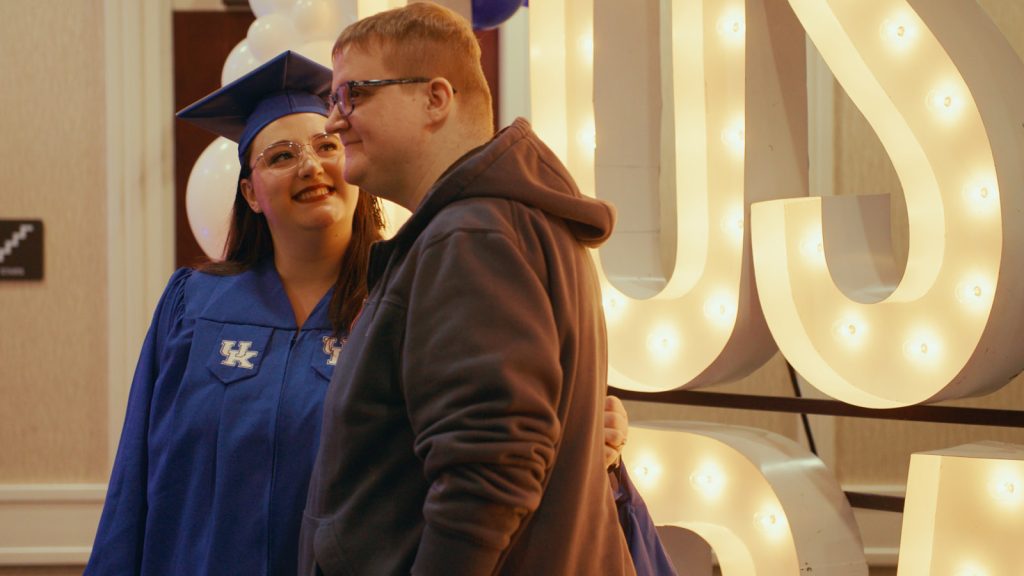
LEXINGTON, Ky. โ€“ The University of Kentucky College of Social Work (CoSW) celebrated it’s newest batch of graduates on December 19. After crossing the stage at Rupp Arena and handed their diplomas, graduates and families arrived at the Hilton Hotel to celebrate their achievements with CoSW staff and faculty. Below are pictures of the festivities.

Photo credit Sanford Weakley/UK College of Social Work

Photos credit Cassie Payne/UK College of Social Work

How UK Grad Raven Whitaker-Smith found family, purpose โ€” and herself

This article was originally published byย Lindsey Piercyย andย Steve Shafferย of UKNow.ย You can view the original article here.

Video produced by UK Public Relations and Strategic Communication and UK Marketing and Brand Strategy. To view captions for this video, push play and click on the CC icon in the bottom right-hand corner of the screen. If using a mobile device, click on the โ€œthought bubbleโ€ in the same area.

LEXINGTON, Ky. (May 8, 2025) โ€” How do you define family?

For some, itโ€™s the people they grew up with โ€” parents, siblings and relatives bound by blood. For others, itโ€™s a chosen group โ€” friends, mentors or caregivers.

For Raven Whitaker-Smith, the meaning of family often felt undefined.

By the time she was 12-years-old, she had already lived through more than most do in a lifetime. While being bounced around the foster care system, Whitaker-Smith had no sense of permanence, no deep roots โ€” just a longing to feel chosen.

โ€œMy biological parents were just kids when they had me and my siblings,โ€ she said. โ€œThey were addicted to drugs, and my home life was a very dark place.โ€

When Whitaker-Smith was 11, the Department for Community Based Services stepped in and removed her and her siblings from their tumultuous home.

Whitaker-Smith found herself living at Holly Hill, an all-girls group home, while attending Campbell County Middle School. The weight of her personal struggles often spilled over into the classroom โ€” one day landing her outside the principalโ€™s office.

Whitaker-Smith was just a sixth grader, but she was on the verge of suspension.

****

Jason Smith felt being a school principal was not just a career โ€” but a calling.

He had been one for 14 years when he found Whitaker-Smith sitting outside his office.

โ€œShe was just this sweet looking, little innocent child sitting there โ€” kind of defeated,โ€ he said. โ€œI asked her, โ€˜Whatโ€™s going on?โ€™ and she said that she had thrown a cup of yogurt at lunch, had been suspended and was waiting to be picked up.โ€

Smith then asked her if she would ever throw food at a restaurant with her family. She told him she had never eaten in one and didnโ€™t have a family.

โ€œAt that point, I had felt like she just needed a hand โ€” needed help,โ€ he said.

Though brief, that conversation had a profound impact on Smith. But he hesitated to bring it up to his wife, Marybeth, that evening.

For years, the couple had faced the heartbreak of infertility.

They had once opened their home as foster parents hoping to adopt. But that dream had quietly faded nearly six years earlier after caring for a trio of siblings โ€” only to have them reunified with their biological parents.

Following that fateful interaction, the Smiths began exploring the idea of fostering Whitaker-Smith. They first reached out to her case worker, then went through the process of getting recertified as foster parents.

Once approved, the Smiths opened their home to Whitaker-Smith, who moved in with them in June 2015.

โ€œHe (Smith) felt compelled to become a foster parent,โ€ Whitaker-Smith recalls. โ€œThe summer following sixth grade, I began having visitation with them before moving in. From there, we became a family.โ€

On Nov. 3, 2017, the Smiths formally adopted Whitaker-Smith, by then a high school freshman. Their inspiring story was later featured on Good Morning America.

โ€œThey gave hope to a hopeless kid,โ€ she said.

****

Whitaker-Smith hadnโ€™t just found a home โ€” she found a future.

Her new family had deep ties to the University of Kentucky. Before moving in, she remembers seeing photos of them dressed from head to toe in Wildcat gear.

โ€œThey would show me these pictures โ€” the whole family,โ€ she said. โ€œAnd as I got older, and I learned about college, I just knew UK was for me.โ€

But choosing UK wasnโ€™t just about family pride โ€” it was about finding a purpose. Whitaker-Smith had always felt drawn to working with children. Still, she struggled with the idea of helping others when she herself felt โ€œunhealed.โ€

That started to shift during her first social work class with Professor Shelita Jackson, D.S.W.

โ€œAs soon as I was in her class, I knew social work was for me,โ€ Whitaker-Smith said. โ€œI just felt so passionate. I knew I was supposed to be there.โ€

Through her College of Social Work (CoSW) coursework โ€” classes in psychology, domestic violence and family systems โ€” Whitaker-Smith began to confront and understand her past.

โ€œI would think about my past and my biological parents when they were younger,โ€ she continued. โ€œThey kind of grew up in a similar situation, and they didnโ€™t have a lot of resources.โ€

Whitaker-Smithโ€™s education led to understanding, and ultimately, her understanding led to compassion. โ€œWhy would the cycle change unless youโ€™re educated about it?โ€ she asks. โ€œSocial work definitely saved me and changed the way I thought about things โ€” definitely the way I thought about my past.โ€

Now, Whitaker-Smith works at the DCCH Center for Children and Families โ€” the same nonprofit organization that helped facilitate her foster care with the Smiths.

โ€œThe therapeutic atmosphere DCCH provided was what I needed to learn to trust my parents and heal from the trauma I experienced,โ€ she said. โ€œThey are still there for me today. I truly feel DCCH is a part of my family and played a significant role in my story.โ€

****

As Whitaker-Smith prepares to walk across the Commencement stage, she knows exactly where to look โ€” toward the cheering crowd of loved ones, with her family front and center.

Their unwavering support has given her the strength to believe in herself and her future.

โ€œI havenโ€™t actually talked about how proud I am of myself,โ€ Whitaker-Smith admits through tears. โ€œBut to be the first person from my biological family to graduate high school and then move on to college, Iโ€™m so incredibly proud of myself.โ€

More than anything, sheโ€™s ready to pay it forward โ€” eager to step into the role of the social worker she once needed.

โ€œNot many people get to say their parents chose them. If anyone reading this is thinking about fostering or adopting a child, I urge you to take a chance,โ€ she said. โ€œFoster care saved my life and because of that, it has inspired me to be a social worker. There are so many kids out there that are just like me โ€” who need to be loved, cared for and given hope.โ€

Did you know, in Kentucky alone, more than 8,000 children are in need of foster or adoptive parents? You can learn more by visiting the DCCH website.

Explore the degree pathways and programs available through the CoSW by visiting the college website.  

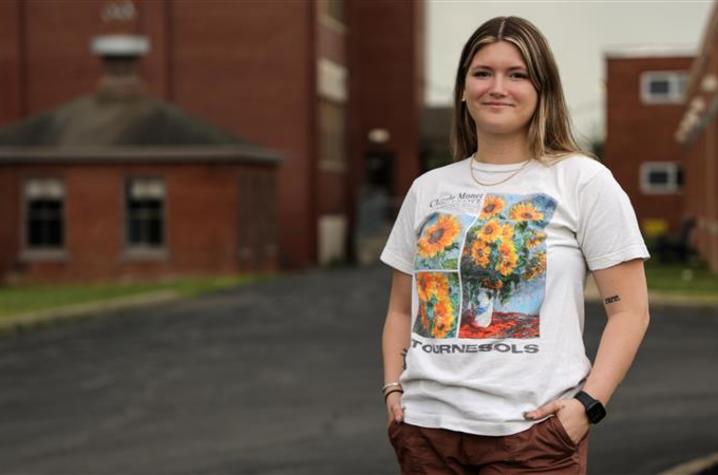
Raven Whitaker-Smith works at the DCCH Center for Children and Families โ€” the same nonprofit organization that helped facilitate her foster care with the Smiths. UK Photo

As the stateโ€™s flagship, land-grant institution, the University of Kentucky exists to advance the Commonwealth. We do that by preparing the next generation of leaders โ€” placing students at the heart of everything we do โ€” and transforming the lives of Kentuckians through education, research and creative work, service and health care. We pride ourselves on being a catalyst for breakthroughs and a force for healing, a place where ingenuity unfolds. Itโ€™s all made possible by our people โ€” visionaries, disruptors and pioneers โ€” who make up 200 academic programs, a $476.5 million research and development enterprise and a world-class medical center, all on one campus.

For over 85 years, the College of Social Work (CoSW) at the University of Kentucky has been a leader in education. Our mission is clear: Through rigorous research, excellence in instruction, and steadfast service, the CoSW works to improve the human condition. Always, in all ways.

As the stateโ€™s flagship university, our mission is actualized through our deeds. Our faculty are renowned academicians dedicated to fostering the development of high-quality practitioners and researchers. As a college, we promote community and individual well-being through translational research and scholarship, exemplary teaching, and vital community engagement. We are committed to the people and social institutions throughout Kentucky, the nation, and the world.

National Adoption Month: The Power of Connection and Belonging

Every child, no matter the context, needs lasting familial connections. Having been in out-of-home care myself, I can personally attest to this need.

As a youth, I was placed in out of home care as a result of the death of my mother and my fatherโ€™s inability to beat his addiction to substances. My sisters and I spent several years shuffled from place to place before being taken in by an aunt and uncle.  

I was 16.

For my sisters and me, the stability provided by our โ€œforever homeโ€ made all the difference. The sense of safety, allowed us to flourish. No more neglect. No more abuse. Frankly, if not for their willingness to open their home and their hearts, Iโ€™m not sure where I would be.   

Indeed, family matters.

Since 1995, November has been marked as a time of deep introspect about adoption. This year, Adoption Awareness Month is focused on creating and strengthening pathways for young people to have lasting bonds and connections.

Now, as has always been in the case, we must take stock of this focus.    

In Kentucky, there are over 8,300 youths in foster care. Of those, approximately one-third are waiting to be adopted. Whilst every effort is made to find adoptive homes for these youth, the unfortunate reality is that for many them, particularly teens, the comfort of a safe, stable forever family will never be actualized.

Research shows that adoption can be profoundly impactful for youth in foster care. Studies illustrate that adopted youth tend to experience higher levels of emotional and physical wellness, financial stability, and fewer instances of trauma, when compared to their non-adopted counterparts. As well, families who adopt often experience a sense of fulfillment, love, and immense gratitude.  


Indeed, family matters.

Unfortunately, research also shows that teens are seldom adopted. Though younger children are often adopted relatively quickly, adoption rates drastically decrease for older youth. Nationally, while almost 25% of young people awaiting adoption are between the ages of 13-17, only about 12% of those adopted in 2022 were teens. Those not adopted usually โ€œage outโ€ of foster care, which puts them at an increased risk for a host of problematic circumstances. Adoption can assuage these circumstances.

Indeed, family matters.

There is a plethora of benefits to adopting older youth. For example, older children can actively participate in adoptive processes, which often means things move more quickly. As well, there is typically more documented information about older youth. This will allow parents to more adeptly assess, address, and understand any needs the child may have. Parents who adopt older kids may also be eligible for educational benefits, tax credits, and support initiatives/programs. Did I mention that older children donโ€™t typically require diapers or babysitters?!

For families like the Hurt-Muellers, adopting two teenagers has been a rewarding experience for their family of four. Plus, Jamie Hurt-Mueller has even learned to be more technologically savvy from her 18-year-old and 15-year-old children!

Indeed, family matters.

In the coming months, as it usually does, attention will shift to an ever-long season of holiday pomp and pageantry. Nestled between office parties, shopping trips, and watching re-runs of A Christmas Story, many of us will find solace in spending time with loved ones. During these times, I implore you think about those, both young and old, waiting for their forever family.

Because after all –  

Family. Matters.

For more information about adoption in Kentucky, please visit https://prd.webapps.chfs.ky.gov/kyfaces.   

Dr. Jay Miller is the Dean and Dorothy A. Miller Research Professor in Social Work Education in the College of Social Work and Director of The Self-Care Lab at the University of Kentucky. You can follow his work via X @DrJayMiller1 or email him at Justin.Miller1@uky.edu.

National Adoption Month: Strengthening Pathways for Lasting Bonds in Kentucky

By: Emily Hendrickson, Adoption Support for Kentucky Program Coordinator

Every November, National Adoption Month invites us to pause and reflect on the transformative power of family, connection, and belonging. It’s a time to celebrate the courage of children waiting for permanent homes, honor the dedication of families who open their hearts, and recognize the professionals and advocates who work tirelessly to bring them together. This year’s theme, “Honoring Youth: Strengthening Pathways for Lasting Bonds,” places young people in foster care at the center of the conversationโ€”where they’ve always belonged.

In Kentucky, this mission comes to life through collaboration and commitment. The Department for Community Based Services (DCBS), the University of Kentucky College of Social Work, and the Adoption Support for Kentucky (ASK) program work hand in hand to ensure every young person finds not just a home, but a permanent place to belong. These partnerships demonstrate that honoring youth begins with one essential practice: listening to their voices, understanding their needs, and then taking meaningful action to support their journeys toward permanency.

The Heart of the Matter: Youth Voices in Kentucky

Honoring Kentucky’s youth starts with creating space for their stories and recognizing the wisdom they carry. Young people in foster care understand a profound truth that sometimes gets lost in systems and procedures: permanency transcends paperwork and court dates. It is about people who show up consistently, who stay through difficult moments, and who commit to being there for the long haul.

“I just wanted a family who wouldn’t give up on me,” shared one Kentucky teen whose words have resonated throughout the child welfare community. These simple yet powerful words encapsulate the essence of National Adoption Month, celebrating the remarkable resilience of young people while forging the lasting bonds that honor each child’s individual journey, needs, and dreams for the future.

When we truly honor youth, we recognize that they are experts in their own experiences. They know what it feels like to wait, to hope, and sometimes to have those hopes disappointed. They understand the difference between temporary placements and permanent commitment. And they can teach us, if we’re willing to listen, about what they need to heal, grow, and thrive in forever families.

Kentucky’s Adoption Landscape: Understanding the Need

The scope of Kentucky’s commitment to children and families reveals itself in these key figures, each one representing a young person with their own story, strengths, and needs:

  • 8,647 children are currently in out-of-home care across the Commonwealth, each waiting for the stability and security they deserve.
  • 2,248 children have adoption as their permanency goal, meaning they cannot safely return to their birth families and need adoptive homes.
  • 7 years old is the average age at which children enter care. A reminder that many have already experienced years of instability before entering the system.
  • 10 years old is the average age of children currently in care, highlighting the need for families willing to adopt school-age children and teens.
  • More than 55,000 children across Kentucky are being raised by kin or fictive-kin caregivers, grandparents, aunts and uncles, family friends, and other adults who stepped forward when children needed them most. This remarkable figure stands as a powerful testament to the strength of community bonds and the tradition of extended family support that runs deep in Kentucky culture.
  • Kentucky’s kinship care rate stands twice the national average, reflecting the state’s deep-rooted culture of family resilience, community support, and the willingness of relatives to provide safe, loving homes for children when parents cannot.

These numbers tell us that while the need is significant, so too is Kentucky’s response. The Commonwealth has built a foundation of family-centered care that recognizes the importance of keeping children connected to their communities, cultures, and families whenever possible.

ASK: Creating Foundations for Forever Families

The Adoption Support for Kentucky (ASK) program, based at the University of Kentucky College of Social Work, serves as a cornerstone of support for adoptive, foster, and kinship families throughout the Commonwealth. Founded on evidence-based practices and the lived experiences of adoptive families, ASK operates from a fundamental understanding: adoption isn’t the conclusion of a storyโ€”it’s the opening chapter of a lifelong relationship that requires ongoing nurturing, support, and understanding.

Many families enter adoption with love, dedication, and good intentions, but may not fully understand the impact of trauma, loss, and attachment challenges that many children in foster care have experienced. ASK bridges this gap by providing education, resources, and connection to help families not just survive, but thrive together.

Through a comprehensive statewide network, ASK provides:

  • Peer-led support groups that connect adoptive and kinship families with others who truly understand their journey. These groups create safe spaces where caregivers can share challenges, celebrate victories, and find solidarity with others navigating similar experiences. There’s profound power in knowing you’re not alone.
  • Continuous training opportunities grounded in trauma-informed, adoption-competent care practices. These educational offerings help caregivers understand the “why” behind challenging behaviors, develop effective parenting strategies, and build stronger, more connected relationships with their children. Topics range from understanding trauma and attachment to navigating adolescence and supporting educational success.
  • The Kentucky Adoption Mentoring Program (KAMP), which pairs families new to adoption with experienced mentors who have walked the path before them. These mentoring relationships provide practical guidance, emotional support, and the reassurance that comes from learning from someone who has faced similar joys and challenges.
  • Strategic partnerships with DCBS and Aetna Better Health of Kentucky to strengthen outcomes for families across the state. These collaborations ensure that families have access to the services, support, and resources they need throughout their adoption journey and beyond.

ASK recognizes that supporting families means supporting the children in their care. When caregivers have the knowledge, skills, and support they need, children benefit through more stable placements, stronger attachments, and better long-term outcomes.

Elevating Youth Voice in the Permanency Process

Research consistently demonstrates that when young people participate meaningfully in decisions about their futures, outcomes improve dramatically. Youth engagement isn’t just a nice idea; it’s the best practice that leads to better matches, more stable placements, and greater satisfaction for both youth and families.

Programs like ASK and KAMP equip caregivers with the tools to build authentic trust and maintain open, honest communication with the children in their care. This includes teaching families how to have difficult conversations, honor a child’s past while building a future together, and create space for young people to express their fears, hopes, and needs without judgment.

By fostering peer connections, facilitating mentorship relationships, and creating learning opportunities for entire families, ASK cultivates a supportive network where both caregivers and youth feel genuinely seen, valued, and heard. This approach strengthens the bedrock of Kentucky’s permanency effortsโ€”ensuring that each young person’s voice actively shapes their path toward a permanent family rather than having decisions made for them without their input.

When youth have a say in their permanency planning, they are more likely to engage positively with the process, develop stronger relationships with their caregivers, and achieve the lasting connections that lead to successful adoptions. Honoring youth means recognizing them as partners in their own permanency journey.

Join Kentucky’s Movement: Ways to Get Involved

National Adoption Month is an opportunity for all Kentuckiansโ€”whether you’re an adoptive parent, a kinship caregiver, a professional in child welfare, or simply a community member who cares about childrenโ€”to get involved in strengthening pathways to permanency.

  • Connect with the community by attending an ASK training session or support group. Even if you’re not currently a caregiver, learning about adoption and foster care helps build understanding and support throughout the community.
  • Recognize excellence by nominating a deserving family or caregiver for Kentucky’s Adoptive Parent of the Year. These families exemplify the commitment, love, and dedication that children need and deserve.
  • Share your experience by volunteering with KAMP to mentor fellow adoptive or kinship caregivers. Your story and your wisdom could be exactly what another family needs to hear.
  • Amplify stories of adoption and permanency on social media using #HonoringYouthKY and our National Adoption Month graphic. Sharing positive adoption narratives helps reduce stigma, educate the public, and inspire others to consider adoption or support for families.
  • Champion changes by advocating for trauma-informed, youth-centered policies in your community, school system, and across Kentucky. Use your voice to ensure that systems serve the best interests of children and families.
  • Consider becoming a resource for children who need families. Whether through adoption, foster care, or supporting kinship caregivers in your community, there are many ways to make a lasting difference in a child’s life.

Moving Forward Together

National Adoption Month represents more than celebrationโ€”it’s a call to action and a reminder of our collective responsibility to Kentucky’s youth. Behind every statistic lives a story. Within every story lives a child with dreams, strengths, and an innate desire to belong. And every child deserves the security, love, and stability that comes with a forever family.

The work of honoring youth extends far beyond November. It’s a daily commitment to listening to young people, believing in their potential, and working tirelessly to ensure they have the support and permanency they need to flourish. It’s about recognizing that every child who waits is a child who deserves a family committed to walking alongside them through all of life’s seasons.

Through the dedicated work of programs like ASK and KAMP, the unwavering commitment of DCBS, and the compassionate hearts of Kentucky’s caregiving community, we’re building the pathways that lead to lasting bonds and brighter futures. We’re creating a Kentucky where no child ages out of foster care alone, where kinship caregivers receive the support they need, and where adoptive families have access to lifelong resources.

Together, we’re ensuring that every young person in our care can find what they’ve been seeking all along: a family who will never give up on them, who will celebrate their victories, support them through challenges, and provide the unconditional love that every child needs and deserves. That is how we truly honor youthโ€”not just in November, but every single day.

โ€˜I am a UK Innovatorโ€™: College of Social Workโ€™s Julie Cerel


LEXINGTON, Ky. (Oct. 23, 2025) โ€” Innovation is a new way of thinking that can often lead to transformative breakthroughs. Research Communications partnered with UK Innovate to spotlight faculty innovators with pioneering ideas at the University of Kentucky. UK Innovate works collaboratively with innovators to strategically assess, protect and license early-stage technologies and co-create new technology startups.

Julie Cerel, Ph.D., is a professor in the UKโ€™s College of Social Work and director of the Suicide Prevention & Exposure Lab. In this Q&A, Cerel discusses her work on CODE RED Safety Planning โ€” a proactive crisis planning intervention. CODE RED stands for โ€œCOntact,โ€ โ€œDElay decisions,โ€ โ€œRElaxโ€ and โ€œDistract.โ€ This approach fosters open dialogue and encourages individuals to create a simple, customized safety plan they can access during a crisis.

With more than 100 academic publications and an accomplished career as a clinical psychologist, Cerel uses her expertise and empathy to develop new and innovative ways to help those most at risk.

UKNow: What inspired you to pick this specific area of research? 

Cerel: As a suicidologist, most of my career has been focused on helping people left behind after a suicide has occurred. Despite years of research, the suicide rate has not decreased. One myth about suicide is that it is mostly a problem among those with mental health disorders. However, many individuals who die by suicide have no diagnosis at the time of their death. Therefore, I started to think about universal approaches that could help not only those we think of as being at-risk, but could benefit everyone. That was the start of CODE RED.

UKNow: What is the most challenging aspect of your research?

Cerel: With nearly 50,000 deaths annually in the U.S., the scope of the problem can feel overwhelming at times. Learning about the experiences of people who lose loved ones to suicide or are struggling to keep someone they care about alive is humbling and often very sad. Thus, we have to be cautious, caring and sensitive throughout our work. Sometimes it is difficult to strike a balance between operating efficiently so we can help those in need in a timely manner and making sure that we satisfy all required documentation and regulations. We have to ensure we do the best we can and have the greatest impact for the most people.

UKNow: What have been the most fulfilling moments for you regarding your discoveries?

Cerel: Many suicide prevention programs, especially those directed at youth, rarely ask those who are on the receiving end of them what they think about the program itself. When deciding how to evaluate CODE RED, we knew that asking those who participated in CODE RED directly about their experience with it would be a very important part of understanding CODE REDโ€™s impact, especially among our youth participants. The feedback we have received has been overwhelmingly positive. Youth have noted that they found their CODE RED experience meaningful, and that they liked the interactive and the proactive approach of the program. While we still have a lot to learn about how CODE RED is perceived and its impact, this initial data tells us that we are on the right track and are making progress toward an effective universal suicide prevention program. 

UKNow: How has your research impacted the way you train students?

Cerel: My work has shown that about half of all adults know someone who has died by suicide and even more know someone who has made a suicide attempt. So when working with students, I emphasize that even if they do not personally know someone who has died by suicide or made an attempt, that they are very likely to encounter someone who does. Compassion and sensitivity are central to this work, and I try very hard to make sure that students understand their importance. I also believe it is very important that students across a variety of disciplines learn about suicide and how they can have an impact in their academic area and future careers.

UKNow: What drew you to and/or inspires you about the University of Kentucky?

Cerel: Although I did not grow up in Lexington, my family has deep roots here. I wholeheartedly believe that Kentucky students deserve a university that not only educates them but also supports them and cares about them. I am fortunate that during my time at UK, Iโ€™ve been able to not only pursue my research, but to do it in a way that has benefited Kentucky students. Seeing the impact of our work not only nationally, but locally, has been incredibly rewarding.

๐Ÿ“ทHighlights: 2025 Annual Recognition Celebration

LEXINGTON, Ky. (September 26, 2025) โ€” On September 25, 2025, the University of Kentucky College of Social Work held its Annual Recognition Celebration, honoring the achievements and contributions of faculty, staff, and students. Individuals who exemplify the College’s mission and values were recognized in a shared celebration of accomplishment and camaraderie. Below is a series of photos captured at the event.

Photo credit: Cassie Payne / UK College of Social Work


College of Social Work Welcomes Liz Utterback

LEXINGTON, Ky. โ€” The College of Social Work (CoSW) is pleased to welcome Liz Utterback as a Lecturer at the University of Kentucky. 

Utterback brings more than a decade of experience working across the legal and social services fields, with professional roles spanning court administration, criminal prosecution and defense, law enforcement, and community-based social work. She has served in critical support roles, including legal advocate and victim advocate, and has worked directly with many communities through both service delivery and program administration. 

Currently a doctoral candidate in social work, Utterbackโ€™s research focuses on the intersection of violence and extremism, particularly the ways in which language is used on digital platforms to incite and facilitate harm. She has presented at national academic conferences and has contributed to peer-reviewed publications, including as a solo author. Utterback also holds a masterโ€™s degree in post-secondary instruction, which supports her strong foundation in pedagogy and commitment to student development. 

โ€œLiz brings a valuable combination of real-world legal experience and academic rigor,โ€ said Dr. Jackie Duron, Associate Dean of Faculty Advancement. โ€œHer work will strengthen our ability to prepare students for the realities and responsibilities of justice-driven community work.โ€ 

Outside the classroom, Utterback is a passionate animal lover and dedicated Indianapolis Colts fan. When sheโ€™s not visiting her favorite zoo exhibits (including red pandas and cheetah cubs at the Cincinnati Zoo), youโ€™ll likely find her tailgating with her Colts โ€œFANmilyโ€โ€”a group that combines game day spirit with community service. Together, they support causes like back-to-school supply drives and the Ronald McDonald House of Indianapolis. 

โ€œDuring my education and career, I have benefited from the guidance and wisdom of caring mentors, and I am thrilled to have the chance to pay that mentorship forward,โ€ Utterback said. โ€œI am honored to be given the opportunity to join a faculty who is deeply committed to the education, growth, and success of The University of Kentuckyโ€™s students.โ€