SEARCH RESULTS FOR:

Search Results

Dean Miller Nationally Recognized for Contributions to Advance Social Work

This article was originally published by UKNow.

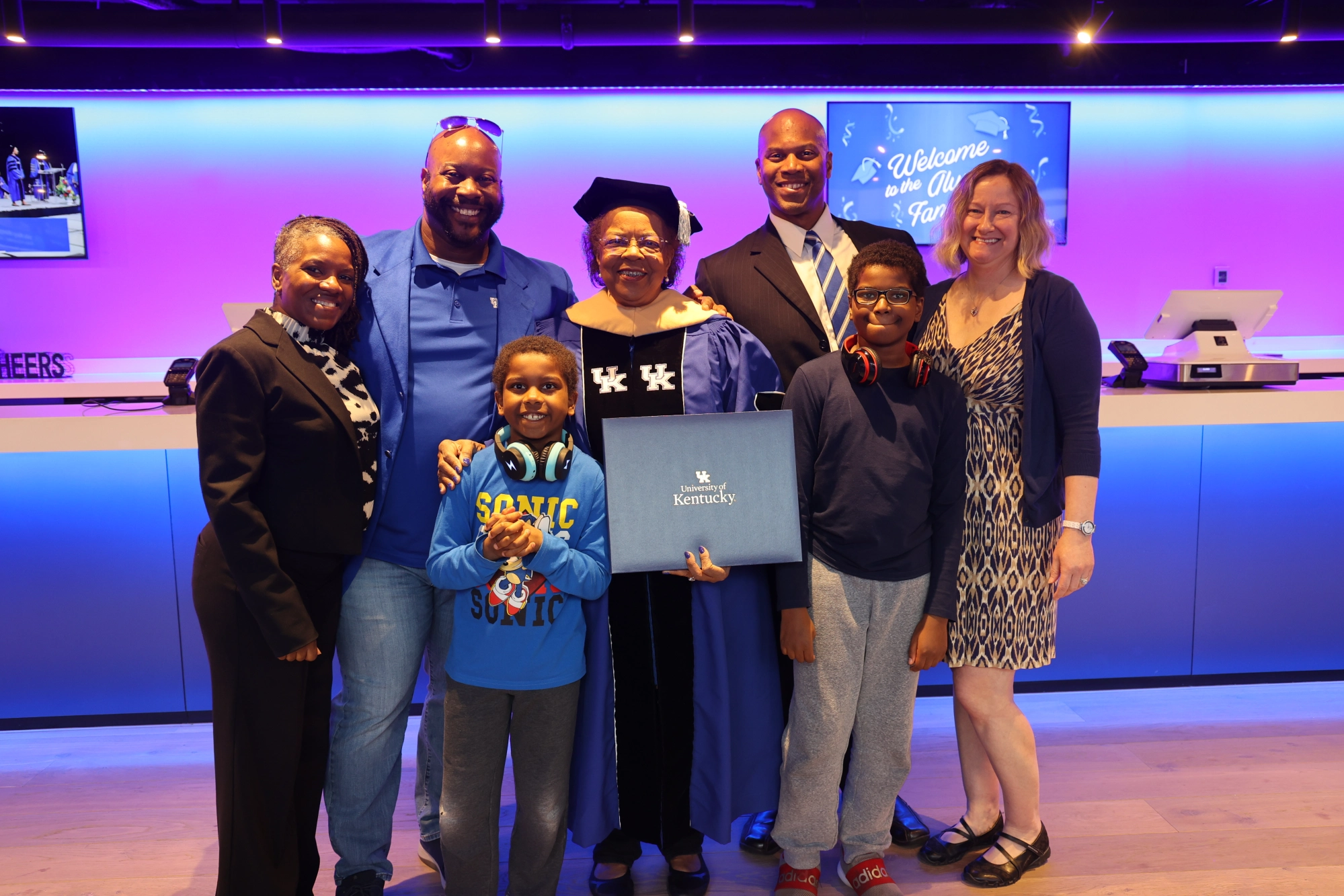
Justin “Jay” Miller, dean of the College of Social Work (CoSW) at the University of Kentucky, is a 2023 recipient of the Council on Social Work Education’s (CSWE) Distinguished Recent Contributions in Social Work Education Award.

The prestigious award is recognition of Miller’s significant contributions to advance the field of social work through education, scholarship and service.

“It’s such an honor to be recognized by CSWE with this distinguished award,” Miller said. “Frankly, this recognition is not about anything that I have done. This award is a testament to the outstanding faculty and staff in our college. Every day I get to engage with colleagues focused on advancing the mission and impacting lives. It doesn’t get better than that.”

Miller is dedicated to a wide array of community outreach and social issues — a passion he brings to his work as an educator and scholar. His research and academic interests focus on child welfare and youth involvement in juvenile systems. Miller’s work has also informed foster youth practices and policies.

In addition to child welfare, Miller is actively leading research related to self-care and wellness. In 2017, he founded the Self-Care Lab (SCL) — specifically dedicated to empirically investigating self-care among helping professionals, including social workers, educators, law enforcement officers, nurses and teachers, among others.

Through this work, Miller demonstrates his commitment to address potentially toxic employment conditions and improve work-life balance. Earlier this year, he also launched a SCL in Europe.  

Miller is actively involved in a variety of community service endeavors and has served as the founder of the Foster Care Peer Support Initiative and the Kentucky Chapter of the Foster Care Alumni of America. He currently serves on the board of directors for the National Association for the Counsel for Children and the national advisory board for the Karyn Purvis Institute for Child Development at Texas Christian University.

Miller has also led Kentucky’s Children Justice Act Taskforce, Citizen’s Review Panel and the Board of Social Work. In 2016, he was appointed to the Federal Advisory Committee on Juvenile Justice and was recently appointed to Kentucky’s Juvenile Justice Advisory Board.  

The impact of Miller’s work has been recognized regionally, nationally and internationally. He is a past recipient of the Paul Grannis Award, Sunny Andrews Award and the Supporting the Workforce Award from the U.S. Children’s Bureau, among other recognitions.

Miller will be honored during the 69th Annual Program Meeting (APM) on Oct. 29, in Atlanta, Georgia.
UK Social Work’s Inaugural Alumni-Student Mentor Program Strengthens Connections, Fosters Support

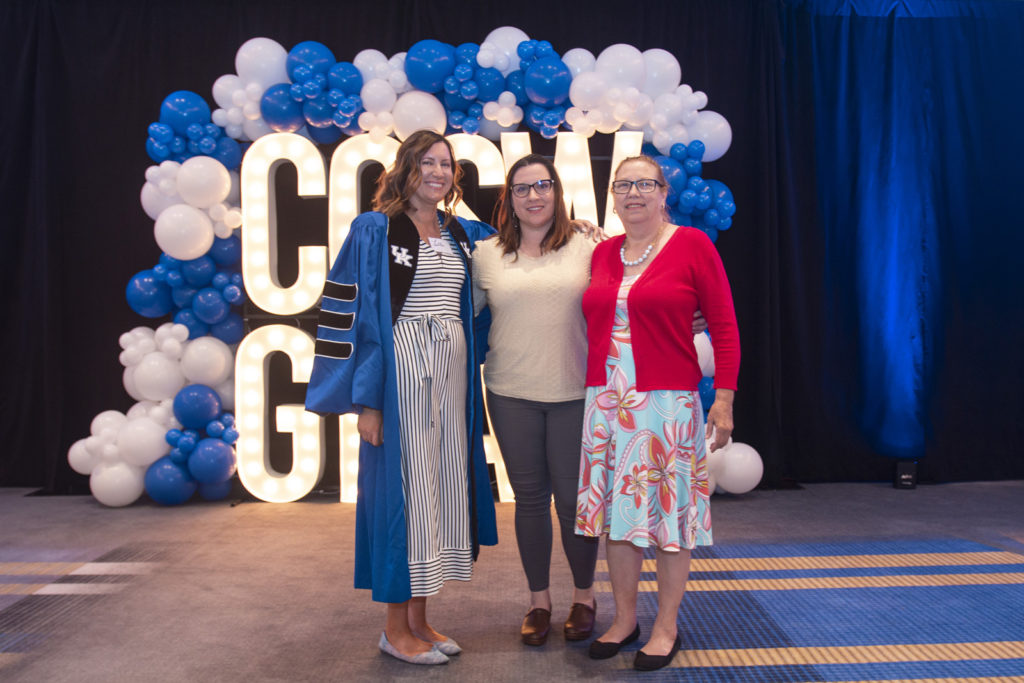
In fall 2022, the University of Kentucky College of Social Work (CoSW) launched its Alumni Association, known as SWAA. At the beginning of this year, SWAA introduced the first cohort of the Alumni-Student Mentoring Program, an initiative designed to match current CoSW student mentees with alumni mentors in order to promote purposeful, one-on-one relationships.

The program aims to help both students and alumni feel more connected to CoSW, as well as provide mentees with an opportunity to learn more about social work from an alumnus with experience and expertise in the field.  Applications for the Alumni-Student Mentoring Program were open from November through December 2022, and student-alumni pairings were announced in January 2023. Once connected, each mentor/mentee pair was responsible for agreeing upon their preferred communication methods using any appropriate communication mechanism (e.g., Wildcat Network message, email, phone call, text message) and meeting modality (e.g., in-person, Zoom, phone call).

They also shared expectations regarding communication and established at least one goal that they planned to accomplish during their time working together. Goals were based on the student mentee’s needs and covered a wide range of ideas and areas. Some sought to develop specific skills, while others were interested in learning more about community engagement or making new connections for future social work opportunities.

After the agreement was finalized, each pair committed to a five-month working relationship, with meetings scheduled at least once per month from January through May 2023.

During these meetings, mentors and mentees had the opportunity to discuss topics such as professional growth and development, accountability, career options, and any specific challenges and situations that the student might be facing. Using the Wildcat Network platform, pairs were able to track milestones as they were achieved, receive monthly email reminders, and be entered for incentives like CoSW swag.

A total of 62 pairs completed the pilot program, which included 62 student mentees and 57 alumni mentors that were spread across 27 states and two countries. Many participants have shared how helpful the match had been for them.

“She is a wonderful mentor,” student E. Andrea Solheim says of Allison Lohr, her alumni mentor. “I appreciate her guidance, her ability to listen and help me problem solve. She has given me vital information pertaining to the field of social work, the UK College of Social Work and other useful information. This is an outstanding program!”

The program also proved to be as beneficial to the alumni mentors as it was to the student mentees. One mentor shared that, “current students are always providing mentors with new learning experiences, especially when assisting with ethical dilemmas or understanding the social work process. My mentee was able to learn what it means to abide by the Code of Ethics and how professionalism and adherence to our ethics is essential to our profession and career.”

Participants completed a post-program survey at the end of the five-month commitment, and their feedback will be incorporated into the next iteration to ensure continuous improvement. Ultimately it is about making a difference in the lives of both students and alumni by offering this unique opportunity to connect.

“I learned how to better advocate for myself as a graduate student and an intern,” says a mentee. “My mentor’s influence has heavily impacted me and increased my motivation to become a social worker. Without my mentor’s guidance and UK’s support, I don’t think I would have made it this far in the MSW program, especially as a first-generation college student.”

With a successful initial run, the SWAA Alumni-Student Mentoring Program will continue next academic year.

UK Social Work to house Child Well-Being Research Institute

This article was originally published by UKNow.

The College of Social Work (CoSW) at the University of Kentucky will be the new home for the Child Well-Being Research Institute, which houses the Child Well-Being Research Network (CWRN).

The national network was previously housed by Chapin Hall at the University of Chicago, where it was launched in 2010.

Supported by funding from Doris Duke Charitable Foundation Inc., CWRN is a community of researchers that builds upon the strong connections of its charter members — the 120 Doris Duke Fellows. The Doris Duke Fellowships for the Promotion of Child Well-Being focuses on two core ideas — learning is best accomplished in disciplinary groups and carefully crafted research can improve public policy and practice.

“The decision to shift CWRN to an academic institution was made after we came to the realization that UK could provide the infrastructure and insight needed for the research network,” Lee Ann Huang, co-chair of CWRN and researcher at Chapin Hall, said. “The College of Social Work is an excellent fit — given their mission alignment; commitment to diversity, equity, inclusion and justice; strong track record in action-oriented research; and their commitment to the development of scholars.”

With 186 members from 135 universities, CWRN identifies and develops leaders who conduct cutting-edge research to enhance child well-being and improves the nation’s ability to prevent all forms of child maltreatment.

Lisa Schelbe, associate professor at Florida State University, will oversee the transition to UK.

Under the CoSW, the CWRN will continue to explore new and innovative ways to conduct and support collaborative research to support child development. CWRN will also explore strategies to cultivate pipelines for future well-being researchers. 

“We are extremely excited about this transition and will support CWRN’s focus on engaging researchers from diverse backgrounds, experiences, perspectives and disciplines to advance the field of child well-being and prevention of child maltreatment,” Jay Miller, dean of UK Social Work, said. “Of course, this opportunity wouldn’t be possible without the work and support of the Doris Duke Foundation, Chapin Hall and CWRN members.”

CWRN will host the Research-to-Action (R2A) Summit with Chapin Hall in Kentucky this October.

UK Social Work’s Laneshia Conner Co-Authors Paper on Syllabus Co-Creation in Graduate Social Work Courses

By Laura Hennigan


A paper co-authored by University of Kentucky College of Social Work Assistant Professor Laneshia Conner, Ph.D., describes a participatory approach undertaken to guide learners through an exercise to co-create syllabus content in a graduate social work course. The article was published in the Spring 2023 issue of the Journal of Empowering Teaching Excellence.

The basis of the paper is a six-week graduate-level social work practice course taught by Dr. Conner. It sought to disrupt the traditional system of instructors creating a syllabus with no input from students. Learners were provided the opportunity to contribute ideas through an exercise guided by the participatory learning framework.

“I feel that we have an important task, as faculty, to address our students as adult learners. Involving them in the learning process and co-creating materials is one way to do that,” says Dr. Conner. “There is no single way to connect and engage with learners, yet collaboration seems to be key in sustaining any relationship, and since we share ourselves, our lived experiences, and questions about what we are learning, it is a good way to increase knowledge.”

During the first class, a traditional syllabus was shared with the class, outlining course objectives, meeting dates, textbook details, and the grading scale. What was not included were any assignments, as the intention was to facilitate a conversation between learners and instructor on the themes of the course and how to achieve knowledge of those themes. Through syllabus cloud activities and active class discussions, learners were given the opportunity to shift from being consumers of education to co-creators.

“When I taught this course, I saw quiet students become engaged and active students working with their peers to figure out what was important for them to learn during the course,” Dr. Conner said. “Textbooks and PowerPoints are not the end-all of learning, and when we are being intentional in trying to celebrate diversity in thought and practice, activities such as this can help facilitate that process. We are much more visual and kinesthetic in our learning, and I believe that if students can be helped to see what we are trying to teach them, they will be more invested. I would love to see this process replicated and gather feedback from students on how it worked for them.”

Co-authors of the paper are V. Nikki Jones, DSW, and assistant professor, Spalding University, and Jason P. Johnston, Ph.D., Director of Online Learning & Course Production, University of Tennessee, Knoxville.

Living the Mission: UK Social Work Student Ryley Butler Receives Award for Research on Appalachia

By Laura Hennigan


Ryley Butler Modaff, a student in the MSW program at the University of Kentucky College of Social Work, was honored as a recipient of the James S. Brown Graduate Student Award for Research on Appalachia at an on-campus celebration ceremony on April 27, 2023.

The award supports graduate student research focused on the Appalachian region and is named in honor of Professor James S. Brown, a sociologist on the faculty of the University of Kentucky from 1946 to 1982. Brown’s pioneering studies of society, demography, and migration in Appalachia helped to establish the field of Appalachian Studies at UK and beyond.

Butler Modaff has been working with Dr. Kalea Benner, Associate Professor and Associate Dean for Academic and Student Affairs, for the past year on understanding bias and stigma toward use of medication for opioid use disorders (MOUD) in Appalachia and rural Kentucky. She has presented their work at three regional conferences and is working with Benner to develop a manuscript as well. Butler Modaff shared that the proposed research “looks at the intersection of public health, policy, and social work in a way that focuses on implementation of treatment in rural communities. Public health barriers can be attributed to community-based stigma which may lead to a lack of utilization of treatment in Appalachia.”

“Ryley is the type of graduate student who embraces every chance to learn,” says Dr. Benner. “I am happy she has this opportunity to fund her research and think her findings will be meaningful in helping communities support those experiencing opioid use disorder.”

In the spirit of collaboration across units, colleges, and academic and community boundaries, the Appalachian Center and Appalachian Studies Program established the UK Appalachian Center Eller and Billings Student Research Award for research by UK students focused in and on the Appalachian region, especially toward furthering the conversation on sustainable futures in the region. Named after longtime UK historian Ronald D. Eller and longtime UK sociologist Dwight B. Billings, the award seeks to encourage and promote cutting-edge research across disciplines.

Receiving this award means a great deal both professionally and personally to Butler Modaff, who is from Appalachia and has seen both friends and family affected by the opioid crisis. “Being able to better understand the treatments that are available and why they may or may not be utilized is something that I think is vital as the third wave of the opioid epidemic continues.

Butler Modaff plans to use the award to continue her research on opioid use disorders, complete her MSW, and then further her graduate education. “My long-term goal is to be able to serve the community in which I was raised.”

UK Social Work’s Jaime Wainscott Named Ken Freedman Outstanding Advising Administrator

UK’s College of Social Work Academic Advising Director Jaime Wainscott was honored with the Ken Freedman Outstanding Advising Administrator Award on Monday, May 8, 2023 at the Gatton Student Center.

The award is presented annually by the UK Advising Network. Ken Freedman, the award’s namesake, was one of the founders of the UK Advising Network in 1986 and served as a professional advisor at UK until his death in 2001.

“We are extremely proud of the work that Jaime has done in and for CoSW,” said Jay Miller, dean for CoSW. “Her commitment to excellence in academic advising is contagious and I am extremely glad for that commitment to be recognized in this way.”

Wainscott earned her undergraduate degree from the CoSW and her Master’s from the University of Louisville. She worked in the field providing both child welfare and medical social work services before joining CoSW as an advisor. Wainscott says she has always enjoyed the training and preparation pieces that come with working with students.

“I love their enthusiasm for changing the world and making a difference,” she shares. “I’ve always gravitated towards students, so when I saw the College of Social Work had a position posted for advising, I took that opportunity and thankfully they gave me a chance.”

Wainscott transitioned to the Academic Advising Director role two years ago and is responsible for supervising an advising team of five, as well as serving students across all programs in the college. She is incredibly appreciative of receiving the award because she knows that the nominations come directly from members of the UK community.

“There are so many wonderful advisors and directors of advising who are nominated that to be selected from such a strong pool of nominees means a lot to me. What means the most to me is having the confidence of my team…That is a huge compliment.”

Wainscott considers the CoSW her home and is excited to take on new responsibilities and challenges as the college continues to grow.

“I love working with students, helping to create opportunities, and taking away barriers for them to get their degrees and reach their goals.

I also really love supporting my team in an administrative role—supporting students by supporting their academic advisors—by making processes easier and more accessible, and making sure people feel like they have a community and a support system.”

UK Social Work Graduate Pens Op-Ed About Experiencing Higher Education as a Foster Alum

At 9 years old, Tamara Vest’s father lost his fight with cancer. The loss was immense since he was her primary caregiver. Meanwhile, Vest’s mother was facing a battle of her own. Unable to escape the relentless grip of substance use disorder, she couldn’t care for Vest. As a teen, Vest was placed in a foster home. At the time of her placement, a social worker told Vest there was only one home in Lexington fostering teenagers — bringing into focus the lack of foster opportunities. Determined to better her life, she enrolled in the University of Kentucky. Upon graduating with a bachelor’s degree from the College of Social Work in December 2020, Vest was eager to get to work helping foster teens who feel overlooked and underestimated beat the odds, while continuing to further her education. She now works as a policy and advocacy analyst for Kentucky Youth Advocates in Louisville.

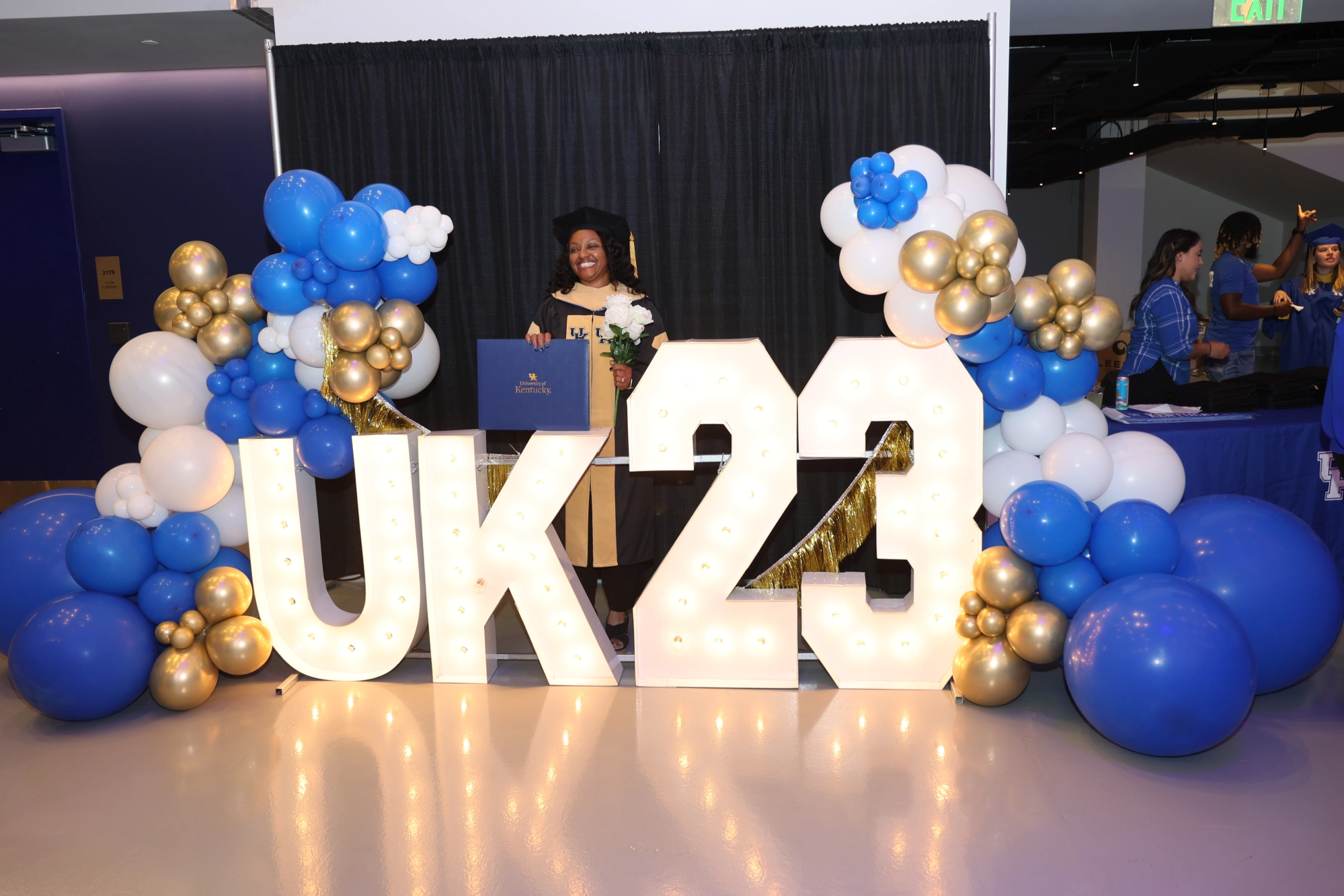
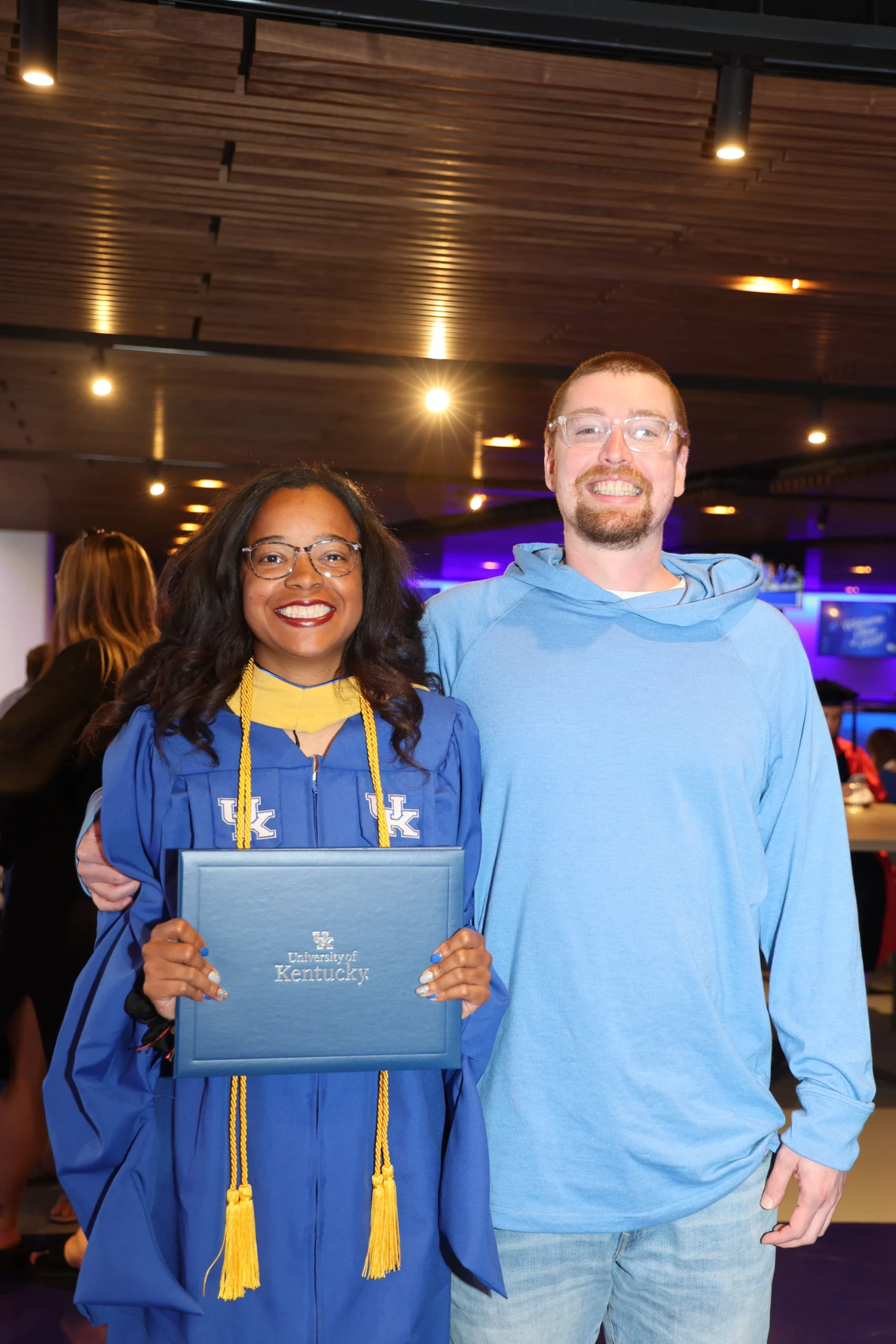
The op-ed below was written by Vest, who graduated with her master’s degree in social work from the UK College of Social Work on Friday, May 5. 

May is National Foster Care Month. According to the Cabinet for Health and Family Services, Kentucky has over 8,500 children in out-of-home care. Nationally, there are nearly 400,000 children involved in the child welfare system currently. There are even more alumni of care, like myself, which means there are many children who may find themselves at odds when making the choice to pursue higher education. 

Pursuing higher education as a foster alum can be quite intimidating. For individuals aging out of foster care, resources such as finances, housing, mental health, and relational support are scarce. It makes it difficult to navigate and succeed in post-secondary education without these. 

When I started college, I also struggled without some of these resources. I did not have transportation, and I struggled with financial instability, mental health challenges and a lack of relational support. 

Luckily, there are programs available in Kentucky that support foster youth and alumni on their educational pursuits.

Financially, I was saved by Kentucky’s Foster and Adoptive Tuition Waiver which helped pay for my college education. As an advocate, I even worked to amend this piece of legislation and was able to cover my graduate expenses as well. I was also able to utilize the Educational Training Voucher as a financial supplement. The University of Kentucky Financial Aid Office Staff made renewing my tuition waiver simple and easily accessible. 

The University of Kentucky College of Social Work also has excellent staff who are knowledgeable on the importance of self care and taking care of mental health. Coupled with their free student health care and counseling services, I found myself well-supported when I attended school on campus and throughout the COVID-19 pandemic.

After graduating with my bachelor’s degree in 2020, I decided to return to the College of Social Work for a master’s degree. I went through the completely-online MSW program. I expected to feel less connected since I chose an online option, however, that was not the case. The faculty members were great — they would email opportunities to get involved and keep me up-to-date on the latest information and requirements for my educational journey.

Less than 10% of foster youth pursue higher education and of that 10%, only 3% will graduate with a four-year degree. Less than 1% will graduate with a master’s or higher. As a community, we can change that statistic. If you are a foster youth or alumni and considering higher education, I encourage you to research your options and resources because there are so many within the state of Kentucky and nationally. 

If you are a member of the community, here are some ways you can support foster youth who are pursuing post-secondary education:

  • Offer rides to and from classes.
  • Offer to help them obtain their driver’s license.
  • Be someone they can talk to about challenges.
  • Send them gift cards for food.
  • Attend their special events.
  • Help them set up their dorm/apartment.
  • Help them get connected with community groups and activities.