
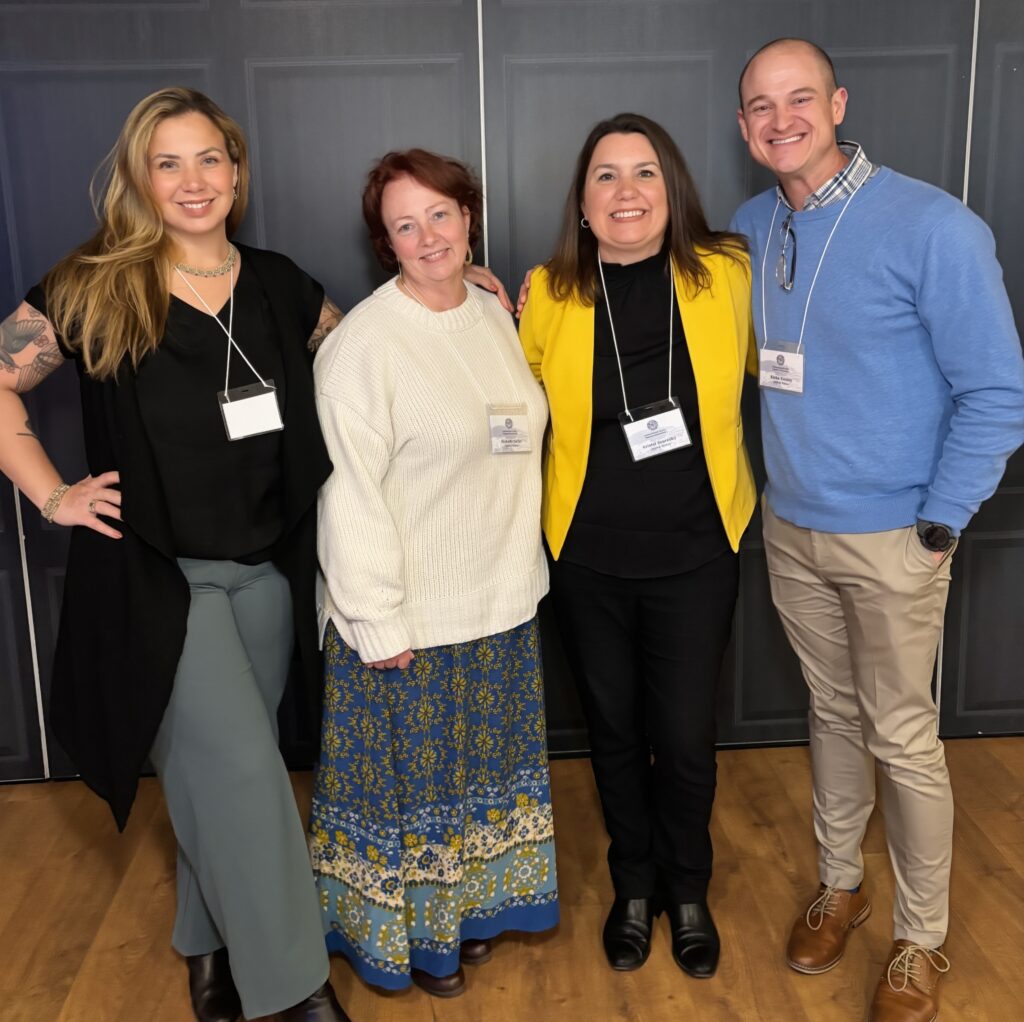
From left to right: Priscila Llamosa, Michelle Keller, Kristel Scoresby and Blake Conley.



LEXINGTON, Ky. — Faculty and students from the University of Kentucky College of Social Work (CoSW) shared research and practice innovations with a global audience at the International Family Therapy Association annual conference in Norway, highlighting the college’s growing international presence in family therapy.
Among the researchers representing CoSW were Kristel Scoresby, Priscila Llamosa, Michelle Keller, and doctoral student Blake Conley.
“This conference created space for meaningful exchange across cultures, disciplines and practice settings,” Llamosa said. “It’s an opportunity to not only share our work, but to learn from others who are advancing more inclusive and responsive approaches to care.”
Llamosa’s presentation, “Navigating Difference Through Identity-Conscious Practice,” explores how identity mismatches between therapists and clients can create relational challenges and limit engagement. Drawing on the Identity-Conscious Psychotherapy Framework, the session outlined strategies such as reflexivity, trauma-informed care and cultural humility to advance more successful therapeutic practices.
In a second presentation with Keller, the duo explored mental health needs among refugee populations following resettlement. Their session emphasized the need for culturally responsive assessment and treatment protocols while identifying opportunities to strengthen support systems for displaced individuals and families.
Poster presentations expanded on these themes. Llamosa’s research reframed traditional notions of “resistance” in therapy, positioning client behaviors as protective responses rooted in cultural knowledge systems. In collaboration with Scoresby, she also presented on Universal Design principles in family therapy, offering practical strategies to create more accessible and inclusive environments for clients with disabilities.
Scoresby and Conley contributed additional work focused on the integration of artificial intelligence in therapy education. Their presentations examined how AI tools can enhance training for emerging clinicians through simulation, feedback and case-based learning, while emphasizing the need to maintain ethical oversight and human-centered practice.
The group’s collective presence at the conference reflects the CoSW’s ongoing commitment to contributing to the global research landscape and advancing social work education and practice in ways that improve the human condition for all.