SEARCH RESULTS FOR:

Search Results

Social Work alum earns global Rotary honor for leadership in youth mental health

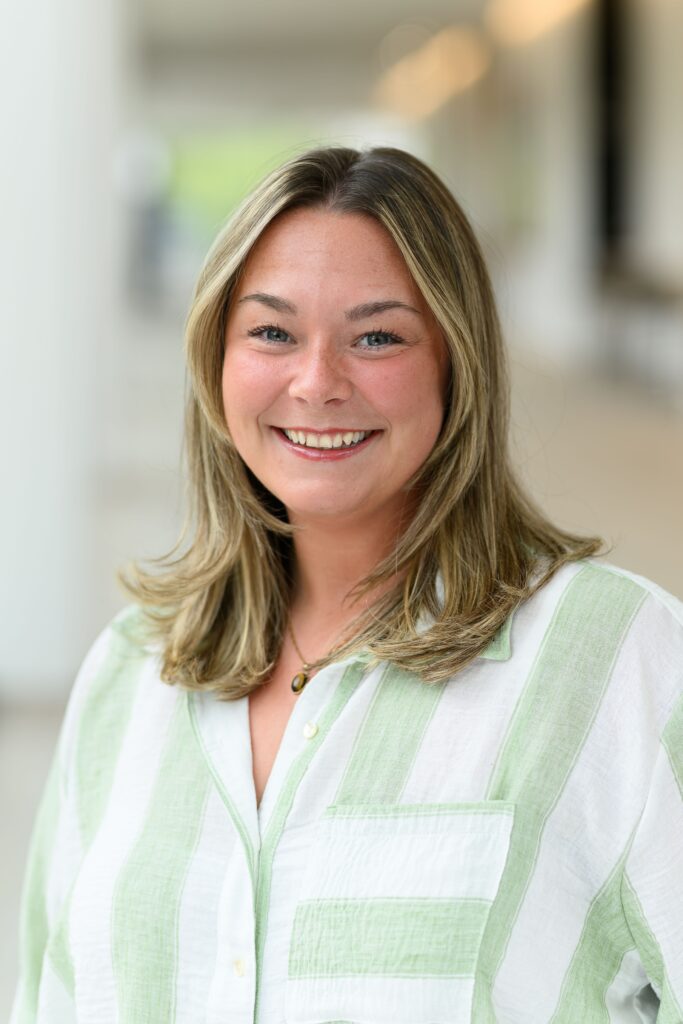
LEXINGTON, Ky. — For Olivia Raley, social work has become a powerful platform for community healing, education and connection. 

Early in her career, Raley was among the first cohort of social workers embedded within police departments across Kentucky. At the Bardstown Police Department, she and her therapy dog, Maverick, provide critical support in moments of crisis—helping individuals and families access immediate care and connect with essential community resources. 

In addition to her work in community policing, Raley serves as a board member for Kentucky Voices for Health, is an active member of the Rotary Club of Bardstown and was named a recipient of the University of Kentucky’s Sarah Bennett Holmes “30 Under 30” award. Across each of these roles, her work continues to center on making mental health resources more visible, accessible and community-led. 

Through her significant involvement in the Yellow Tulip Project of Nelson County, Raley has contributed to expanding opportunities for youth to engage in mental health awareness and advocacy. Youth across several schools have participated in week-long, dedicated mental health awareness activities through Family Resource and Youth Services Centers, as well as hands-on workshops such as planting Hope Gardens – learning how to advocate for mental health while building community connection. 

Several schools and community organizations have also participated in a county-wide scavenger hunt designed to bring families together, encourage conversations around mental health and connect participants with local resources through Tri-County Kentucky United Way’s Credible Minds platform. These efforts have been complemented by educational materials and peer-led advocacy opportunities that continue to expand the project’s reach. 

The Nelson County initiative builds on the broader mission of the national Yellow Tulip Project, which was founded after a teenager, Julia Hansen, sought to break down stigma surrounding mental health and create spaces where young people feel supported in seeking help. That vision has since taken root locally through a strong network of community partners. 

Key collaborators in Nelson County include Tri-County Kentucky United Way, Lincoln Trail District Health Department, the Department for Community Based Services, Family Resource and Youth Services Centers, WellCare and Lemon Aid Mental Health Services – each contributing to the initiative’s growth and impact. 

Recently, Raley was named one of Rotary International’s “Champions of Tomorrow,” a global distinction recognizing six young leaders worldwide who are driving meaningful change. She was the only recipient selected from the United States in 2026. 

What began as a local effort has evolved into a collaborative model for community-based mental health support that prioritizes prevention, partnership and long-term impact. 

Raley’s work has also been recognized close to home. In addition to her national Rotary honor, she was celebrated during the College of Social Work’s Annual Recognition Celebration with the “Rising Star Award” which recognizes recent alumni who are already making exceptional contributions in their field and who personify the principles and values of their profession. 

For Raley, the recognition is not about individual achievement, but about collective progress. 

As the Yellow Tulip Project continues to grow, so does its potential to influence how communities approach youth mental health by offering a model grounded in partnership, connection and care. 

Social Work faculty, students present at International Family Therapy Association in Norway 

LEXINGTON, Ky. — Faculty and students from the University of Kentucky College of Social Work (CoSW) shared research and practice innovations with a global audience at the International Family Therapy Association annual conference in Norway, highlighting the college’s growing international presence in family therapy. 

Among the researchers representing CoSW were Kristel Scoresby, Priscila Llamosa, Michelle Keller, and doctoral student Blake Conley.

“This conference created space for meaningful exchange across cultures, disciplines and practice settings,” Llamosa said. “It’s an opportunity to not only share our work, but to learn from others who are advancing more inclusive and responsive approaches to care.” 

Llamosa’s presentation, “Navigating Difference Through Identity-Conscious Practice,” explores how identity mismatches between therapists and clients can create relational challenges and limit engagement. Drawing on the Identity-Conscious Psychotherapy Framework, the session outlined strategies such as reflexivity, trauma-informed care and cultural humility to advance more successful therapeutic practices. 

In a second presentation with Keller, the duo explored mental health needs among refugee populations following resettlement. Their session emphasized the need for culturally responsive assessment and treatment protocols while identifying opportunities to strengthen support systems for displaced individuals and families. 

Poster presentations expanded on these themes. Llamosa’s research reframed traditional notions of “resistance” in therapy, positioning client behaviors as protective responses rooted in cultural knowledge systems. In collaboration with Scoresby, she also presented on Universal Design principles in family therapy, offering practical strategies to create more accessible and inclusive environments for clients with disabilities. 

Scoresby and Conley contributed additional work focused on the integration of artificial intelligence in therapy education. Their presentations examined how AI tools can enhance training for emerging clinicians through simulation, feedback and case-based learning, while emphasizing the need to maintain ethical oversight and human-centered practice. 

The group’s collective presence at the conference reflects the CoSW’s ongoing commitment to contributing to the global research landscape and advancing social work education and practice in ways that improve the human condition for all.

Appalachian roots shape Holden Dillman’s path to a Ph.D. in social work 

LEXINGTON, Ky. — On May 8, 2026, Holden Dillman will cross the Commencement stage at the University of Kentucky, earning his Ph.D. in Social Work. His next chapter will keep him rooted in Kentucky, where he has accepted a faculty appointment in the psychology department at Transylvania University beginning in fall 2026. 

A licensed clinical social worker (LCSW) and 2025–2026 DREAM Scholar through the University of Kentucky Center for Clinical and Translational Science, Dillman’s work centers on the experiences of sexual and gender minority (SGM) young people in Appalachian communities. 

His research explores the intersections of identity, resilience and mental health, with a focus on elevating community-informed approaches to care and support. Through his dissertation project, “We Are Here,” Dillman examines how mental health, identity, caregiving and place shape both distress and resilience among SGM emerging and early adults in Appalachia. 

“My experience in the Ph.D. program at the College of Social Work has been deeply formative, both personally and professionally,” Dillman said. “The program has helped me see scholarship not as something separate from practice, but as another way of listening, witnessing and working toward change.” 

The project includes multiple studies, combining quantitative and qualitative approaches to better understand the lived experiences of SGM individuals across Appalachian contexts. Together, the work explores themes of mental distress, self-worth, belonging, caregiving and relational support, offering a more nuanced understanding of how individuals navigate both harm and resilience. 

Dillman said his research aims to shift the narrative around Appalachian and LGBTQ+ communities. 

“So much research about Appalachia has focused on deficits, and so much research about LGBTQ+ young people has focused on risk,” he said. “I wanted my work to also ask: Where do people find safety? How do people create belonging in places where they may have also experienced harm?” 

His contributions to Appalachian-focused research have been recognized with the 2025 James S. Brown Graduate Student Award for Research on Appalachia and the 2026 UK Appalachian Center Eller & Billings Student Research Award. 

“I am the first person in both my maternal and paternal family lines to receive a doctoral degree, and I hold that with a lot of gratitude and humility,” he said. “This accomplishment is not mine alone—it reflects the love, labor and sacrifices of the people who came before me.” 

Natalie Pope, director of the College of Social Work Ph.D. program, said Dillman’s impact extends beyond his research. 

“As a student, Holden has been such a steady presence among his colleagues and faculty he’s worked with,” Pope said. “We are so grateful to have worked alongside him and are glad that he’ll be right down the road at Transylvania University.” 

In addition to his academic work, Dillman brings a holistic perspective to his research, drawing on his background as a certified yoga teacher (CYT-200) and his experience in integrative mental health practice. 

Dillman said he hopes his work contributes not only to scholarship, but to recognition and belonging. 

“For SGM young people in Appalachia, I hope this work says: your experiences matter, your stories belong in research, and you are not invisible.” 

Portrait of Holden provided by Erica Chambers Photography.

‘Always the dream’: Shawn Hunter finds his path in social work at the University of Kentucky

LEXINGTON, Ky. — For Shawn Hunter, attending the University of Kentucky was more than just a personal goal – it was “always the dream”.

After earning his GED in 2022 and starting college the same year, Hunter will graduate on Friday, May 8, 2026 Summa Cum Laude with a bachelor’s degree in social work and continue directly into the College of Social Works’ Accelerated Master of Social Work program this fall.

The road to this milestone in Hunter’s life has been shaped by incredible resilience.

“I have faced many adversities in my life,” Hunter shared. “Since I was 14, I’ve been managing a chronic illness. Growing up, I was severely bullied for being sick and for my sexuality.”

Hunter learned early how quickly isolation can shape a person’s sense of self. He navigated the physical toll of chronic illness alongside emotional weight of bullying and feeling misunderstood. Later, the sudden deaths of both his brother and father altered the course of his life once again.

But those experiences sharpened his sense of empathy and his drive to help others.

“The trying times in my life helped me develop empathy toward others,” he said. “They instilled in me an unwavering passion for achieving success and helping others realize their full potential.”

As a nontraditional student, Hunter admits he initially felt intimidated entering higher education. But that uncertainty dissolved as he began to build relationships with students and faculty that strengthened his sense of self and purpose.

Hunter credits Dr. Shelita Jackson, director of the BASW program, as one of the most influential mentors in his journey.

“Her commitment to student learning and support helped me see my full potential and achieve things I didn’t think were possible,” he said.

Through the Accelerated Master’s Pathway, Hunter began taking graduate-level coursework while completing his undergraduate degree, building momentum toward a career rooted in service and advocacy.

“Social work feels like a path where I can turn what I’ve been through into something meaningful,” Hunter said.

Since arriving at UK, Hunter has earned a place on the dean’s list, maintained a 4.0 GPA and was inducted into the Honor Society of Phi Kappa Phi.

In 2025, he was named the College of Social Work’s Outstanding Undergraduate Student — an honor he describes as deeply meaningful.

“To have my hard work recognized by a place I feel so passionate about meant everything,” he said.

Hunter is also a recipient of the Virginia Marsh Bell Scholarship, which he said affirmed both his dedication and his place within the College.

For Hunter, those moments of recognition and hard work have continued to reinforce his commitment to serving others.

That commitment took shape through his practicum work at Ashland Terrace, an independent living community for women. The experience not only strengthened his clinical skills but deepened his passion for working with aging populations and individuals navigating complex health challenges.

Hunter’s next practicum placement will be with the University of Kentucky HealthCare Psychiatry and Trauma Surgery Departments, where he will serve for two semesters as he completes his MSW along with a Clinical Social Work (CSW) certificate.

“I know what it’s like to face the challenges of a disease,” he said. “That perspective allows me to approach others with respect, compassion and a genuine desire to help.”

This fall, Hunter will continue his education in the University of Kentucky’s Master of Social Work program, building on the foundation he has already established through the Accelerated Master’s Pathway.

With a future centered on advocacy, service and supporting others through life’s difficult moments, he remains grounded in the experiences that brought him here.

“I want to help people find the support they need and promote their wellbeing,” he said.

From case management to clinical care: MSW graduate Johnny Nantz builds a path toward holistic healing 

LEXINGTON, Ky. — For Johnny Nantz, the path to earning his second graduate degree wasn’t about starting—it was about going deeper. 

Already holding a master’s degree in psychology, Nantz was working as a case manager when he began to see the limits of focusing solely on individual behavior and expand his desire for a broader perspective. 

“I saw clients who needed more than psychological support,” Nantz said. “They needed someone who could help them navigate complex systems, access services and address underlying issues that were impacted their health and wellbeing.” 

With a strong foundation in mental health, Nantz chose UK’s Online Master of Social Work program to expand his clinical skills. 

“I wanted additional training that would allow me to continue working and providing therapy,” Nantz said. “The program’s flexibility gave me that opportunity, while also expanding my perspective in areas like policy, ethics, and clinical practice.”  

Nantz is also the first healthcare fellow from Mountain Comprehensive Health Corporation to graduate since the partnership with the University of Kentucky College of Social Work launched in fall 2024. Created to strengthen workforce pipelines and expand access to behavioral health care in rural communities, the partnership provides tuition support for fellows pursuing advanced social work education. Through the initiative, professionals like Nantz are able to continue serving their communities through MCHC while building the clinical skills needed to address growing behavioral health needs across Eastern Kentucky.

For Nantz, practicum was particularly impactful. It allowed him to integrate his background in psychology with his social work training, helping him begin to shape his clinical identity.  

“Practicum reinforced that I am moving in the right direction professionally,” Nantz said. “I was especially proud to apply both my psychology background and social work training to support my clients.” 

Now graduating from the program, Nantz is focused on what comes next: continuing to build his clinical experience and working toward becoming a Licensed Clinical Social Worker. 

“I’m motivated by the opportunity to help people create meaningful change in their lives,” he said. “Whether it’s through therapy or connecting someone to the right resources, being part of that process is what drives me.”