SEARCH RESULTS FOR:

Search Results

Beyond the Crown: Ariana Rodriguez’s journey to Miss Kentucky

LEXINGTON, Ky. – For many, competing in the Miss Kentucky Scholarship Pageant would be a dream come true. For University of Kentucky College of Social Work (CoSW) student Ariana Rodriguez, it has enabled her to pursue a higher education and kickstart her non-profit. 

Rodriguez, a sophomore earning her bachelor’s in social work and psychology, entered the foster care system at 12 years old and became homeless at the age of 16. Throughout this journey, Rodriguez was able to participate in the Miss America Opportunity, competing in Miss Kentucky’s Teen as a senior in high school and earning the title of Miss Lexington in April 2024. Rodriguez most recently competed in the Miss Kentucky pageant this June, earning the Miss Spirt of Kentucky award and a talent award, receiving almost $1,000 in scholarships. 

Studies have found that just three to four percent of former foster youth obtain a four-year college degree and between two and six percent receive a two-year degree. Earning scholarships to pursue a college degree was initially why Rodriguez began competing, but she has continued for the numerous opportunities, especially for her service organization, within the Miss America program. 

Ariana Rodriguez - The Lucky Ones service initative

“All of the competitors have a community service initiative, that’s how my non-profit, The Lucky Ones, originated. It started as the community service initiative within the pageant and expanded from there,” Rodriguez said. 

The Lucky Ones is a service organization focused on providing transition-aged foster children in Northern Kentucky with a suitcase containing a toothbrush, toothpaste, floss, soap, first aid kit, and a handwritten note.  Most children, Rodriguez mentioned from experience, are only given a trash bag when they enter the system, an experience that is dehumanizing and sets the tone from the moment children enter care, that they are not worthy.  

For Rodriguez, her non-profit and time competing in the Miss America Opportunity has been deeply personal. 

I was once given that trash bag in the foster care system and this experience has been really special to me,” Rodriguez said. “I have loved the Miss America opportunity; it’s been life changing. Coming from the background of foster care, I have been able to change the trajectory of my life and be able to experience new things and meet passionate, intelligent women from across the country.” 

Rodriguez’s favorite part of the competition is the talent portion. During this year’s Miss Kentucky pageant, she sang Whitney Houston’s “I Didn’t Know My Own Strength,” a song that has inspired her to stay hopeful and resilient throughout her life. 

“That song means so much to me because I really didn’t know my own strength. I was in a hard situation and singing is one of the things that got me through,” Rodriguez said. “No matter what happened in my life, I always knew that I was going to be able to sing. To be able to do that in front of thousands of people at the pageant, on live television, was amazing.” 

As a CoSW student, Rodriguez has been able to reach out to her professors and talk about her experience in foster care and amplify the voices of foster alumni, to teach the next generation of social workers those perspectives. She has also been working with Dean Jay Miller, who is also a foster alum. 

“To see his success and to know that he also grew up in foster care has been really inspiring to me,” Rodriguez said. “Before meeting Dean Miller, I had never met another foster alum who had created such a successful life for themselves. Having him help me with my non-profit and personal branding has been great and to be able to get to know him as a person has been an enlightening experience.” 

Using those experiences within the foster care system has given Rodriguez a unique perspective and she understands that her perspective determines how she sees the world. Regardless of their situation, people have the power to do whatever they want with their life. 

“I could have given up so easily. To be able to rise up from my circumstances has taught me a lot,” Rodriguez said. “If you would have told me at 12 years old that I would be competing for Miss Kentucky, I would have laughed. No matter what you’ve been through, you have the power to control your own destiny. No one will be able to take that away from you, and I’ve been able to teach other children that through the Miss America Opportunity.” 

If you are interested in learning more or supporting The Lucky Ones, please reach out to ariana.rodriguez@uky.edu. 
START program gains national attention from the Administration for Children and Families

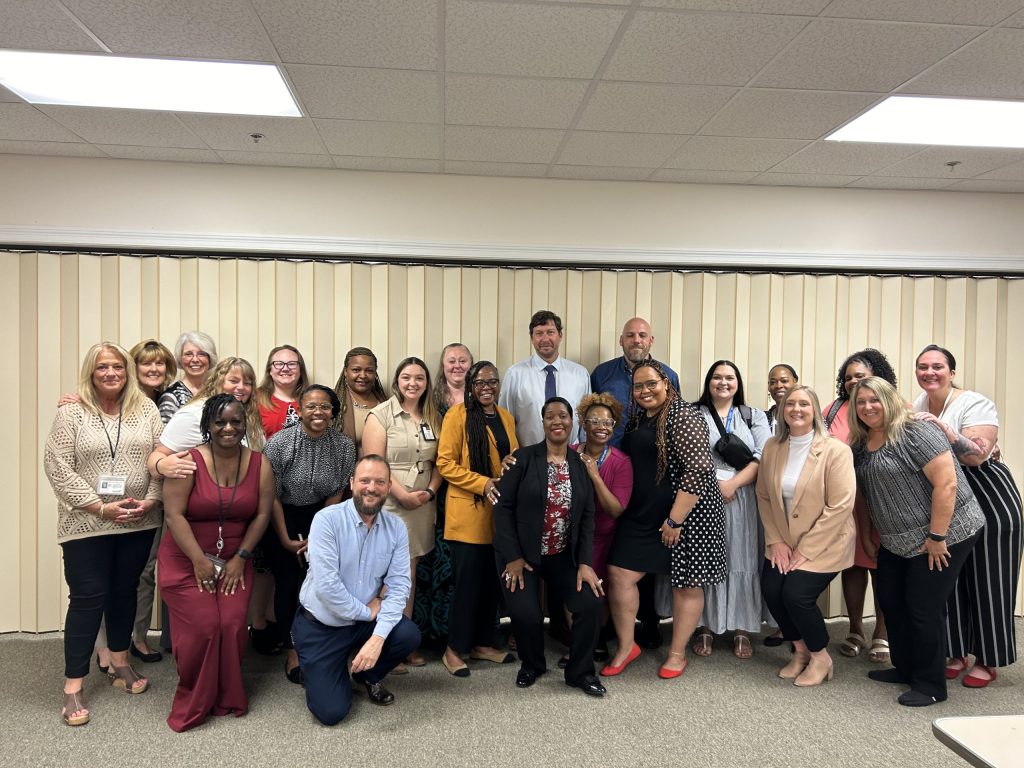
COVINGTON, Ky.The Sobriety Treatment and Recovery Teams (START) in the Kentucky Department for Community Based Services (DCBS) and supported by the UK College of Social Work (CoSW), had the opportunity to meet with members of the Administration for Children and Families (ACF) at the Kenton County DCBS this summer.

Jeff Hild, Principal Deputy Assistant Secretary, and members of his staff, as well as START Director John Lewis, START Clinical Director Kathy Kleier-Coates, and START Assistant Director Felicita Quinones were in attendance. START family mentors and families impacted by START were also involved in the round-table discussion with ACF, as ACF is learning from how START utilizes prevention services and Title-IV-E federal funding to prevent child removal.

START pairs child protective services (CPS) workers trained in family engagement with family mentors (peer support employees in long-term recovery) using a system-of-care and team decision-making approach with families, treatment providers and the courts.

Essential elements of the model include quick entry to START services to safely maintain child placement in the home when possible and rapid access to intensive addiction/mental health assessment and treatment. 

“Empowering families and giving them autonomy while connecting them with the resources they need is our biggest priority at START,” Lewis said. “The phrase ‘no decision about me without me’ is something we continue to utilize in our program.”

Recently, START achieved certification as local START affiliates by the National Sobriety Treatment and Recovery Teams Training and Technical Assistance Program at Children and Family Futures.  

This prestigious designation, which marks a three-year certification period, acknowledges the programs’ dedication to collaborative and early intervention approaches for families at higher risk of child abuse and neglect due to parental substance misuse.

This achievement of being certified as official START providers is a testament to Kentucky’s role as a pioneer in the START model’s implementation and serves as a model for the Nation. ACF staff members were able to learn more about the program, as well as hear a testimony from a mother who stated that START changed her life.

“START gave me a chance and never gave up on me,” the START participant said. “START was there for me and reminded me that I am not alone. Today, I have my life back.  I am proud of me today.”

The proof is also in the numbers with START, as Women in START have higher rates of sobriety than their non-START child welfare-involved counterparts (66 percent vs. 36 percent). Children in START are 50 percent less likely to enter out-of-home placements than children from a matched comparison group.

As START continues to be an impactful program across Kentucky and the United States, the program continues to stick to its values and hopes to help more families struggling with substance misuse. For more information about START, please visit the START website.

Social Work’s Levone Lee presents at Alliance of Social Workers in Sports 10th Annual Symposium

UNION, N.J. – Earlier this summer, members of the University of Kentucky College of Social Work’s (CoSW) Sport Social Work Research Lab attended the Alliance of Social Workers in Sports (ASWIS) 10th Annual Symposium. Among those attendees was Ph.D. student Levone Lee, who presented his research at the symposium, marking Lee’s first solo presentation.

ASWIS has been at the forefront of integrating social work principles into sports, promoting the well-being of athletes and supporting professionals who work in the industry.  Lee, a researcher in the Sport Social Work Research Lab, presented his study on examining collegiate student-athlete’s comfortability in discussing mental health.

The study focused on the preferences of student-athletes when talking about mental health issues to different social agents like their coaches, teammates, athletic trainers, and mental health professionals.

“In the past, athletes would typically go to their athletic trainers and their coaches more when discussing mental health,” Lee said. “In this study, we found that student-athletes now feel most comfortable discussing their mental health with their teammates and mental health professionals.”

This is due, in part, to new National Collegiate Athletic Association (NCAA) governance that was passed in 2022.  Under the NCAA constitution adopted in January 2022, each Division I member school must facilitate an environment that reinforces physical and mental health within athletics by ensuring access to appropriate resources and open engagement with respect to physical and mental health. Because of this higher exposure to mental health professionals, student-athletes feel more comfortable talking about mental health issues with them.

Lee credits the supportive environment within the CoSW and Sport Social Work Research Lab, as well as the mentorship of Dr. Tarkington Newman, director of the Sport Social Work Research Lab, with the opportunity and platform to pursue his research and build relationships with researchers in the sport social work field.

The intersection of sports and social work has been a passion for Lee, and a unique opportunity to help focus on an athletes’ well-being on and off the playing field.

“Not only are they athletes, but they are also human beings. Their mental health matters,” Lee said. “Their mental health not only affects their performances, but it affects their lifelong happiness. If there are mental health problems that aren’t addressed, especially for young athletes, that will change the trajectory of their life and affect their overall well-being.”

As the sport social work field continues to grow, Lee’s goal is to help others understand that sport social work is important because it’s not just focused on the performance of the athlete. Social workers can help get to the root of the presenting problem, such as generalized anxiety, and address it, which may lead to improved performance.

“We are looking to find positive approaches to address mental health issues within athletes because we do research in theory, but we also want to amplify the practical applications of our research,” Lee said. “We want our research to apply to athletes in the real-world.”

Meeting caregivers where they are: Kentucky Kinship Resource Center expands program

LEXINGTON, Ky. (July 1, 2024) – The Kentucky Kinship Resource Center (KKRC) at the University of Kentucky College of Social Work (CoSW) is expanding, the College announced on July 1. The KKRC will now serve all caregivers, whether they have custody, are fostering, or are caretaking for a family member or friend’s child.

Across the nation, nearly 2.7 million young people are being raised by a relative. This care arrangement, referred to as kinship care, is necessary when parents are unable to safely care for children in their home. It is estimated that Kentucky has one of the highest rates of kinship care in the country. Kinship care also includes fictive kin care, which is a child being cared for by a close family friend.

To support kinship caregivers, the CoSW launched the KKRC in March of 2020. The KKRC provides a continuum of services to meet the unique needs of kinship providers across the Commonwealth, including one-on-one peer support, support groups, and online webinars and trainings.

“We conceptualized and launched KKRC for a singular purpose: to meet the needs of kin caregivers in Kentucky,” Jay Miller, dean of the CoSW, said. “This center was the first of its kind in our state, and we are extremely excited to be able to serve kinship caregivers in an innovative way.”

Prior to expansion, the KKRC programs offered services to individuals who were caring for children they may or may not have had custody of. Now, the KKRC programs will be offered to all kinship caregivers in Kentucky, regardless custodial status, including kinship foster situations.

“The KKRC is designed to provide a strong social support network easily accessible by participants in times of need,” Missy Segress, director of centers and labs in the CoSW, said. “Through our innovative partnership with the Kentucky Cabinet for Health and Family Services, we have implemented a program that reduces the risk of placement instability among kinship providers and improves the quality of care provided. With this program expansion, we are able to provide these services to even more families across the Commonwealth.”

Creating a safe, supportive community for kinship caregivers is one of the main goals at the KKRC and with the expansion, the foster care side of the kinship population will be integrated into the program, allowing for more resource sharing and community building.

“The relational dynamics and complexities of kinship care can be difficult for caregivers to navigate, regardless of whether a caregiver has custody or not,” Sheila Rentfrow, KKRC Director, said. “Being able to expand the kinship programs at the KKRC will provide opportunities for caregivers to connect with other kinship caregivers and receive vital support no matter where they are in their kinship journey.” 

The Peer Support Specialists and group facilitators, all of whom have lived experience as a kinship caregiver themselves, have played a large role in the success of the KKRC and will play an even bigger part in the expansion.

“Our peer supporters and small group facilitators have been amazing people to work with. They are passionate about using their lived experiences in kinship care to serve and connect kinship families with needed resources and assistance,” Rentfrow said. “With this type of expansion, we’ll be able to offer more support services, utilizing more program leaders with lived kinship experience, including hiring more peer supporters and small group leaders that will allow us to serve more of Kentucky’s kinship families.”

With more kinship-experienced program leaders, the KKRC will be able to provide an array of services to include more individualized peer support, a variety of small group experiences, and more training opportunities. This expansion will offer kinship families in Kentucky the ability to connect with more resources, support, and community as they navigate their unique kinship journey.

Reports have shown that the KKRC has increased caregiving capacity, reduced stress, and offered increased stability to Kentucky families. In 2023, the KKRC was nationally recognized and named “Parent Group of the Year” by the North American Council on Adoptable Children (NACAC). The award is designed to honor parent associations and groups for their excellence in supporting adoptive, foster and kinship families. 

More recently, KY-KINS was approved to certify kinship peer supporters, in accordance with Kentucky law. The program is recognized as meeting state certification requirements — allowing KKRC to address critical workforce and behavioral health needs in Kentucky.

For many like Jessica Adkins, who in addition to being a kinship caregiver is a Certified Kinship Peer Supporter, programs like the KKRC can have a significant impact on kinship caregivers – and the young people in their care.   

“As a kinship caregiver, I wasn’t able to access programs like KKRC,” explained Adkins. “For many of our caregivers, it is such a relief to know they are not alone. To know that they are heard. To know that there is help. That is what the KKRC is all about.” 

To learn more about KKRC, or if you are a kin caregiver in need of support, email kinship@uky.edu.

UK Social Work travels to Ireland and Northern Ireland for Education Abroad trip

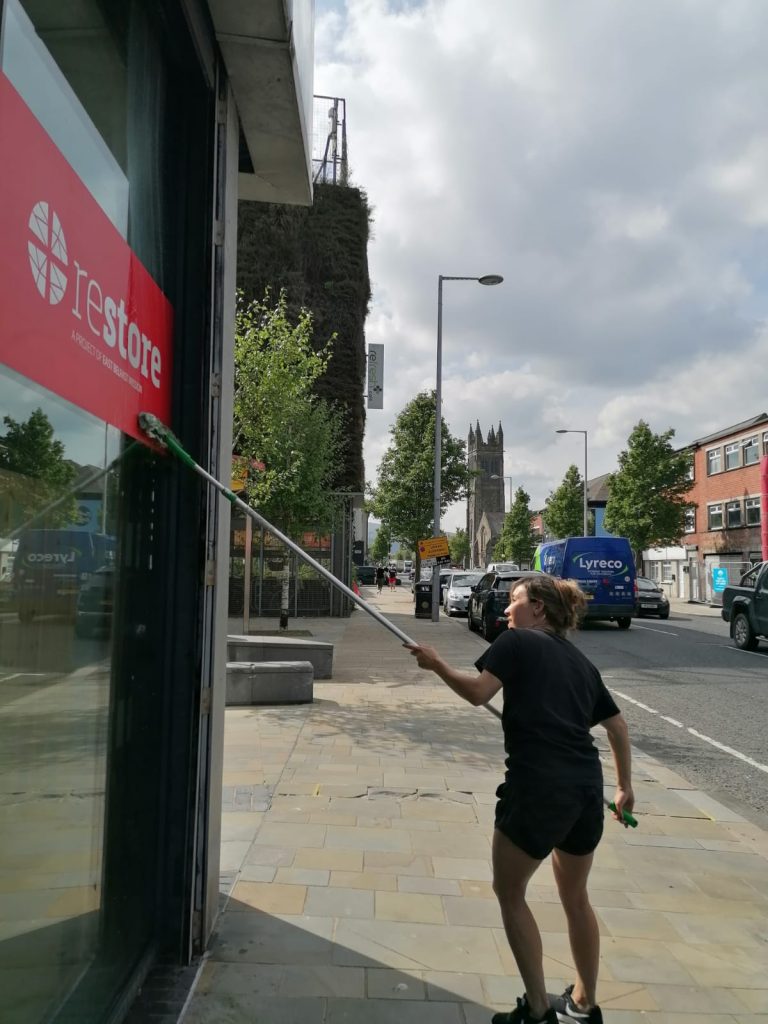
LEXINGTON, Ky.– Experiencing education in a global context, students and professors from the University of Kentucky College of Social Work (CoSW) embarked on an enlightening journey to Ireland and Northern Ireland this May. This education abroad trip, renowned for its ability to expand students’ understanding of their field through immersive cultural experiences, saw the group exploring Belfast and Derry in Northern Ireland, as well as Dublin, Ireland.

During this transformative 10-day trip, participants engaged in hands-on learning, observing community activism and social work practices firsthand. These experiences are instrumental in developing a broader worldview and enhancing both academic and professional prospects.

“This kind of education abroad experience increases students’ cultural adaptability, helps foster international awareness and concern, as well as exposes them to social work practice on an international level,” Dr. Natalie Pope, associate professor and PhD Program Director at the CoSW, said.

Pope, along with assistant professor Dr. Aubrey Jones, facilitated the trip that included undergraduate students, as well as Master of Social Work (MSW) students. The CoSW group shared many different experiences while abroad, including volunteering at the East Belfast Mission, visiting the Clonard Monastery, and learning about the Bloody Sunday massacre.

Students had the opportunity to visit the peace walls in Belfast, participate in a formal tea service, and take part in a self-care for trauma healing session at the Glencree Centre for Peace and Reconciliation.

Traveling outside of the United States for the first time, Alison Calnan, a 2024 MSW grad, said that her favorite part of the trip was meeting with Jon McCourt, a former IRA member and now peace activist in Derry, Northern Ireland.

“Walking with Jon clarified a humble perspective of working with polarized communities, as he exemplifies a story of lived trauma and transformation,” Calnan said. “Jon stated that there is more that is unified in human experiences between Catholics and Protestants, but ‘we allow those outside of us to tell us differently.’  I gained that in a sense, we humanize these forced divisions, on both sides, truly losing our humanity in stride to resolve the discomfort they cause.”

A sense of connection and understanding of different cultures was a big part of the trip, as well as being exposed to more community-level work and peace building that can be done to unite people.

“I hope this group of students feel more connected to the UK CoSW, given that most of them were online, remote students. I hope they fell in love with traveling abroad and learned about the lived experiences of people in a completely different part of the world,” Pope said.

Experiencing social work in a real-world setting, instead of in a classroom, was an impactful part of Calnan’s experience abroad.

“The overall experience was really cool. What’s great about education abroad is that it gives life to the things you’re learning, and it becomes real and tangible. Being able to interact with people in their communities was powerful,” Calnan said.  “I saw a lot of social work, whether by people in the field or not, that embraced the core values of practice and implemented them in a fashion that epitomized the true roots of social work in the United States,” Calnan said.

Northeastern Citizen Review Panel Hosts Overdose Response and Resource Event

ARGILLITE, Ky. – Earlier this spring, the Northeastern Citizen Review Panel (CRP) hosted an overdose response and resource event at the Argillite Community Service Center in Argillite, Ky. Argillite is an unincorporated community in Greenup County, on the eastern side of the state.

The Northeastern CRP, a group of volunteers that strive to improve child welfare in their community, offered the event to combat increasing overdoses and a lack of resources in their area. Over 250 members of the community attended the event.

The event brought together several community partners to provide information and on-site services, including free medical and wellness screenings. Partners included King’s Daughter Medical, KY-Moms, Pathways and Pathways to Go, the Greenup County Health Department, Porchlight Sexual Assault Resource Center, Aetna, Passport Health Plan, KYNECT, Northeast Head Start, Ramey Estep Re-Group, Greenup County Ambulance Authority, Greenup County Sheriff, and the Greenup County Bookmobile.

In addition to the wellness checks, the event featured free Narcan and training, giveaways, and activities for children. Food was provided by the Northeastern CRP and cooked by local vendors Roy Imel Catering and One Stop Grocery Store. The event also featured live music by Kentucky Memories. Attendees had the opportunity to eat lunch, listen to bluegrass music, and visit the many community partner booths.

The overdose response and resource event also served as the kickoff for the new Argillite Community Service Center, a non-profit organization that plans to offer services year-round. They plan to have a food bank, clothing drive, wellness checks, and more. The Northeastern CRP partnered with the board of the community center to make this event possible, as many board members are also CRP members.

Moving forward, the Northeastern CRP hopes to give back to their region next year. At the event, they conducted a needs assessment, which will guide future efforts. The panel remains passionate about helping all members of their community with compassion and understanding.

Kentucky has nine regional Citizen Review Panels across the state. The Northeastern panel covers fifteen counties, including Bath, Bracken, Boyd, Carter, Elliott, Fleming, Greenup, Lawrence, Lewis, Mason, Menifee, Montgomery, Morgan, Robertson, and Rowan Counties. Kentucky’s CRPs are coordinated by staff at the University of Kentucky’s College of Social Work.

For more information and to join your local CRP, visit the CRP website.

National Foster Care Month: CoSW Professor works to increase positive youth outcomes in the child welfare systems

LEXINGTON, Ky. – Improving outcomes within the child welfare system is what brought Taylor Dowdy-Hazlett, assistant professor at the University of Kentucky College of Social Work, to Lexington. Focusing on positive youth outcomes, Dowdy-Hazlett continues to further her research to cultivate a better system for foster children.

Dowdy-Hazlett comes to the CoSW with a wealth of experience in the child welfare field, earning her Bachelor and Master of Social Work, as well as her PhD. She has also worked for the Department for Community Based Services and in residential treatment and clinical therapy.

Through these experiences over her career, Dowdy-Hazlett knew she wanted to make a larger imprint on the child welfare system.

“I really saw the holes in the child welfare system and knew that I wanted to make a bigger impact,” Dowdy-Hazlett said. “I had a lot of questions and I wanted to answer those questions. That’s when I decided to pursue my PhD and now, I’m doing research.”

Working with the Foster Parent Mentor Program (FPMP) at the CoSW, Dowdy-Hazlett is focused on improving retention for foster parents to mitigate turnover and decrease the amount of placement disruptions for youth.

As part of this research, the FPMP is evaluating the mentorship program and asking mentors and mentees to complete surveys to see the impact of the mentor program on various items related to support and their satisfaction with being foster parents.

“Thirty to 50 percent of youth coming into foster care will experience at least one placement disruption and if they move placement once, they are at an increased risk for continuing to move placements,” Dowdy Hazlett said. “I am focusing on trying to stabilize foster parents by understanding their needs and how we can meet those needs through training or support services and resources.”

Dowdy-Hazlett is also collaborating with Dr. Tanya Renn, assistant professor in the College of Social Work at Florida State University. Together, they are working  with Boys Town, a residential treatment organization in Florida, delivering a group therapy intervention called Cognitive Behavioral Intervention for Trauma and Schools (CBITS). This intervention was originally developed for schools but has now been modified so it fits more in a community-based setting.

Working with Boys Town, CBITS involves a pretest before the intervention and then a posttest following the intervention. Those tests are measuring youth trauma symptoms, substance misuse, and anxiety and depression. These tests demonstrate if CBITS is working and how the intervention can be expanded to offer it to more youth in foster care.

The goal with this research? Creating a system where there are healthy, happy, well-rounded youth who come out of the child welfare system that haven’t been further traumatized.

“Best supporting foster children begins with supporting foster parents. We need to offer foster parents more opportunities for training, offer higher stipends to cover the cost of living for the youth in their care, and increase the number of hours and days they can have respite care, so that they can focus on their well-being and self-care and feel rejuvenated and ready to take care of these children,” Dowdy-Hazlett said.

Offering more opportunities for support, whether that be through mentorship or opportunities to get together with other foster parents are other ways to best support foster parents, Dowdy-Hazlett mentioned.

As National Foster Care Month ends in May, Dowdy-Hazlett recognizes the month’s significance and the importance of support for foster families year-round.

“National Foster Care Month highlights the importance of the work that foster parents are doing because without foster parents, we wouldn’t have a child welfare system,” Dowdy-Hazlett said. “It also highlights the resiliency in the youth that we work with and the continuous need we have to improve the child welfare system for these children.”

UK Social Work announces second cohort of BRIGHT Leadership Training Participants

Lexington, Ky. – The University of Kentucky College of Social Work (CoSW) is proud to welcome its second cohort of BRIGHT Administrative Training Supplement participants this spring. The program is a strategic administrative leadership initiative designed to cultivate leaders via a series of integrated, structured activities, including HR training, administrative shadowing, and external executive coaching, among others.

BRIGHT, which is part of CoSW’s Investment in Ingenuity and Initiative Program (I3), was launched by Dean Justin “Jay” Miller in spring 2023. Miller established the program after reviewing a number of faculty and staff professional development plans that included administrative aspirations. BRIGHT became Miller’s direct response to these aspirations.

“It was clear, based on reviewing professional development plans, that faculty and staff were interested in developing leadership skills,” explained Miller. “As such, we wanted to respond to that interest in a meaningful and impactful way.” 

In 2022, CoSW launched the Forward, Together Strategic Plan, which identifies a “People First, People Always” priority area.

BRIGHT is structured around five phases, all of which are designed to foster growth in a unique area of leadership and administration. As part of the program, participants enroll in several trainings offered by UK Human Resources, take part in unique professional shadowing and simulation exercises, and receive 1:1 executive coaching. Through these activities, BRIGHT aims to cultivate a sustained pipeline of future administrators who are prepared to lead in spaces of higher education.

Initial assessments of BRIGHT show it is meeting that expectation.

Diana Pérez La Rotta, CoSW HR Manager, was a participant in the first cohort of BRIGHT, which completed the program in October 2023. Pérez La Rotta found her participation in the program to be invaluable.

“Participating in BRIGHT was unlike any previous trainings or professional development initiatives I have been a part of,” said Pérez La Rotta. “The program has been extremely beneficial and has provided me a personalized experience that will positively impact my career. Creating and offering programs like BRIGHT shows and commitment and investment to developing people.”

And, that – according to Miller – is what it is all about.

“There is nothing more important than investing in people,” said Miller. “Of course, that investment will take many forms. For now, I hope that BRIGHT continues to afford faculty and staff the supports needed to excel in their professional endeavors.”   

BRIGHT Cohort 2 will complete the program in Summer 2024. Applications for Cohort 3 will be accepted starting Fall 2024.

Questions about the BRIGHT program can be directed to PeopleFirst@uky.edu.

Always remember your why: DCBS Commissioner and CoSW alum reflects on time at UK

LEXINGTON, Ky. – Over the last 27 years, Lesa Dennis, Commissioner of the Department for Community Based Services, has served families in the Commonwealth through many roles at DCBS. The University of Kentucky College of Social Work (CoSW) has played a part in this journey, elevating Dennis professionally with a Master of Social Work (MSW).

Dennis, a 2005 graduate of the MSW program, was appointed Commissioner of DCBS in June 2023, marking the first career employee to be appointed as Commissioner. Dennis has worked at the Cabinet of Health and Family Services since 1997, serving in many capacities including frontline social work, service region administrator, division director, chief of staff and deputy commissioner.

When deciding what she wanted to pursue as an undergraduate student at Morehead State, Dennis explored many options until she met a current social work student. From there, she immediately felt connected to the field.

Commissioner Lesa Dennis
Photo credit DCBS.

“I fell in love with the concept of helping others and the different avenues you can pursue with a social work degree. I felt a connection and a calling to work in child welfare, that was the calling I had been searching for,” Dennis said.

While working at DCBS and pursuing the next steps in her career, Dennis chose the MSW program at the College of Social Work.

“The Master of Social Work program at UK is a great program. I felt supported and the curriculum connected to my work at the time. When you think about community and making systemic changes, and how you want to not only professionally grow but personally, I felt that was central and part of my experience,” Dennis said.

As part of her field practicum during her time with the CoSW, Dennis created a centralized intake structure to use throughout the state, becoming just the second region to do so. Dennis credits this experience with helping to launch the next steps of her career.

With this practicum experience, Dennis explored an aspect of social work she was passionate about and worked with many community partners.

“At that time, when anyone called the department to make a report of abuse and neglect, they called their local county,” Dennis said. “I created our protocol for the centralized intake system, developed our training and met with partners. I think that’s what’s fascinating about social work, you never know where your career is going to take you and how you’re going to touch the work in different ways.”

Now, almost 20 years later from her graduation from the MSW program, Dennis hopes to continue to make a difference in the lives of families and children and leave the child welfare system in a better place, particularly in working towards prevention and getting services to families when and where they need them, not just after an incident happens.

“We are really focused on improving outcomes for children and families. I want us to move away from a system where we are reactive and head towards being more proactive. I want to focus on more intentionality and prevention,” Dennis said.

Dennis’ time at the CoSW has helped with those intentions, providing a great deal of knowledge, and helping build out skills in a variety of ways, instilling the values of social work.

As a Kentucky native herself, Dennis is proud to be a part of the UK tradition and always remembers her why.

“No matter which direction you go, there are always going to be challenges. Remembering why you got into this work and what that means to you will help keep you centered and focused,” Dennis said. “I love this work. The opportunity to be able to serve in this position has been a real honor, and for UK to be a part of my journey makes it all that more special.”

UK researchers secure grant to enhance understanding, improve child welfare systems

This story was originally published in UKNow. By Breanna Williams and Lindsey Piercy.

LEXINGTON, Ky. — Two researchers at the University of Kentucky are using their experience and expertise to conduct an innovative study aimed at improving the child welfare system and supporting families across the Commonwealth.

Shelby Clark, Ph.D., assistant professor in the College of Social Work (CoSW), and Elizabeth Riley, Ph.D., an assistant professor in the College of Public Health, have been awarded a grant from the Center for Clinical and Translational Science (CCTS) Small Grants Program for their project “Reimagining Child Abuse and Neglect Reports: A Qualitative Exploration of Attitudes and Beliefs about Mandated Reporting and Mandated Supporting.”

“Engagement with the child welfare system begins with a report of child abuse and neglect, so this is an important place to intervene and rethink practice,” Clark said. “Rather than immediately making a child abuse and neglect report, encouragers of mandated support suggest communities ‘wrap around’ families to provide resources and services to better meet their needs.”

Mandated reporting and mandated supporting are two distinct concepts within the child welfare system.

Mandated reporting refers to the legal obligation to report suspected cases of child abuse and neglect. Certain professionals (teachers, health care workers, social workers, etc.) receive specialized training on reporting. However, with her background as a child welfare worker, Clark understands the ambiguous and emotionally charged nature of this topic.

“My research is informed by my practice experiences,” Clark said. “My social work identity is important and significant to my worldview and how I approach social problems, and how I seek to solve them in my research.”

Mandated supporting involves providing assistance, resources and services to families in need — often under the supervision of child welfare agencies.

While mandated reporting focuses on identifying and responding to abuse or neglect, mandated supporting aims to intervene early and support families in crisis to promote child well-being and prevent further harm.

“We need more scholarship focused on understanding how children, families and communities can be better supported by a network of public systems — as opposed to relying solely on the child welfare system via the mandatory reporting hotline,” Riley explained. “A number of states and agencies around the nation are starting this work, and we’re excited to explore what mandatory supporting could look like in Kentucky through a social work and public health lens.”

Clark and Riley’s study also explores how people working in human service contexts (education, health care, social work, etc.) come to the decision to report abuse and neglect, what their training is to make that decision and how they feel about the decision afterwards.

Additionally, the CCTS-funded research aims to better understand human service workers’ needs around mandated reporting and mandated supporting.

“Right now, there is recognition the child welfare system as it stands is causing harm — specifically among Black and Indigenous people,” Clark explained. “Rather than just calling into an abuse and neglect hotline, we should be asking, ‘how do we support that family?’ The idea is to reduce the number of children who enter the child welfare system unnecessarily and to reduce the harm caused by investigations and children being removed from their homes and families.”

While many advocate for these shifts, little is empirically known about how human service professionals conceptualize mandated reporting. “Additionally, little is known about what mandated supporting could, or should, be in actual practice,” Clark explained. “Therefore, research is needed to better understand both mandated reporting and mandated/community support models.”

Clark and Riley will also be partnering with the Department for Community Based Services and Prevent Child Abuse Kentucky to report their findings and explore opportunities to shape policy and practices in their respective child welfare settings.

“We are excited and grateful that CCTS saw the value in this project, and we strongly feel there’s a large value add to the Commonwealth to better understand how human service professionals are thinking about mandated reporting and mandated supporting,” Clark said. “Ultimately, we want to build programming to better support children and families in Kentucky.”

Research reported in this publication was supported by the National Center for Advancing Translational Sciences of the National Institutes of Health under Award Number UL1TR001998. The content is solely the responsibility of the authors and does not necessarily represent the official views of the National Institutes of Health.