SEARCH RESULTS FOR:

Search Results

Training Programs equip foster youth for lifelong success

LEXINGTON, Ky. — Each year, more than 500 young people in Kentucky age out of the foster care system. Because they have not found permanency through parental reunification, permanent legal custody, or adoption, these youth are often left with few safety nets. Years of out-of-home care and the instability of multiple placements means they frequently do not have the skills needed to successfully transition to independent living.  

Compared to their peers, foster youth are less likely to know how to interview for a job, manage a budget, locate housing, or pay bills. This leaves them at a serious disadvantage and puts them at higher risk of unemployment and homelessness. 

Enter the Fostering Success and Earn and Learn programs at the University of Kentucky College of Social Work. Housed in the College’s Training Resource Center, these programs actively seek to empower current and former foster youth to create their own journey to self-sufficiency and stability. 

The 10-week Fostering Success Program is a workforce development initiative aimed at current and former foster youth between the ages 18 and 23. The statewide program is structured to provide youth with the opportunity to develop on-the-job skills through a paid internship at a local business or Department of Community Based Services (DCBS) office. Participants are matched with Job Coaches who assist them with professional development and career planning support.  

“Young people aging out of the foster care system have a need for both job readiness skills and financial resources in the current employment market and economic climate,” Linda Smith, Fostering Success and Earn and Learn program coordinator, said. “Kentucky employers are struggling to find both qualified and job-ready applicants and thus are embracing the opportunity to partner with this program to develop untapped labor markets.”  

The Fostering Success Program is foundationally rooted in the premise that employment, education, and training best occur along a wholistic continuum, and thus positively impact the challenges former foster youth face. 

Earn and Learn, launched in 2020 as a subset of the Fostering Success Program, provides the opportunity for current and former foster youth to boost their earning potential through the completion of short-term vocational training, or by completing their GED. Earn and Learn participants receive support in selecting a vocational program for a high-demand job that matches their skill set and interests.  

Earn and  Learn is a key component of Fostering Success as it increases the number of current and former foster youth obtaining post-secondary credentials across the state. Because education and employment are integral to reducing the likelihood of homelessness and poverty among former foster youth, earning these credentials will increase young adults’ capacity to earn a living wage and live independently. 

“Some of these individuals have never had jobs or never thought they could pursue a higher education,” said Smith. “We try to match them with their interests and offer options that will hopefully lead to long term employment. Through these programs, we hope to provide meaningful experiences and teachable moments.” 
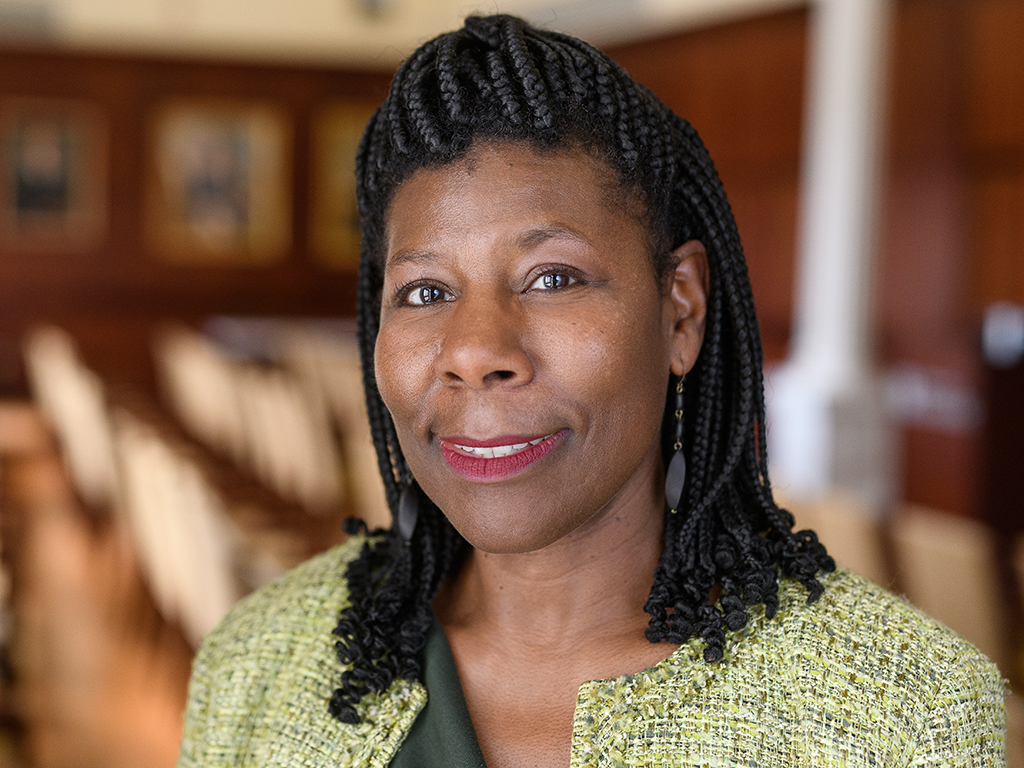
Social Work’s Tamikia Dumas celebrates 30 years at the University of Kentucky

LEXINGTON, Ky. – Throughout National Social Work Month and National Criminal Justice Month this March, the University of Kentucky College of Social Work (CoSW) will be sharing stories on the humans of the CoSW, highlighting the critical role our people play in supporting individuals, families and communities across Kentucky and beyond. 

Celebrating 30 years of service at the University of Kentucky, Tamikia Dumas, Foster Parent Mentor Program (FPMP) Coordinator, reflects on the program’s growth, as well as the fulfillment of helping others through her position at the College. Beginning her career in Human Resource Development at UK, Dumas came to the CoSW 24 years ago to join the FPMP. 

As the FPMP Program Coordinator for the Western Regions, Dumas works with foster parent mentors and mentees, completing matches for newly approved foster parents. When a mentor accepts the match, she provides contact information to the mentee, mentor, Recruitment and Certification (R&C) worker, and staff support so that the match can be entered and maintained in the mentor portal. 

Dumas also spends time talking with foster parents who have been recommended as mentors and being a sounding board for both mentors and mentees. Dumas shares that working to get newly approved foster parents matched with a mentor is one of her favorite parts. 

“My goal is always to do what I can to help foster parents,” Dumas said. “I enjoy the opportunity to coordinate and plan training for foster parents. I enjoy seeing or hearing from mentors the joy and excitement for having been able to help their mentee through a difficult situation. I do my job because I enjoy helping others. It’s rewarding to hear from a mentor or mentee that what I did for them made a difference.” 

The Foster Parent Mentor Program specializes in one-on-one, short-term, intensive coaching relationships, which provide newly approved foster parents emotional encouragement, skill reinforcement, and parenting strategies unique to providing out-of-home care to enhance the quality of care provided and stabilize placements. 

As the program has grown, Dumas hopes foster parents continue to gain confidence in their abilities to provide for the needs of the children placed in their home, due to the support they received from their mentors. 

“At the conclusion of the mentor match, I want mentees to see their mentor as someone who was available, encouraged them, provided guidance and listened to them when they needed it the most,” Dumas shared. 

For Dumas, the mentor program has continued to evolve over the years to better support foster families from the very beginning of their journey. When the program first launched, newly approved foster parents were connected with mentors only after receiving their first placement. Today, families are matched with a mentor immediately upon approval, giving them a resource to turn to before a child enters their home. 

That early connection helps reduce stress and prepare foster parents for the realities of their first placement, something Dumas has seen make a meaningful difference. 

“The advice I give to new foster parents is to take advantage of the support, knowledge and experience they will receive from their mentor,” Dumas said. “I encourage them to be engaged in the mentoring process and let their mentor know when they need help. Foster parents shouldn’t suffer in silence.” 

After three decades at UK, Dumas says the most rewarding moments often come at the end of a mentoring relationship, when the uncertainty she hears in a foster parent’s voice during their first conversation has been replaced with confidence and hope. 

“It’s uplifting to talk with a new foster parent at the end of their mentor match and hear joy and peace in their voice that wasn’t there during the first conversation,” Dumas said. “Foster parents give a lot of themselves to help children in care. I want them to know they are heard, appreciated and not alone.” 

UK College of Social Work scholars featured on podcast discussing social media and eating disorders

LEXINGTON, Ky. – Two University of Kentucky College of Social Work scholars recently shared their expertise, discussing the relationship between social media and eating disorders on The Renfrew Center Podcast.

Dr. Kari Gerth, a Doctor of Social Work (DSW) graduate, and Emily Stein, a Ph.D. student in the College of Social Work, joined the podcast to explore how digital platforms influence body image, mental health and recovery.

For Gerth, the opportunity to share her capstone research publicly was a meaningful milestone.

“It felt incredibly rewarding, like all the work I’ve put in throughout the DSW program truly came full circle,” Gerth said. “Eating disorders are often misunderstood, and there’s growing evidence that social media platforms like Instagram and TikTok can contribute to body dissatisfaction and disordered eating behaviors.”

Her research also examines barriers to accessing eating disorder treatment. That work has led Gerth into efforts aimed at expanding access to care across Kentucky.

“A major focus of my capstone research was identifying barriers to accessing treatment,” Gerth said. “I now serve as chair of the Access to Care Subcommittee for the Kentucky Eating Disorder Council, where we work to improve insurance coverage and expand treatment options across the state.”

Stein said participating in the podcast provided an opportunity to highlight the work happening at the University of Kentucky while contributing to a broader conversation.

“It was really exciting and such a great opportunity to highlight the work of Dr. Gerth and share what’s happening here at UK,” Stein said. “Knowing that the trends we see here can be impactful and helpful to others across the country made this such a meaningful experience.”

The episode also focused on helping listeners better understand how social media can influence body image and mental health, particularly among young people.

“Social media is not bad,” Stein said. “But just like everything, we must be aware of how it is affecting us and be intentional about its use.”

In addition to her research, Stein works in a hospital setting, where her social work training helps patients and families navigate complex medical and personal challenges.

“My social work education helps me look beyond the medical issue and understand what’s going on in a patient’s life that might affect their health or recovery,” Stein said. “Ultimately, it’s about making sure patients leave the hospital with the support they need to follow through with their treatment and stay well.”

By sharing their perspectives, Gerth and Stein hope the conversation encourages listeners to think more critically about how social media shapes mental health and how it can be used more intentionally to support well-being and recovery.

College of Social Work’s Dr. Victoria Collins publishes new book

LEXINGTON, Ky. – University of Kentucky College of Social Work’s Dr. Victoria Collins has published a new book providing a global examination of the role of women as organizers for social change.

Collins, associate professor and director of criminal justice programs, is the author of “Women’s Resistance in Global Context,” published by Routledge, Taylor & Francis Group. In the book, Collins analyzes historical and contemporary examples of women serving as resistance actors across various regions of the world.

Writing the book required extensive interdisciplinary research spanning criminology, victimology, sociology, international relations, and related fields. Collins, whose work is grounded in critical criminology, expands analysis beyond traditional criminal justice approaches to examine broader conceptualizations of social harm, state-perpetrated violence, and resistance.

The book analyzes the role of women as resistance actors, unpacking formal and informal strategies of resistance such as acts of dissent, activism, pacifism, and collective action, while highlighting how women have repeatedly stood in the face of social, political, and cultural violence in ways that have gone unrecognized.

“Women are amazing,” Collins said. “They have a strength that is not always recognized. What inspires me the most are individuals whose contributions are sometimes overlooked or silenced, yet they persevere for the greater social good.  Their commitment is inspirational.”

Reflecting on the themes of the book, Collins highlights the role of women’s participation in collective action and resistance efforts. Drawing on global examples, her work documents how women organize, innovate, and lead initiatives that fight injustice, and influence policy and legal change.

“The most important takeaway of this book is recognizing the contributions of women’s strategic resistance behaviors, their effectiveness as organizers for social change, as well as their creativity and resilience in the face of counter-resistance efforts both from counter-movements and the state,” Collins shared. “Globally, resistance actions, tools, and strategies vary, yet so often women are at the core of activist movements. It is important to recognize these efforts and their impact in an ever-changing global landscape that provide unique challenges to human rights and the wellbeing of all people.”

Collins is a recognized scholar in criminology, bringing an interdisciplinary perspective supported by an extensive publication record and nearly a decade of administrative leadership. She is also the author of several other books including  “Space Expansionism and Criminology,” which examines crime, environmental harm, and violence within the context of state and corporate expansion into outer space.

“Women’s Resistance in Global Context” is available through Routledge, Taylor & Francis Group and major online retailers.

CoSW alumna Jiselle Hirsch advances child welfare prevention services through lived experience

LEXINGTON, Ky. – Throughout National Social Work Month and National Criminal Justice Month this March, the University of Kentucky College of Social Work (CoSW) will be sharing stories on the humans of the CoSW, highlighting the critical role our people play in supporting individuals, families and communities across Kentucky and beyond.

For CoSW alumna Jiselle Hirsch, a career in social work was a deeply personal choice. As a former foster youth, Hirsch was in and out of the system throughout her childhood, becoming a single mother at the age of 19.

Living at One Parent Scholar House in Lexington, Hirsch received affordable housing as she pursued her education. Receiving that support as she raised her child and went back to school inspired her to be a changemaker in her community, helping people with backgrounds like hers.

“I was receiving a lot of benefits and services myself, and I could see how, with the right supports, people can really turn their lives around,” Hirsch shared. “I wanted to be a part of that process.”

Beginning her education at Bluegrass Community Technical College (BCTC), Hirsch transferred to UK’s Bachelor of Social Work (BASW) program after receiving the Public Child Welfare Certification Program (PCWCP, now known as Child Welfare PREP) scholarship.  For Hirsch, the scholarship represented both opportunity and validation.

“Earning the PCWCP scholarship made me feel worthwhile,” Hirsch said. “Growing up in the situation that I did, there were a lot of times when I didn’t feel like I had value to contribute. This scholarship made me feel like the work I was doing was valuable.”

Pursuing social work as a former foster youth gave Hirsch insight into the children and families she would one day be working with. The level of empathy gained from her experiences allowed her to understand issues within the system that others might not have insight into.

Breaking her own cycle of trauma was a motivating factor in Hirsch’s career in social work. She graduated with her BASW in 2013 and has been making a difference for children and families ever since.

“That’s where I work from now — trying to break the cycle within families to prevent future maltreatment,” Hirsch said. “Especially with my child, I wanted them to see that if I could be successful, they could be successful as well.”

Following graduation, Hirsch worked in Scott County for the Department for Community Based Services for three years. After relocating to North Carolina, Hirsch worked in investigations, as well as with LINKS, a foster care initiative supporting youth aged 13–21 in transitioning to adulthood through vocational training, education, housing assistance, and life skills development.

Over time, Hirsch realized that lasting change requires not only direct support for families, but stronger systems designed to intervene early and effectively. Continuing her career in child welfare, Hirsch now works as a Regional Child Welfare Prevention Specialist for the North Carolina Department of Health and Human Services. She serves as the Policy and Communication Lead for Prevention Services.

In her current role, Hirsch works to strengthen prevention services and uplift families across North Carolina, the kind of support that once helped change her own trajectory.

“I’m very proud of myself,” Hirsch said. “Not everybody has the support they need to break the cycle, and I’m very grateful for the support I received. Without it, I would not be where I am. That’s why I try very hard to be a support to others whenever I can and to give grace whenever I can.”

As the College of Social Work highlights the humans at the heart of social work and criminal justice this March, Hirsch’s story serves as a reminder of the transformative power of support, opportunity and compassion.

Catalyst for Change: CoSW Alumna Linda Harvey’s 60-Year Commitment to Community

LEXINGTON, Ky. – Throughout National Social Work Month and National Criminal Justice Month this March, the University of Kentucky College of Social Work (CoSW) will be sharing stories on the humans of the CoSW, highlighting the critical role our people play in supporting individuals, families and communities across Kentucky and beyond.

With more than 60 years dedicated to helping others, University of Kentucky College of Social Work alumna Linda Harvey reflects on her role as a catalyst and a connector in the Lexington community, bringing people and organizations together to create meaningful and lasting change.

As the eldest of four children, Harvey naturally stepped into a caretaking role early in life. She had experiences that sparked her interest in helping others and led her to pursue a career in social work. After attending St. Petersburg Junior College in 1961 and earning her associates degree, Harvey transferred to the University of Kentucky, where she earned her bachelor’s degree in social work in 1963.

Following graduation, Harvey began what would become a lifetime commitment to service. In St. Petersburg, Florida, she worked with the state welfare agency, supervising 70 foster children, and was a part of starting the first Women’s Job Corp Center, working with the Office of Economic Opportunity, supervising the resident advisors of 300 girls.

After relocating to Cleveland, Ohio, she continued her work with the YMCA/YWCA, expanding her experience in community-based services and youth support programs.

Harvey’s return to Lexington was inspired by Father Elmer Moore of the UK Newman Center, who served as both a mentor and guiding influence during her time as a student volunteer at the Newman Center.

After returning to Kentucky, Harvey established a volunteer program that connected college students with social service agencies and prison outreach initiatives on UK’s campus. During this time, she also worked with Community Action, where she helped open four community centers across Lexington to expand access to local support services.

“Throughout my life, I have seen myself as a catalyst, trying to make connections and bring people together for the greater good,” Harvey shared.

Over the years, Harvey has played a role in founding or helping establish at least 60 organizations and programs designed to improve lives throughout the Lexington community. Among these are Birthright of Lexington, Christians in Community Service, LexCare, the Mediation Center of Kentucky, Transformation House, and Juvenile Restorative Justice. She also advocated the expansion of the neonatal unit at UK and contributed to former Kentucky Governor Brereton Jones’ healthcare plan.

Alongside her professional accomplishments, Harvey built a family in Lexington, where she met her husband, Stan, and welcomed twin children, a son and daughter, an experience that inspired her to create the Mother of Twins organization of Lexington to support families navigating the unique challenges of raising multiples.

One of Harvey’s most influential contributions came through her work in restorative justice. Through this initiative, she helped introduce restorative justice practices into central Kentucky’s courts, schools and prison systems. Harvey created a program within maximum security prisons and worked with inmates who had committed homicides.

The program focused on repairing harm caused by crime or wrongdoing by addressing the needs of victims, encouraging accountability among offenders and involving the broader community in the healing process. Restorative justice centers on rebuilding relationships, fostering understanding and promoting long-term behavioral change.

“A number of cases were mediated by bringing surviving victims of homicide together with the offender who had killed their loved one,” Harvey noted. “As we continued to visit these maximum-security prisons in Kentucky, we could see real healing within inmates.”

Staying connected to the College of Social Work throughout her career, Harvey has served on three Dean’s Advisory Councils. She also created reconciliation breakfasts, co-sponsored by the Human Rights Commission and the College of Social Work. These breakfasts worked to show the impact of restorative justice on reconciliation and peacemaking. Harvey also received the Algernon Sydney Sullivan Medallion in 2007 for her dedication to community service.

Since 1969, Harvey has served as a supervisor and mentor to UK social work students completing internships across numerous organizations. Her lifelong dedication to service continues to shape the Lexington community and influence the field of social work through the organizations she helps build, the students she mentors, and the families she supports.

At 84 years of age, Harvey has done these activities primarily as a volunteer. She could not have done so without the support and involvement of her husband of 55 years, Stanford Harvey, Jr. Their family has expanded to their children’s spouses and four grandchildren. Harvey is a widow now for two years.

Harvey’s most recent initiative is with the Catholic Mental Health Ministry as co-director. Her work exemplifies the core values of the UK College of Social Work — improving the human condition through connection, compassion and action, especially those who are impacted by mental health challenges.

As she reflects on the impact of her career, Harvey encourages future social workers to remain open to new ideas, think outside the box, and move forward with action.

“Be a seed planter,” Harvey said. “Sometimes they take and sometimes they don’t. You have to be willing to watch them grow.”

Social Work’s Lynden Bond selected as UK ASCEND Scholar

LEXINGTON, Ky. — Dr. Lynden Bond, Ph.D., MSW, assistant professor in the University of Kentucky College of Social Work (CoSW), has been selected as a UK ASCEND Scholar, joining the third cohort of faculty chosen for this prestigious two-year community-engaged research development program beginning February 1, 2026.

Funded by the National Institutes of Health through the Achieving Success in Community-Engaged Research to ElimiNate Disparities (UK ASCEND) initiative, the program equips early-career researchers with comprehensive training in community-engaged research methods, mentorship, and pilot funding to translate evidence into action.

During the first year, scholars participate in the UK Research Scholars Program (RSP) with workshops, coursework, and community partnerships. The second year provides funding for a mentored, community-guided pilot project of up to $50,000 designed to advance research outcomes that matter to communities.

“I am incredibly excited to begin as an ASCEND scholar during its third cohort. The time and support I’ll receive in this program will provide me with the skills I need to make sure my research is focused on working with communities, including directly impacted people,” Bond said.

Bond’s research is rooted in partnerships with communities facing homelessness and housing instability. Her work centers on understanding and addressing the complex intersections of housing insecurity, behavioral health, and access to care, priorities shaped by her own professional practice and advocacy experience in social work.

“As a social work researcher, I want my research to be useful to communities and to help answer the questions or challenges they have; I see community-engaged methods as a natural fit to doing this work,” Bond shared. “My research supported by the ASCEND program will focus on how homeless outreach programs can best support people with mental health or substance use-related needs.

Bond recently served as a lead investigator on the 2025 Care to Count Initiative, a first-of-its-kind effort to document the experiences of hospitalized patients experiencing homelessness through a Hospital Point in Time Count in Lexington. This project, co-led with colleagues from the College of Social Work and UK HealthCare partners, aimed to illuminate hidden gaps in homelessness data and inform policy and service solutions that better support individuals at the intersection of crisis health events and housing instability.

Through her ASCEND-supported work and related community-engaged research, Bond continues to strengthen services and advance responses that improve housing and behavioral health outcomes. Her scholarship exemplifies the potential of community-driven research to catalyze real-world impact.

Championing Change Through Sport: A Q&A with MSW student Serenity Burnett-Perry

LEXINGTON, Ky. — National Girls & Women in Sports Day (NGWSD), observed annually in early February (Feb. 4, 2026), celebrates the achievements of athletes, coaches, and leaders. This week, the UK College of Social Work (CoSW) will be celebrating the faculty and student leaders who work within the CoSW’s Sport Social Work Research Lab (SSW-RL).

Serenity Burnett-Perry, CoSW MSW student, sat down with the CoSW to share her experience as a former student-athlete and her involvement in the SSW-RL.

Tell me about your collegiate student-athlete experience and how that impacted your time in college? 

I ran track at Colorado Mesa University, and this shaped my college experience immensely! Being an athlete taught me a lot, but one of the main things it taught me was how much of a lack there is for athlete mental health. I started to realize it early on when I was going through some challenges and I barely had any resources. During my college career, I had one left labrum repair surgery and one right labrum repair surgery, and my last year as a senior, I found out I had two bulging discs in my back and a tear.

My freshman year of college was amazing. I was the second fastest on the team behind a senior and my coach gave me so much attention! But during my freshman season, my left hip always hurt but the trainers kept telling me it was everything else but a torn labrum. When I came back for my sophomore year season, I could barely walk after practices because of the pain and finally the trainers got me an MRI. I then found out it was a torn labrum, and it was completely hanging off. I had my first surgery my sophomore season and after that, the whole rest of my college career was different. I went from my coach barely talking to me, a lot of mental health issues, and no resources to help me get through what I was going through.

Being an athlete was an awesome experience, but it also taught me a lot mentally and all the cons that it comes with to be an athlete. It taught me there is a lot to be fixed. 

What inspired you to pursue social work and specifically Sport Social Work? 

I actually went to school to become a homicide detective which I shortly after realized that was not something I wanted to pursue. I talked to my advisor, and she was asking me questions about who I am and what I care about and once we were done, she told me I needed to go into social work. Being an athlete my whole life, I had so many ideas in wanting to work with athletes. When I was a junior and we had a practicum fair to pick a practicum for senior year I saw nothing I was interested. I went to my professor and said, “oh no I think I picked the wrong degree ha-ha.” My professor asked me what I wanted to do and I mentioned sport social work and I had no idea that it even existed at the time. I did so much research and long story short, I found my own practicum and had the first ever sport social work practicum at my college! I am so glad I followed my gut and passion because now I am very involved in sport social work.

How did you get involved with the Sport Social Work Research Lab? 

When I was looking at schools for my master’s degree, I was trying to find schools that had a focus on sport social work. My practicum supervisor in my undergrad gave me some school options and the University of Kentucky was one of them. I did my research and I reached out to some faculty at the research lab, and I ended up having an interview. During the interview, I talked about the importance of sport social work and the work that I want to do, and they said they would love to have me be a part of the lab!

Why is Sport Social Work important to athletics, specifically collegiate athletics? 

Sport social work is important to athletics, specifically collegiate athletics, because it can offer some resources that are lacking in athletics right now. Sport social work cares about the mental health of athletes in all aspects and not just the athletes themselves. I know sport social work is a very new field and not a lot of people know about it, but when it continues to growth, I believe it will have such an impact on so many athletes. College athletes go through so much on all different levels, whether that be injury, negative teammate atmosphere, transitioning out of sport, etc. Sport social work can offer so many resources to college athletes if colleges let social work professionals into the athletic setting.

What is your favorite part of being a member of the Sport Social Work Research Lab? 

My favorite part about being a member of the lab is how I can focus on what I am passionate about. I can take control of what I want to work on and will be hosting a workshop of my own coming up this March. Another part that is my favorite is how much opportunity I am given to learn and grow in the field of sport social work. I have been to an amazing conference in September of 2025 and just got invited to another one this next month. This gives me an opportunity to network and connect with people, which will help me with future job opportunities since this is the field of work that I want to be a part of. 

What are your career goals following graduation? 

Since I have been in this area of social work going on for three years now, I do find myself trying to work with athletes. I do not know exactly what job opportunities are going to be available when I graduate, but my hope is that I work for an athletic team, either pro athletes or college, to support them with workshops/interventions and support for their mental health, however they need. My overall goal is to be a sport social worker for a team! 

Championing Change Through Sport: A Q&A with PhD student Anne Stauffer

LEXINGTON, Ky. — National Girls & Women in Sports Day (NGWSD), observed annually in early February (Feb. 4, 2026), celebrates the achievements of athletes, coaches, and leaders. This week, the UK College of Social Work (CoSW) will be celebrating the faculty and student leaders who work within the CoSW’s Sport Social Work Research Lab (SSW-RL).

Anne Stauffer, CoSW PhD student, sat down with the CoSW to share her experience as a former student-athlete and her involvement in the SSW-RL.

Tell me about your collegiate student-athlete experience and how that impacted your time in college?

My experience as a collegiate student-athlete strongly shaped how I experienced college. While reaching that level was a major accomplishment, I entered already mentally and physically burned out from years of intense training. Balancing academics with the demands of athletics left little room for rest, reflection, or celebrating achievements.

That experience challenged my sense of identity and forced me to confront the pressure of tying self-worth to performance. Over time, it helped me develop resilience, self-advocacy, and a deeper understanding of balance and well-being. Ultimately, being a student-athlete influenced not only how I navigated college, but also the values and career goals that guide me today. While I would not consider my experience as a collegiate student-athlete positive, it was the catalyst to me pursuing a career that helps me become the person I needed back then.

What inspired you to pursue social work and specifically Sport Social Work?

My experiences in high-performance sport exposed me to the mental, emotional, and identity-related challenges athletes often face, especially when support systems focus primarily on performance. Navigating burnout, pressure, and transitions helped me recognize the gap between athletic success and overall well-being. Social work appealed to me because of its holistic, person-centered approach, and Sport Social Work allows me to bridge mental health, identity, and sport culture to better support athletes as whole people, not just performers.

How did you get involved with the Sport Social Work Research Lab?

When I started applying to Ph.D. programs, I did a lot of research on schools and their specific programs that had initiatives or labs dedicated to sports in some capacity. As I continued collecting research on various schools’ programs I was applying to, I set up a meeting with Dr. Natalie Pope to discuss UK’s Ph.D. program. When I mentioned I was interested in sport social work, she told me they had just brought on Dr. Tarkington Newman as faculty who was bringing the Sport Social Work Research Lab to UK. After this meeting, I set up a call with Dr. Newman and I started working in the Lab and the rest is history!

How do the initiatives within the SSW-RL support sports and recreation?

The initiatives within the SSW-RL support sport and recreation by promoting athlete well-being, and access through research, education, and community-based practice. The lab emphasizes holistic development by addressing mental health, identity, leadership, and barriers within sport environments.

SSW-RL initiatives support female athletes by centering research and programming that acknowledges the unique pressures they face. Through advocacy, applied research, and practitioner training, the lab helps create safer sport spaces that empower athletes both within and beyond sport participation.

Why is Sport Social Work important to athletics, specifically collegiate athletics?

Sport Social Work is important to collegiate athletics because it addresses the complex mental health, identity, and challenges student athletes face beyond performance. Collegiate athletes navigate intense academic demands, injury, transition, and pressure within highly structured systems that often prioritize results over well-being.

Sport Social Work brings a holistic, athlete-centered approach that integrates mental health support, advocacy, and education while accounting for power dynamics and access. By supporting student-athletes as whole people, Sport Social Work strengthens well-being, retention, and long-term development both within and beyond college sport.

What is your favorite part of being a member of the Sport Social Work Research Lab?

My favorite part of being a member of the Sport Social Work Research Lab is the sense of purpose that comes from contributing to the creation of safer sport environments that prioritize overall health and well-being, particularly within competitive youth sport settings. The work we do moves beyond simply identifying problems. This work actively challenges harmful norms and helps reshape how sport systems care for the people within them.

Through our research and initiatives, we intentionally expand the definition of success in sport. Rather than viewing success solely through a narrow focus on performance, outcomes, or winning, the Lab examines sport as a powerful social space that can foster community, instill values, support identity development, and create a sense of belonging. Being a part of work that recognizes and elevates these outcomes reinforces my belief that sport can be both competitive and humane, and that athlete well-being should be central, not secondary, to sport participation.

What are your career goals following graduation?

Following graduation, my career goal is to work at the intersection of mental health, sport, and athlete development, with a focus on creating safer, more supportive sport environments. I aim to apply Sport Social Work principles within collegiate and youth sport settings by providing holistic support that addresses mental health, identity development, injury, and transitions out of sport.

Long term, I hope to contribute to change through applied research, program development, and advocacy that prioritizes athlete well-being alongside performance. My goal is to help reshape sport culture so that athletes, especially those in high-pressure environments, are supported as whole people both during and beyond their sport careers.