SEARCH RESULTS FOR:

Search Results

Mollie Cole, Adoptive Parent Liaison (APL)

Mollie Cole has been working as an Adoptive Parent Liaison (APL) for ASK-VIP for two years.

When she was still fairly new in the Adoption Support for Kentucky Virtual Interaction Program (ASK-VIP), she was approached by the director to fill in as an ASK-VIP-Pilot facilitator due to some last-minute staff changes. Her role as facilitator for the group was a great fit, and she soon found herself on a new path in life.

“After the great experience I had facilitating that pilot, I was asked to consider a VIP Specialized Support group for Transracial Foster/Adoptive families and knew I wanted to connect with other families in this capacity, walking a similar journey as myself,” Cole said.

For Cole, being the facilitator of the Transracial Foster/Adoptive Support Group (TFA) was built on her own experiences as a parent to children of another ethnicity. Since becoming a foster parent eight years ago, Cole had been searching for a place where she could open up about the struggles, rewards and challenges of being a transracial parent.

Looking in mostly online spaces, Cole began trying to learn and grow in the unfamiliar territory of transracial fostering, but found it difficult to learn, understand, and share with vulnerability in a group where she didn’t have relationships with the other members. It wasn’t until Cole found ASK did she find a place where she could truly flourish.

“This group has been different because it has been built on closer proximity to parents looking for the same kind of growth and answers, and the relationships I’ve built have fostered honesty and support in a way I haven’t experienced before,” Cole said. “Even as a facilitator, I’m learning and growing alongside the group members each time we meet.”

The Transracial Foster/Adoptive group first began as a pilot program. For 10 weeks, Cole said bonds, connections, and support thrived among the members, which created a strong foundation of honesty, humility, eagerness to learn, and encouragement to the group as they later began meeting monthly.

The members of the group share their challenges, questions, resources, and support with one another as they meet each month. Cole said she spends time each month gathering ideas to discuss if members don’t have concerns or things to share. However, most weeks the group members are waiting to come to the group and discuss questions or experiences they have, she said.

A typical support group meeting consists of introductions before Cole opens up the space for anyone to share thoughts, questions, or experiences they have had to discuss with the group. She also keeps a list of topics to discuss that are either directly related to common experiences of foster and adoptive families (trauma, behaviors, current events and their impact on families, etc.).

When Cole isn’t serving as the facilitator for the TFA group, she’s leading training groups as an APL. After introductions, Cole goes over the specific topic at hand, such as Bullying, Healthy Boundaries in Teenage Relationships and Healing After a Foster Child Leaves Your Home.

“I love having participants to ask questions and share during the time we are covering training material! While I have experience with many of the topics we (ASK) offer training in, I’m certainly not experienced with everything, and am not an expert of anything,” Cole said. “Hearing from others’ experiences and learning about resources they are knowledgeable about adds such a richness to our training time.”

She also tries to bring some laughter, hope, and positivity to each group she facilitates.

But each meeting, whether it is a support or training group, brings with it so many benefits – not just for those attending, but for facilitators like Cole as well. Through this process, she’s learned how to listen to the experiences of others as well as grow in her understanding of those who might be different from herself.

“The way I parent my children or facilitate an ASK-VIP group doesn’t happen in a vacuum nor is it compartmentalized apart from the rest of who I am. If I am growing in how I love and care for others; if I am learning to unlearn misconceptions and unhealthy beliefs, that all affects how I lead a training or support group,” she said. “I’ve learned that my success or failure in this area is connected to each part of me, and this holistic growth has changed me for the better.”

The best part is ASK-VIP allows for parents to connect with others for support and growth at their convenience, Cole said. Due to COVID-19 restrictions and safety, ASK-VIP expanded to offer trainings along with the support groups already in place. They can access both support and training from their home, while out of town in a hotel room, as they wait to pick-up their groceries, or as they walk the dog. There is a different level of comfort while being at home – wherever that may be. But it also allows people to connect no matter the distance between them.

“I’ve had families in one group join together to “meet” virtually, who would likely never have met in person. They lived on opposite sides of the state and more than five hours away from one another, but this space brought them together,” Cole said. “It really is accessible in a unique and different way than an in-person meeting can be.”

Dean Miller Named to UK Diversity, Equity and Inclusion Leadership Team

The University of Kentucky (UK) recently announced a comprehensive, enterprise-wide Diversity, Equity and Inclusion Implementation Plan designed to accelerate progress at UK for our Black communities and other communities of color. Justin “Jay” Miller, dean of the UK College of Social Work (CoSW), has been named to the 22-member Diversity, Equity and Inclusion (DEI) Leadership Team.

Dean Miller has extensive experience in DEI. He previously oversaw DEI initiatives for several federal government agencies. Additionally, Dean Miller has written, spoken, and conducted extensive research about the importance of diversity in academic and practice settings.  

You can learn more about the comprehensive plan here.

New UK Social Work Study Zeros in on Self-Care During COVID-19

By Lindsey Piercy, LEXINGTON, Ky. (Sept. 8, 2020) — It is a profession committed to the well-being of others — social workers provide a broad range of services and help people cope with everyday issues.

But meeting the needs of others day after day, while potentially putting their own needs aside, could lead to burnout. Now, add the stressors that accompany a global pandemic.

To learn more about the impact of COVID-19 on social workers, researchers in the College of Social Work (CoSW) Self-Care Lab at the University of Kentucky conducted an insightful study.

“We focus a lot on the acute medical issues associated with COVID-19, and social workers are definitely doing pertinent work alongside other health care providers in that arena,” College of Social Work Dean Jay Miller, lead investigator of the study, said. “But social workers are also doing work to address other problematic consequences, such as unemployment, growing mental health needs, child protection and access to education. These factors certainly make for stressful practice conditions, which can contribute to professional burnout.”  

Burnout, a term first coined by American psychologist Herbert Freudenberger in 1975, describes what happens when a practitioner becomes increasingly inoperative. As symptoms worsen, its effects can turn more serious.

That begs the question, how can social workers provide compassionate care for others if they are not doing the same for themselves?

To better identify self-care issues, the comprehensive study surveyed social work practitioners throughout Kentucky. This is the first-known study to examine the impact of COVID-19 on self-care among social work practitioners.   

The study, launched this summer, assessed several aspects of self-care and factors that influence self-care practices among social work practitioners in a wide array of settings. 

Researchers found that since COVID-19 was declared a pandemic in early March, self-care practices among social workers have significantly decreased. In fact, over 90% of practitioners reported COVID-19 has negatively affected their ability to engage in adequate self-care.

“Given the importance of self-care to the profession, these findings are extremely concerning,” Brenda Rosen, executive director of the Kentucky chapter of the National Association of Social Workers, said. “This research really illustrates the need to support social workers during this unprecedented time.” 

While some of the findings were expected, researchers noted a few surprising results. For instance, analyses revealed that gender, race/ethnicity and sexual orientation are all factors that influence engagement in self-care. 

In summary, social workers who identified as female, white or LGBTQ* reported engaging in significantly fewer self-care practices.

Additionally, practitioner’s working remotely reported struggling to engage in adequate self-care practices.

“Though there are certainly commonalities, results from this study show that people are experiencing the pandemic in very different ways,” Miller explained. “Responses and interventions aimed at improving self-care must take these differences into account.”

The CoSW understands managing crippling stress among these practitioner groups is fundamental to their well-being and the well-being of the populations they serve.

Researchers, like Miller, believe self-care is not only indispensable but cannot be ignored. He hopes this study will highlight the need to examine and develop beneficial approaches to support all helping professionals.

“For the foreseeable future we, as a society, will be dealing with the ramifications of COVID-19. Social workers, and other professionals, will be instrumental in the recovery from this pandemic,” Miller said. “Given the importance of these practitioners, it is absolutely imperative that we build a knowledge base that informs how we support them. This study contributes to doing just that.” 

To learn more about The Self-Care Lab, you can view this video. If you have additional questions about this project or would like to receive a copy of the full report, email selfcarelab@uky.edu.

Guidance for Children and Families Involved with the Child Welfare System During the COVID-19 Pandemic

One of our Medically Complex Training Program presenters from the Cincinnati Children’s Hospital sits on the Executive Committee of the American Academy of Pediatrics Council on Foster Care, Adoption, and Kinship Care. They, along with a small group, wrote Guidance for Children and Families Involved with the Child Welfare System During the COVID-19 Pandemic. The guide is designed to support the continuation and improvement of that critical work so that all children and families may flourish.

Maintaining child safety is essential, and even the circumstances of a pandemic should not undermine the vital work of supporting permanency and well-being for children and their families.

Exerpt from Guidance for Children and Families Involved with the Child Welfare System During the COVID-19 Pandemic

Read more here.

Emily Moseley Awarded HDI’s Paul Kevin Burberry Award

Story by Beth Potter, HDI Director of Information Services

The University of Kentucky (UK) Human Development Institute (HDI) has awarded the prestigious Paul Kevin Burberry Award to Emily Moseley. Emily began a research assistantship with HDI in 2019 and has worked on several projects related to people with disabilities and their experience with COVID-19 and information services. Emily is entering her second year of graduate studies to obtain a master’s degree in Social Work and the HDI Graduate Certificate in Developmental Disabilities. This field of study will equip her to promote social justice and equity while being of service to others.

“Emily is an exceptional student and a joy to work with. With her strong leadership capabilities, genuine care and concern for people, as well as an unbridled passion for the HDI and Developmental Disabilities, Emily truly exemplifies qualities of an outstanding Social Worker,” Sara K. Green, Graduate Advisor from the UK College of Social Work said. “As her Academic Advisor in the College of Social Work, I am so proud of her ongoing academic achievement as well as her many personal and professional accomplishments, the prestigious Paul Kevin Burberry award included. I cannot think of a more deserving recipient.”

The annual Paul Kevin Burberry Award honor is given to a student who has demonstrated a strong commitment to people with disabilities, academic excellence, and the leadership qualities exemplified by Burberry’s own life. It is named in memory of the Berea native who was the first student with significant physical disabilities to graduate from Berea Community High School. He went on to Berea College and UK, as a philosophy major. While a student at UK, Burberry worked with HDI to create training modules to train medical and allied health students on developmental disabilities. Though his life was cut short before graduation, he was posthumously awarded his UK degree with highest honors in 2004.

Beth Potter, HDI Director of Information Services says, “Emily’s work performance is evidence of her commitment to the HDI mission and vision which align with the extraordinary example set forth by Kevin Burberry.

Third MSW Student Awarded LTJ Fellowship

Incoming Master of Social Work (MSW) student Eman Ghoneim now joins her fellow incoming MSW student Quinten Harris and current student Alisia Taylor Sullivan in receiving this tremendous fellowship. Sullivan is completing her first year of the fellowship.

In an effort to contribute to the mission of enhancing diversity, the University of Kentucky established the Lyman T. Johnson Postdoctoral Fellowships to support postdoctoral fellows in graduate and professional areas. The fellowship is named in honor of UK’s first African American graduate student, Lyman T. Johnson.

Johnson, known as a desegregation pioneer, sued UK in 1949 after two failed attempts to enroll in the University’s graduate program. At the time, UK’s graduate school was completely segregated. The university held the stance that black and white students should not attend the same school, a stance that many institutions across the nation held.

By April of 1949, Federal Judge H. Church Ford ruled that UK must admit black students to the university. Through Johnson’s actions, it became possible for future black students to be a part of the graduate program.

The LTJ Fellowship is awarded to first-year or continuing graduate students. Candidates for eligibility contribute to the University of Kentucky’s compelling interest in diversity, is a first-generation college student and exemplifies leadership, extracurricular activities, awards and recognition, and/or community service. 

Fellowship recipients pursue an individualized research program under the mentorship of one or more UK professors and actively participate in departmental and professional research-related activities. Fellows play a lead role in designing, developing, and implementing research programs that contribute to a department’s overall graduate education and research mandates.

The fellowship provides a $47,476 stipend plus benefits. In addition, the fellow receives $2,000 for support of research activities. Fellowships are available for up to two years. The initial appointment is for 12 months, but recipients may apply for a second year.

Loeffler Awarded 2020 Outstanding Teaching Award

Each year, the University of Kentucky recognizes faculty and graduate teaching assistants for outstanding teaching during its UK Faculty Awards Ceremony. The Outstanding Teaching Awards annually recognizes faculty and graduate teaching assistants who go above and beyond what is expected of them.

For the first time in the 18-year history of the UK Faculty Awards, the College of Social Work (CoSW) is proud to announce that Dr. Diane Loeffler, Director of Undergraduate Studies, is a recipient of a 2020 Outstanding Teaching Award.

“We are extremely proud of, and for, Dr. Loeffler,” said Jay Miller, CoSW dean. “Dr. Loeffler’s commitment to quality instruction and student experience is unparalleled. We are extremely fortunate to have her as part of our CoSW family.”

Loeffler was awarded this prestigious honor in Category 2, which recognizes lecturer and clinical title series faculty for outstanding performance in the classroom, laboratory, or clinical settings.

“Winning this award was very overwhelming – there are so many gifted teachers at UK, and it is truly an honor to be recognized as being among those great educators,” Loeffler said. “I wouldn’t have become the teacher I am without the steadfast encouragement and support from so many UK faculty past and present.”

After graduating from high school in the Twin Cities, Loeffler obtained her Bachelor of Arts in Political Science at the University of Iowa (UI). While there, she said she encountered some of the best educators around, such as Dr. Joel Barkan and Dr. John Nelson, who encouraged her to take flight and to think critically about inequities and social problems.

“It is likely that neither ever knew the impact they made on me and how I approach teaching and working with students,” she said.

After graduating from U of I, Loeffler headed south, where she spent time working with a housing nonprofit in Central Appalachia. Loeffler decided to pursue a career in social work after working for a few nonprofit organizations in the Southeastern United States. The work she was doing was largely around affordable housing and community development.

Realizing she didn’t have the tools and skills needed to be equipped to help create systemic change, Loeffler pursued a Master of Social Work (MSW) – a natural fit for her which provided her with the education needed to become more successful in community development work that was meaningful and impactful.

“The social work profession has deep and meaningful ties to work around social justice and equity, and this was important to me when I was deciding in what area I wanted to pursue graduate studies,” Loeffler said.

Loeffler earned her MSW and Ph.D. at the University of Kentucky, a move that allowed her to stay connected to the communities she had worked in and to the social issues she was passionate about.

Loeffler said she was fortunate to be able to complete her post-doctoral work and become a member of the faculty at UK CoSW.

“I’ve been on faculty in the College since 2007, and in 2019 I was asked to serve as the Director of Undergraduate Studies,” Loeffler said. “It is a challenging and rewarding way to deepen my commitment to undergraduate education and to – hopefully – positively impact the lives of our students.

Contributing to her passion to better others and the world around her, what drives Loeffler is the understanding that the work she does is a privilege. As a professor who has the opportunity to teach elective courses, Loeffler loves getting the chance to interact with students from many different disciplines and professions.

“When a classroom is humming with discussion and dialogue and students are really working together to challenge one another – that drives me to keep doing this work,” Loeffler exclaimed.

For a list of previous winners, visit here. For media inquiries, please contact Kaitlyn Brooks at Kaitlyn.brooks@uky.edu.

UK Collaborative Team Receives Funding To Refurbish & Provide Essential Medical Equipment

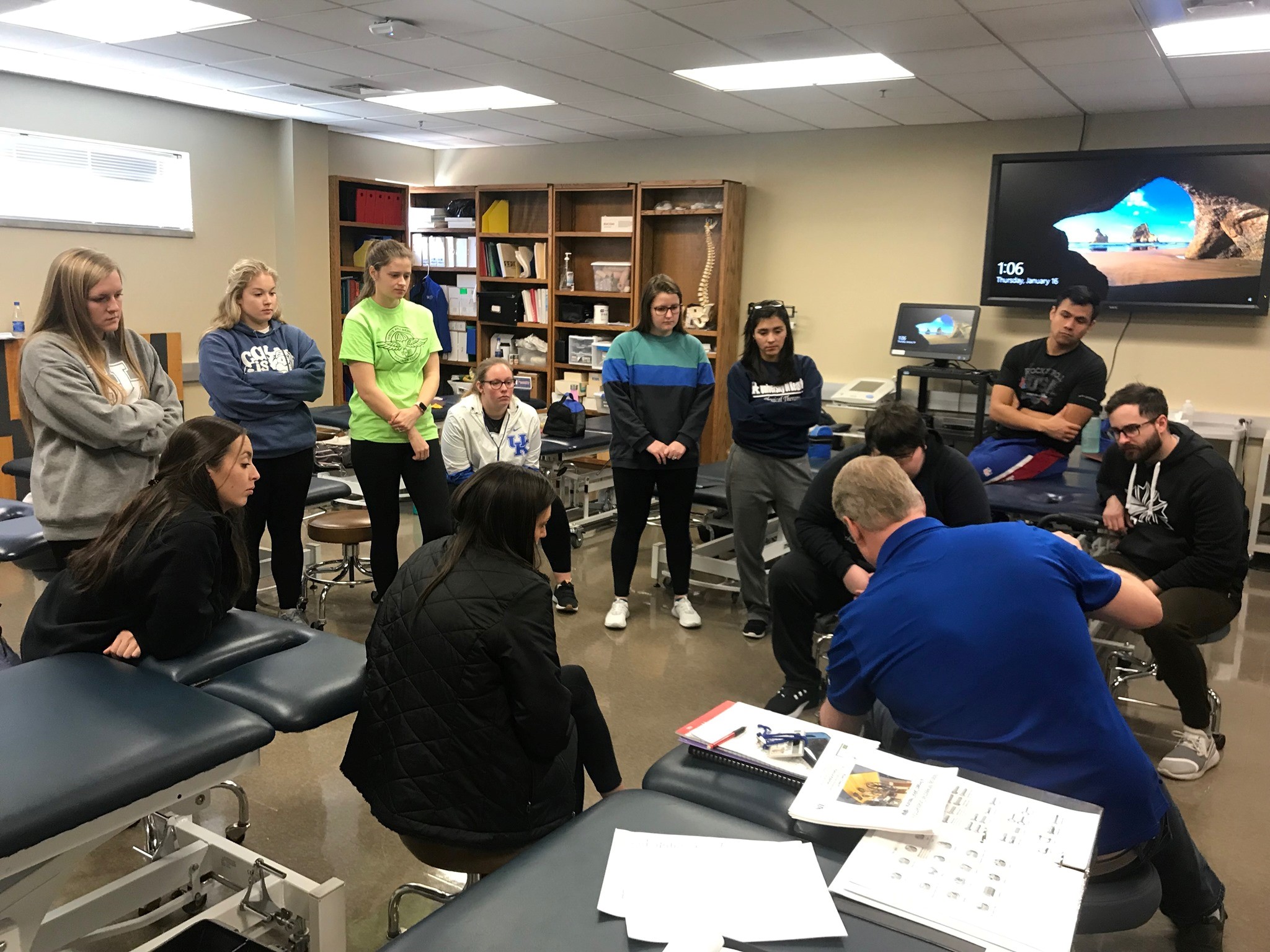
Students watch as Dr. Pat Kitzman teaches how to refurbish medical equipment.

Roughly 1 in 7 Americans live with a disability that impacts daily mobility. The average cost of a wheelchair ranges from $500 to $2,000 without insurance, seriously curbing access to this essential equipment for patients who lack proper coverage. The UK Center of Excellence in Rural Health (CERH) in Hazard is working to bridge this gap for Kentucky patients through a project that repairs and redistributes used medical equipment to communities in need. 

Project CARAT—short for Coordinating and Assisting the Reuse of Assistive Technology— began in 2013 as a collaborative Health Resources and Services Administration Grant (HRSA) with CERH, the UK Physical Therapy program, and the Kentucky Office of Vocational Rehabilitation where two CARAT sites opened—one in Hazard and the other in Thelma. Within the last seven years, three additional sites in Lexington, Louisville, and Paducah have been added.

In order to expand the reach of the Hazard facility, CERH, the UK College of Health Sciences and the UK College of Social Work partnered in applying for a 2020 UK Sustainability Challenge Grant and the project was funded. This funding will allow the programs to work collaboratively to provide a larger number of refurbished equipment items to individuals in need and increase opportunities for community members to engage with the project at various levels.  

Keisha Hudson, CERH’s administrative research assistant said each CARAT site is unique in terms of need for equipment, and community support will impact the project’s continued success.

“We hope to increase engagement with the public,” she said. “Community-donated equipment is crucial to our success and we hope more awareness of our mission will result in equipment donations and greater access to care.” 

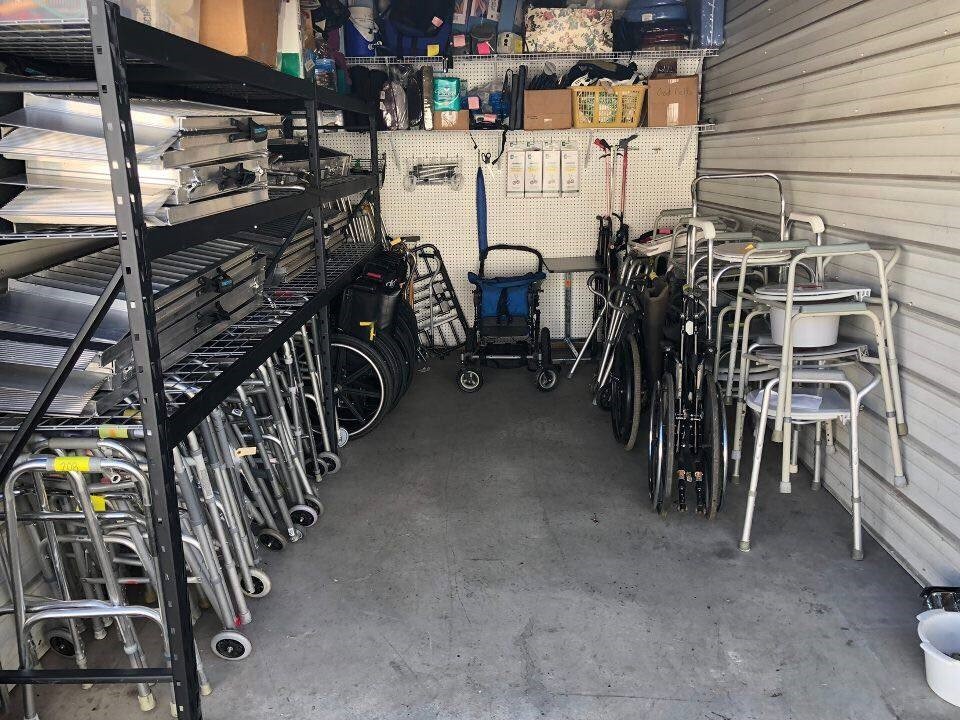
Used canes, walkers, and wheelchairs can easily be repurposed for additional use. Unfortunately, most of this medically necessary equipment is thrown out after acquiring wear and tear. The team behind Project CARAT works to repair, sanitize, and rehome used equipment in local communities.

Used medical equipment stored in new Project CARAT facility thanks to HRSA grant funding.

“If you drive up and down your streets, it’s amazing the number of wheelchairs and walkers you will find waiting for the garbage truck. There’s also tons of equipment in landfills,” said Pat Kitzman, PT, Ph.D., professor in physical therapy and a founder of Project CARAT. “We have a supply, and we have a need, but we did not have the go-between until now.”

Kitzman said the project was also borne from challenges he faced as a home health physical therapist. His first-hand experience has impacted both the project’s overarching mission and how he teaches his physical therapy students.

“I was always having to MacGyver somebody’s wheelchair because current insurance policies only allow patients to receive a new wheelchair every five years. They will not replace the chair sooner if something happens to it,” he said. “I knew our students, who will one day become future healthcare providers, would need this knowledge to help their patients.”

Frances Feltner, DNP, MSN, RN, FAAN, director of CERH, added she hopes Project CARAT will provide sustainable solutions and continuous expansion for much-needed care in rural Kentucky.

“Serving people is at the heart of everything we do. Project CARAT is giving patients the equipment they need, providing greater health care resources, and looking at the real needs of each individual community,” she said. “This type of precision care is a building block to addressing health disparities in our communities and in our state.”

“This project was a natural fit for our social work students,” said Melissa Slone, MSW, UK College of Social Work East program coordinator at CERH. “Accessing resources, providing services, and breaking down barriers is what social workers do.”

“What we do is not for the glory of the grant,” Feltner continued. “It’s to provide services for people who truly need them.”

Kay Hoffman Receives CSWE Award

The Council on Social Work Education (CSWE) proudly announces the recipients of the 2020 Professional Recognition Awards.

Professor and dean emerita of the College of Social Work (CoSW), Dr. Kay Hoffman has been named a recipient of the 2020 Professional Recognition Awards.

Dr. Hoffman will receive the Faculty Service and Leadership Award in Social Work Education Award from the Council on Social Work Education (CSWE). It recognizes a social work educator with 10 or more years of service excellence whose work has advanced and promoted social work education and provided a significant contribution to extend its reach.

“As former dean of CoSW, Dr. Hoffman was ahead of her time. Her visionary leadership put CoSW on a path that yields benefits still today,” said Jay Miller, CoSW dean. “This recognition of her work and impact is well deserved.”

Having served the University of Kentucky and CoSW for 20 years, Dr. Hoffman retired in 2018. Although having retired, Dr. Hoffman continues her work with Ph.D. students and supervises an evaluation team of researchers examining prevention responses in child welfare and public health.

At UK she was the Dorothy A. Miller Professor in Social Work Education and a member of the Kentucky Institute of Medicine. Her scholarly work is in social work education, child welfare, and international social work.

“We are glad to present the Faculty Service and Leadership Award to Dr. Hoffman in recognition of her many years as a leader of social work programs and as an educator who supported countless students, researchers, and faculty,” Darla Spence Coffey, Ph.D., MSW, CSWE president, and CEO, said. “Social work education is indebted to the contributions she made through her service to the Commission on Accreditation and as president of CSWE when she led the movement to competency-based outcomes. Even two years into retirement, Dr. Hoffman finds ways to support social work students.”

Coffey said CSWE is glad to continue its annual acknowledgment of remarkable social workers, educators, and students with these awards. She noted that the recipients of the Professional Recognition Awards represent the best of the best among social work educators.

Dr. Hoffman continues to be active in her local community, having served as the president of the Plantory, an incubator for nonprofit organizations, and president of the Center on Human Entrepreneurship Solutions Group. Presently, she is a board member of the Peninsula Art Academy. Read more about Dr. Hoffman here.

The CSWE Board of Directors selected the recipients of the 2020 awards from a slate of nominees.

Other award winners include:

Rebecca Gomez, Ph.D., LCSW, director of the Our Lady of the Lake University Ph.D. program, will receive the Distinguished Recent Contributions to Social Work Education Award, which recognizes the achievements of a social work educator within the last 10 years.

Alice Gates, Ph.D., MSW, associate professor, BSW program director, and department chair of sociology/social work at the University of Portland, will receive the Early Career Faculty Service and Leadership in Social Work Education Award. It recognizes a social work educator with fewer than 10 years of service who has advanced and promoted social work education and provided significant contributions to extend its reach.

Betty J. Ruth, clinical professor and director of the MSW/MPH program at Boston University School of Social Work, will receive the Significant Lifetime Achievement in Social Work Education Award, which recognizes the achievements of a social work educator over an entire career.

The honorees will be presented with their awards during the 2020 CSWE Annual Program Meeting, November 12‒15.

About CSWE
Founded in 1952, the Council on Social Work Education is the national association representing social work education in the United States. Its members include over 800 accredited baccalaureate and master’s degree social work programs, as well as individual social work educators, practitioners, and agencies dedicated to advancing quality social work education.

CoSW Welcomes First Summer Online MSW Cohort

From just down the street in Lexington, to as south as Florida, as east as Massachusetts, and as far away as Alaska and Germany, students are pursuing the College of Social Work’s (CoSW) online Master of Social Work (MSW) program this summer.

The CoSW is now delivering a high-quality social work education to practitioners who otherwise would not be able to access it because of their location. Providing the MSW in an online format allows CoSW to truly manifest the land grant mission of the University of Kentucky.

Now, students have yet another option for entering that program.

Earlier this spring, CoSW announced that the online program would accept its first summer cohort with students from coast to coast, from California to North Carolina. Though widely accessible, CoSW remains committed to the Commonwealth, with 41% of the incoming summer cohort hailing from the Commonwealth.

According to the Bureau of Labor Statistics, with job growth projected at a rate of 16% through 2026—about double the national average—social workers are in high demand to provide support across educational settings, family services, health care settings, and policymaking, to name a few. And, with the majority of mental health services in the U.S. provided by social workers, the need to expand the MSW program into an online format was crucial.

“It is imperative that future practitioners have access to a quality social work education, delivered by world-class faculty,” explained Kalea Benner, Director of Graduate Programs. “The CoSW, through the new online program, is now able to deliver this opportunity to students, no matter where students call home.”

The accredited, online MSW is available in both advanced and regular standing program options. Advanced standing, for those with a 3.5 social work GPA in their Bachelor of Social Work program within the past seven years, is a 30-credit hour program that can be completed in an accelerated model in two semesters, one short academic year. The regular standing option is a 60-credit hour program for students who have an undergraduate degree in any discipline that can be completed in four semesters, just two academic years. The MSW program options feature quality, practice-focused instruction from social work leaders at the forefront of innovation in the field.

Additionally, students in the online MSW program can specialize their educational experience by attaining a graduate certificate during the course of the MSW program. Certificate options including Child Welfare Practice, Clinical Social Work, or Military Behavioral Health, School Social Work and Substance Use Disorder are available to students in the online MSW program.   

“We have made substantive investments to ensure that the student experience in our online program is second to none,” said CoSW Dean Jay Miller. “From the outset, we want our students to know that they are receiving adept instruction, rooted in best-practices associated with online education delivery. At the end of the day, we are preparing them to deal with the complex practice realities facing individuals, groups, and communities. That is not something we take lightly.” 

For more information about the online MSW program at CoSW, visit MSW program website or text MSW to 888-845-0189 or email MSW@uky.edu.