SEARCH RESULTS FOR:

Search Results

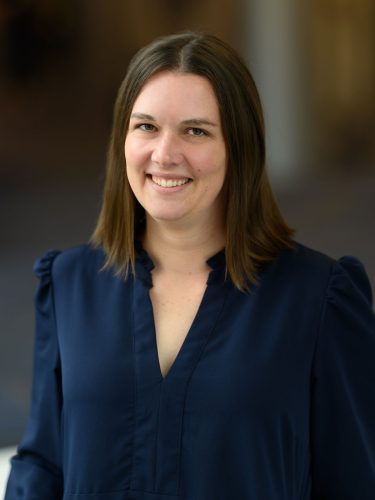
Social Work Welcomes Dr. Rebecca Hill as Assistant Professor 

LEXINGTON, Ky. — The University of Kentucky College of Social Work (CoSW) has announced Rebecca “Becky” Hill, DSW, LCSW, will be appointed as lecturer of social work. Hill brings more than two decades of experience in clinical social work, education, and cross-sector collaboration across Kentucky. 

Hill began her social work career at the Kentucky Department for Community Based Services (DCBS) and has since held roles in public health, community mental health, private practice, medical social work—including in the emergency department and outpatient pediatrics at UK HealthCare—and higher education. She has previously served in the UK community as a team member at the Violence Intervention and Prevention (VIP) Center and as a part-time instructor with the CoSW. 

“Dr. Hill’s extensive experience across Kentucky’s local systems—from state agencies to health care and higher education—offers a critical lens for our students,” said Dr. Jackie Duron, associate dean for faculty advancement. “Her insight into the unique challenges and strengths of our Commonwealth will enrich classroom learning and prepare our future workforce for impactful, community-informed practice.” 

Hill earned her Bachelor of Social Work (BSW) from Eastern Kentucky University in 2000, her Master of Social Work (MSW) from the University of Kentucky in 2009, and her Doctorate of Social Work (DSW) from UK in 2024. She has been licensed in Kentucky since 2002, first as an LSW (2002–2009), then as a CSW (2009–2019), and has held her LCSW since 2019. 

Throughout her career, Hill has been known for her client-centered approach, trauma-informed care, and deep commitment to mental health advocacy. She is particularly passionate about integrating clinical education into community-responsive frameworks that address both individual and systemic needs. 

Outside of her professional work, Hill is the proud parent of two teenage sons. She enjoys spending time outdoors—often hiking or gardening—and can frequently be found with a good book in hand between family activities. 

Munoz joins CoSW faculty, continues pedagogical leadership 

The University of Kentucky College of Social Work (CoSW) has announced Dr. Lindsey Munoz will start an appointment as a clinical faculty member, where she will continue shaping the future of teaching and learning.

Munoz joined CoSW in 2024 as the assistant dean of pedagogical possibilities, a role focused on enhancing instructional excellence, innovation, and accessibility. This fall, she expands her commitment to the College by also serving as a faculty member, bringing her student-centered approach directly into the classroom. 

“I’ve always felt a strong pull toward teaching,” Munoz shared. “Serving in an administrative role reminded me how much I value the connection with students—and stepping into a faculty role feels like the next step in my own professional growth.” 

That growth is guided by a teaching philosophy rooted in constructivism, relational-cultural theory, and an unwavering commitment to inclusive and transparent instruction. Whether developing new academic alert systems or advocating for Universal Design for Learning (UDL), Munoz views access and success in education not as individual burdens, but as shared institutional responsibilities. 

Munoz has led College-wide efforts to enhance online learning, integrate responsible AI use, and apply data to improve instruction. Her work spans undergraduate through graduate programs and includes onboarding programs that make virtual classrooms more dynamic and engaging. 

Looking ahead, Munoz will continue prioritizing three key initiatives: 

  • Leveraging data to enhance academic decision-making and instructional quality, 
  • Strengthening faculty development across modalities, and 
  • Advancing instructional design systems that are accessible, aligned, and sustainable. 

“My goal is to support high-impact teaching that makes the College of Social Work a true destination for students,” Munoz explained. “We already have extraordinary faculty and curriculum. Now, we’re focusing on how we deliver those experiences to ensure connection, clarity, and long-term impact.” 

Outside of academia, Munoz brings a unique lens shaped by her work in mental health, public safety, and app development—and a surprising background as a nationally ranked BMX racer. “It’s not something that comes up often in meetings,” she joked, “but it definitely shaped how I think about discipline, resilience, and risk-taking.” 

Whether she’s working with instructional designers, mentoring new educators, or experimenting with new classroom approaches, Munoz continues to model what it means to learn, evolve, and lead with intention. 

Social Work student supports mothers in recovery through PATHways program

LEXINGTON, Ky. — Marie Vice remembers what it felt like to be pregnant in early recovery: the fear, the hope, the invisible daily victories. It was a time of uncertainty and transformation—one that would ultimately set the course for her future. 

Now, years later, she spends her days walking alongside women navigating that same road. 

Vice is a student in the University of Kentucky College of Social Work (CoSW) Bachelor of Social Work (BASW) program and has worked with  UK’s Perinatal Assessment and Treatment home (PATHways) program for over a decade. PATHways supports pregnant and parenting women who are struggling with substance use disorders by offering comprehensive, trauma-informed care—integrating OB services, peer support, psychiatry, psychotherapy, and case management. 

“I know firsthand how hard it is to rebuild your life while also carrying new life,” Vice said. “That’s what brought me to this work. I wanted to be the person I needed back then.” 

Vice entered the PATHways program at 22 weeks pregnant. Two years after completing it, she was invited to join the team as a peer support specialist, thanks to a new federal grant secured by PATHways leadership. Since then, she has grown into a seasoned care provider, earning certifications as a prevention specialist, community health worker and targeted case manager. 

“As a prevention specialist, I get to build trust with patients in a really unique way because of my lived experiences,” she said. “Social work, at its best, meets people exactly where they are. It’s not about fixing someone. It’s about standing beside them while they figure out what healing looks like for them.” 

Vice’s early recovery journey was shaped by personal and relational challenges. She and her husband—both new to sobriety—struggled with accountability and co-dependence. But with time, education, and support, they learned to stabilize and grow. 

“I used to think there was only one way to recover. But I’ve learned recovery is different for everyone,” she said. “For me, it was learning to cope, identify triggers, the use of medication-assisted treatment, and accepting support from others. Accountability, support, and education changed everything for me”. Marie’s perspective has become a guiding principle in her work with patients. Whether she’s leading group sessions, coordinating care plans, or simply listening, Vice is intentional about meeting people with compassion—and helping them build a life they can sustain. 

Alongside her clinical work, Vice is earning her BASW through CoSW’s fully online program. The flexibility allows her to balance work, school, and family, while the content deepens her professional toolkit. 

“My courses have helped me put words to what I’ve experienced—and what I see in practice every day,” she said. “But the most meaningful part has been the connection. When a professor takes the time to really engage, it reminds me that I belong here. That my story matters.”

With her bachelor’s degree, Vice hopes to expand her scope of care, eventually offering therapy under the supervision of a licensed clinical social worker (LCSW). She’s also exploring the path toward graduate school—eager to continue growing as a practitioner and advocate. 

Vice sees advocacy as a critical part of the work both inside the clinic and out. 

“There’s still so much stigma. So much misunderstanding,” she said. “We need our communities and policymakers to understand that recovery is possible and that programs like PATHways are life-saving.” 

The work isn’t always easy. The outcomes aren’t always certain. But for Vice, the purpose is unwavering. 

This isn’t a ‘have-to’ job—it’s a ‘get-to,’” she said. “I get to walk alongside women as they heal from their past and grow for their future and their children’s future. I get to witness resilience unfold every day. I no longer ‘have-to’ survive, prove myself, or carry the weight of the past alone, and that’s a gift I don’t take lightly. I know—because I’ve been there. I’ve walked through the darkness and found my way to the other side. Now, every step I take with them is a reminder that recovery is possible, hope is real, and no one has to walk it alone.”

Aubrey Jones Appointed Acting Director of Ph.D. Program at College of Social Work 

Dr. Aubrey Jones, assistant professor in the University of Kentucky College of Social Work (CoSW), has been named acting director of the college’s Ph.D. program. She will serve in this role while Dr. Natalie Pope is on sabbatical through January 2026. 

Jones, a scholar-practitioner with deep expertise in maternal health, trauma, and digital support systems, joined the CoSW faculty in 2021. Since then, she has led several interdisciplinary research efforts aimed at improving health outcomes for underrepresented populations, particularly in the perinatal and postpartum period. Her work is rooted in community-engaged approaches that center access, equity, and lived experience. 

In addition to her academic leadership, Jones is a 2024–2025 Community Engaged Research Fellow and a recent nominee in the Community Action Council’s Unapologetically Woman series, which celebrates leaders advancing justice and well-being in Kentucky communities. 

“Dr. Jones’ scholarship and leadership embody the future of social work,” said Dr. Jackie Duron, Associate Dean of Faculty Advancement. “She brings a thoughtful, collaborative, and research-driven approach to her work—qualities that make her exceptionally well suited to guide our Ph.D. program during this time.” 

Jones is a member of the college’s fourth Research Scholars Program cohort and a key contributor to initiatives that bridge academic research with real-world change. In her new role, she will oversee curriculum planning, student support, and faculty mentoring, ensuring continued excellence in doctoral education and research productivity. 

“Dr. Jones has consistently demonstrated her commitment to developing the next generation of social work scholars,” Duron added. “I am confident our doctoral students will benefit greatly from her guidance and support.” 

To learn more about Dr. Jones and her work, visit: https://socialwork.uky.edu/portal/sw/faculty/jones-aubrey.  

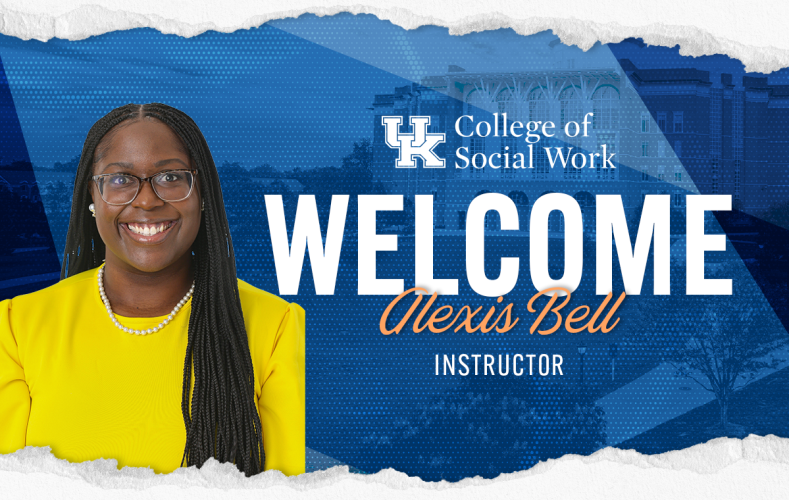
College of Social Work Welcomes Dr. Alexis Bell as Clinical Assistant Instructor  

LEXINGTON, Ky. — The College of Social Work (CoSW) is thrilled to welcome Dr. Alexis Bell as a Clinical Instructor at the University of Kentucky (UK).

A Lexington native and two-time UK alumna, Bell brings a student-centered, experience-driven lens to her teaching and practice. Since earning her MSW from CoSW in 2020, she has worked in school-based mental health and student support roles with Fayette County Public Schools, first as a District Mental Health Specialist and later as a Family Resource Youth Services Center (FRYSC) Coordinator at the high school level. In both positions, she worked to eliminate barriers to students’ academic and social-emotional success through responsive programs and wraparound support. 

Bell began teaching in higher education in 2022 as an adjunct instructor at Bluegrass Community and Technical College (BCTC). She joined the UK MSW program as a Part-Time Instructor in 2023 and has also provided clinical services in private practice and hospital-based settings. 

She holds a bachelor’s degree in psychology from Eastern Kentucky University, a Master of Social Work from UK with a school social work certification, and a Doctor of Social Work (DSW) from UK with a concentration in social work education, completed in May 2025.  

“Dr. Bell’s lived experience, teaching expertise, and passion for student advocacy make her a powerful addition to our faculty,” said Dr. Jackie Duron, Associate Dean of Faculty Advancement. “Her voice and vision will enrich our classrooms and strengthen our commitment to equity in education and social work practice.”  

Outside of her professional roles, Bell enjoys attending concerts, traveling, singing in her church choir, playing tennis, and shopping. 

To learn more about Dr. Bell’s work, visit her LinkedIn profile

Your Story Matters: Help Us Celebrate the Legacy of Social Work Alumni

LEXINGTON, Ky. — The University of Kentucky College of Social Work (CoSW) is launching Moving Forward, Looking Back, an alumni spotlight series honoring the generations of CoSW graduates whose work has shaped the field of social work through leadership, advocacy, and values-driven service.

Spearheaded by Ramla Osman, Director of Philanthropy, the initiative offers an opportunity to uplift and celebrate the profound contributions of alumni across eras and disciplines.

“Social workers have always been at the heart of meaningful change,” said Osman. “This series is a way to share their stories—stories of service, strength, and transformation—and to preserve their legacy for future generations.”

The first spotlight features Patricia Givens, an alumna whose international work in postwar Japan and later leadership in the U.S. exemplify the far-reaching and deeply human impact of social work. Her story is just one of many that reflects the enduring power and legacy of the profession.

Moving Forward, Looking Back will serve as a living archive, capturing the depth, expansion, and dedication of CoSW alumni who have turned social work values into lifelong missions.

If you—or someone you know—would like to be featured in this ongoing series, please connect with Ramla Osman at ramla.miller@uky.edu.

From Kentucky to Tokyo: A Social Work Alumna’s Legacy

LEXINGTON, Ky. — At 93 years old, Pat Givens can trace the impact of her life’s work across decades, cultures, and continents. A proud graduate of the University of Kentucky College of Social Work (CoSW), her legacy stands as a testament to the quiet power of social work—not only as a profession, but as a lifelong practice of listening, bridging, and understanding.

Givens’ path to Kentucky began far from the Bluegrass. Living with her family in South Dakota at the time, she chose UK because of her father, a proud College of Agriculture alumnus, who had long dreamed his daughter would return to his alma mater.

“I think my first semester I just signed up for whatever I had to pass on,” she said, laughing. “But social work was about the only thing that was me all over. It’s about understanding people better, helping where I can—and I’ve always loved to travel. It helped me fit into the many places I’ve been able to live.”

Givens arrived at UK in the early 1950s, a time when the social work program was small—just 8 to 10 students in her freshman class—but deeply formative. She recalls feeling immediately at home, surrounded by peers and faculty who saw and supported her.

One of those figures was Dr. Herold Wetzel, then-dean of the College of Social Work, whom Givens remembers as “loving and kind.” Another was Sarah (Bennett) Holmes, dean of women, who was known for her dedication to the rights and welfare of women students on campus.

“I always felt like I fit in,” Givens said. “That might be one of UK’s great strengths: it helps people feel like they belong.”

But her journey didn’t stop in Lexington.

During her junior year, she met a young military officer—her future husband—and after he passed the Foreign Service exam, the couple moved to Tokyo, Japan. For Givens, the transition wasn’t just geographic; it marked the beginning of a life shaped by international service and cultural diplomacy.

While in Japan, Givens worked with International Social Service (ISS), a postwar organization dedicated to child welfare, protection, and family reunification. Her role included interviewing U.S. military families interested in adoption and supporting Korean and Japanese mothers—many of whom had been separated from U.S. servicemen following the Korean War—as they sought adoptive families for their children.

“I can remember 3 or 4 times when there was no place to take this baby,” she said. “So, I would bring them home with me until I found them a permanent family.”

The work was rewarding, emotional, and urgent. At a time of intense geopolitical tension, Givens quietly built bridges—family by family, story by story. Her role required compassion, discretion, and a deep sensitivity to the nuances of identity, loss, and belonging.

“It really was a wonderful time,” she recalled smiling. “During that time, I also had a few kids of my own, so there were a lot of children around. I really enjoyed that.”

After returning to the United States, Givens continued her work as a cultural bridge-builder. In the early 1980s, she served as Director of the Japan Society of Boston, during a time when Japan’s rapid economic and technological ascent drew intense interest from American industry and policymakers.

Recognizing her unique perspective and cross-cultural expertise, leaders from the Commonwealth of Massachusetts later invited her to help guide the state’s economic development efforts in Asia—particularly Japan.

“I’m not a businessperson,” she admitted. “But they thought I would be a good person to help develop business opportunities between Japan and the state. During the seven years I served in that role, I went to Japan 29 times.”

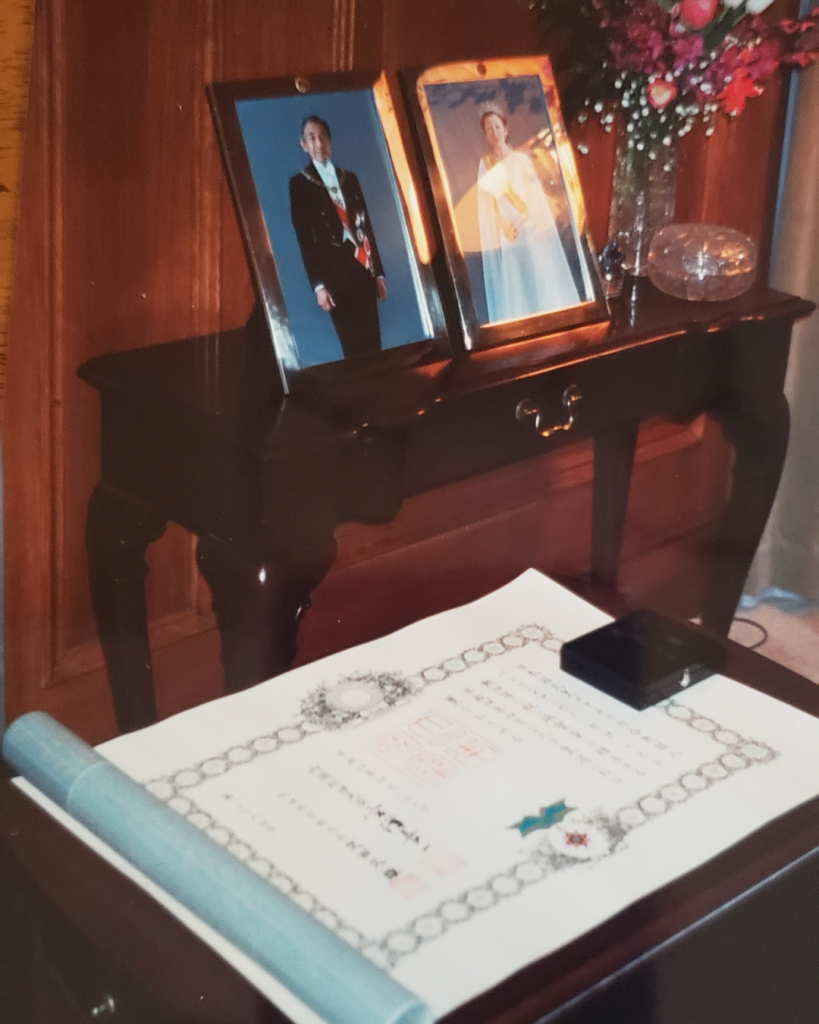
During that time, she also formed a friendship with Masako Owada, then a Harvard student and now the current Empress of Japan.

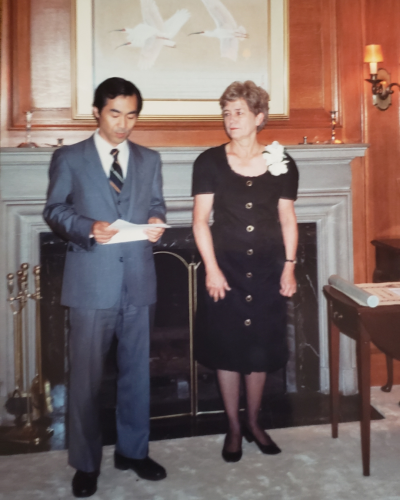
In honor of her extraordinary work in strengthening U.S.–Japan relations, Givens received the Decoration Order of the Sacred Treasure from the Government of Japan—one of the highest honors awarded for exceptional contributions to bilateral diplomacy.

Still, Givens frames her life not through accolades, but through values.

“I’ve always had a desire to understand people,” she said. “Even people I don’t always get along with. That’s what we need now. More global understanding. We might not always call it social work, but that’s what it is.”

In every chapter of her story, Patricia Givens embodies the spirit of social work—not as a job title, but as a way of being. From postwar Tokyo to policymaking circles in Massachusetts, she moved through the world as a connector: of people, cultures, and ideas.

“Don’t rely on screens to understand each other,” she added as a piece of advice. “Meet face to face. Talk to each other. That’s how we build a better world.”

Her story is a reminder that social work doesn’t begin or end at the office door. It lives in every moment someone chooses to listen, to learn, and to take action in service of others.

And in that way, her legacy isn’t just global—it’s timeless.

Holden Dillman recognized for community-rooted research on Appalachian youth

LEXINGTON, Ky.  For too long, the stories of young people in Appalachia have been flattened—portrayed in broad strokes that overlook the complexity of growing up in one of the nation’s most culturally rich regions with historically limited access to resources. One student scholar at the University of Kentucky’s College of Social Work (CoSW) is working to change that. 

Holden Dillman, a doctoral candidate in the CoSW Ph.D. program, community-engaged scholar, and licensed clinical social worker, lives in Eastern Kentucky and provides telehealth psychotherapy to individuals and couples across the state.  

Dillman has been awarded the James S. Brown Graduate Student Award for Research from the UK Appalachian Center & Appalachian Studies program, a recognition that honors research aimed at reframing narratives and lifting voices from the community. 

Dillman’s research, We Are Here, seeks to better understand how early experiences of of being seen, supported, and valued—or the lack thereof— shape long-term mental health outcomes for youth in Appalachia. The project, supported by the award, blends national survey data with in-depth interviews conducted across rural communities, aiming to uncover both challenges and sources of strength. 

“This work is deeply personal,” Dillman said. “Growing up in a small Appalachian town, I often felt invisible. But I also witnessed the quiet forms of connection and resilience that don’t always make it into the headlines. This study is about honoring that complexity.” 

At its core, the project challenges the notion that Appalachian communities are defined solely by hardship. Instead, it spotlights protective factors like belonging, place-based identity, cultural affirmation and others that could inform more effective, locally grounded mental health supports. 

Dillman’s approach urges social workers and policymakers alike to consider not just clinical interventions, but the broader social and environmental systems in which young people come of age. 

“Appalachia is not a monolith,” Dillman noted. “We need research that recognizes the many experiences within the region and moves beyond deficit-based thinking. This study is about expanding the map—both literally and metaphorically—for youth whose voices are too often left out.” 

The James S. Brown Award comes with funding to support participant incentives, ensuring that rural youth who share their stories will be compensated for their time and insight. For Dillman, this is not just a matter of ethics, but of fairness. 

“I believe research should serve the communities it comes from,” Dillman said. “This award affirms that community-driven work matters.” 

As part of the next phase of the project, Dillman is actively recruiting participants across Kentucky and the broader Appalachian region. Those interested in contributing to the study can complete an interest form here: https://uky.az1.qualtrics.com/jfe/form/SV_a5ec2gBWmPc9dMa 

Social work faculty prepare students for policy in practice

LEXINGTON, Ky. Dr. Madri Hall-Faul, assistant professor at the University of Kentucky College of Social Work (CoSW) is helping students explore how social workers shape policy through the rulemaking process. 

Her recent co-authored article, published in Families in Society: The Journal of Contemporary Social Services, explores how federal rulemaking—a process often overlooked in curricula— provides important chances to influence policies that affect the people and communities social workers support. 

In “Federal Rulemaking: An Untapped Arena for Social Work Policy Education and Practice,”  Hall-Faul and co-authors Dr. Emily Loveland of California State University San Bernardino and Dr. Kathryn Libal of the University of Connecticut review case studies in which proposed regulations had the potential to substantively shape policies related to social work practice.  

“Rules are made every day that shape how justice and support are delivered,” said Hall-Faul. “If we’re not part of that process, we’re leaving power on the table.” 

With the recent overturning of the Chevron doctrine by the Supreme Court, the rulemaking process is undergoing a seismic shift. As these changes unfold, the participation of those trained in systems thinking, legal frameworks, and social impact becomes even more critical.  

In her courses, Hall-Faul teaches students how to analyze public comment campaigns and practice crafting persuasive policy messages. The hands-on learning helps bridge theory and practice, supporting students in social work and criminal justice as they engage with real-world policy issues. 

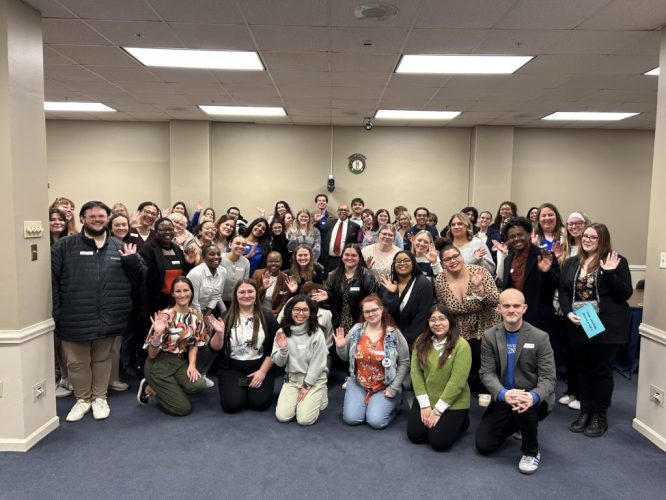
Hall-Faul also plays a significant role in the College of Social Work’s annual participation in Social Work Lobby Day, where students and faculty travel to the Kentucky State Capitol to engage directly with lawmakers on pressing legislative issues.  

“Policy can feel abstract in the classroom—but when students sit across from a legislator and speak from experience, it becomes real. It also helps students realize that legislators are people with whom they can build a relationship” Hall-Faul shares, “That’s where change starts.” 

For more information on the College of Social Work’s programs and initiatives, visit https://socialwork.uky.edu/portal/sw/

Social Work brings rural perspectives at the center of a National convention 

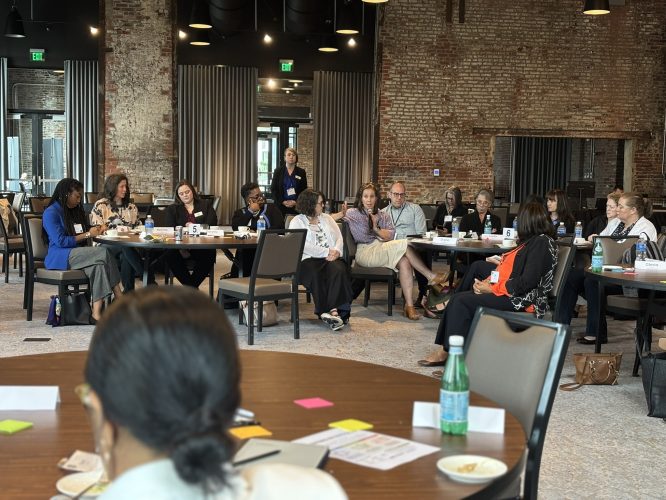
Lexington, Ky. — In a room full of bankers, philanthropists, and national nonprofit leaders, Dr. Diane Loeffler brought something different to the table: the perspective of a social worker. 

Loeffler traveled to Memphis, Tennessee, for the 2025 Rural Investment Summit, hosted by Partners for Rural Transformation. The convening drew voices from across sectors to address persistent underinvestment in America’s rural landscapes—from the hollers of Central Appalachia to Tribal Lands and the Rio Grande Valley. 

Loeffler, a faculty member at the University of Kentucky College of Social Work (CoSW), didn’t just speak on behalf of Kentucky’s flood-ravaged communities. She listened with a trained ear for systems, policy, and the human stakes behind both. 

“I kept thinking, ‘If only banks and philanthropies had social workers on staff,’” she said. “We’re trained to hold systems and people in the same frame—and that’s exactly what this work demands.” 

For Loeffler, the conversation wasn’t only theoretical. In recent years, she’s collaborated with faculty and PhD students across the University to assess disaster recovery systems in Eastern Kentucky, where historic flooding left entire counties underwater—and unmoored. Her research has traced not just the damage, but the delays, the disconnects, the dead ends rural communities face when navigating recovery. 

“Too often, rural communities are asked to solve complex problems without the capital or capacity to support long-term solutions,” she said. “What they need and deserve are multi-year, flexible investments rooted in trust and local leadership.” 

That belief—that rural places are rich in strength but hungry for more structural support—is now embedded in more than just her research. It’s informing how the College prepares the next generation of social workers. 

This year, CoSW launched its Graduate Certificate in Rural Health and Well-Being, a fully online program built for students eager to tackle the layered realities of rural life. From broadband blackouts and transportation gaps to generational trauma and healthcare deserts, the certificate explores the intersections of geography, identity, justice, and care. 

“The challenges facing our rural population are unique and complex,” said Dr. Amanda Brown, Director of the MSW Program and one of the driving forces behind the certificate. “This offering reflects our commitment to preparing students—and building a workforce—equipped to meet those needs.” 

For Loeffler, the connection between summit conversations and classroom instruction is seamless. What she witnessed in Memphis—innovators working across disciplines to reimagine what’s possible for rural America—is the same energy she hopes to ignite in her students. 

“Our students want to do work that matters,” she said. “They want to be part of systems change. And rural communities right here in Kentucky need them. This is where we can make that happen.”