SEARCH RESULTS FOR:

Search Results

Social Work, POWER host “Self-Care Mindset” workshop for students

Lexington, KY (September 16, 2024) – In recognition of September as Self-Care Awareness Month, the University of Kentucky’s College of Social Work (CoSW) continues to prioritize student well-being through a recent virtual workshop on cultivating a “Self-Care Mindset.” The workshop, held on September 11, was hosted by Meghan Wolf, the Student Wellness Coordinator with UK POWER, a National Board-Certified Health and Wellness Coach. Wolf is also a Certified Intuitive Eating Counselor and Certified Body Image Coach. 

The interactive, virtual workshop encouraged participants to assess their wellness across multiple dimensions using the Wellness Wheel. Participants were asked to rate their satisfaction in eight key areas—emotional, spiritual, social, physical, financial, environmental, intellectual, and occupational—on a scale from 1 to 10. This exercise fostered honest discussions about maintaining balance in their personal, academic, and professional life.  

“The Wellness Wheel really helped me visualize where I need to focus more attention on my well-being. It was a great reminder to prioritize myself,” said one student participant. 

Wolf emphasized the importance of a holistic approach to wellness, highlighting how factors such as occupational and environmental health are closely tied to overall well-being. Students were encouraged to reflect on how their social and physical surroundings, as well as their professional satisfaction, impact their mental and emotional health. 

One of the workshop attendees, Dewanna Chambliss-Young, a Doctor of Social Work (DSW) student, shared her newfound self-care goals “After attending the Wellbeing webinar, I plan complete at least 15 minutes of daily movement to reset and refocus. The workshop inspired and encouraged me to prioritize self-care.”  

Students are also encouraged to book personalized wellness coaching sessions with Wolf, available virtually, to further explore their individual self-care needs. 

This workshop is one of many initiatives the College of Social Work is offering to enhance student wellness, aligning with the broader mission of fostering a supportive, balanced environment for all students. 

College of Social Work expands wellbeing initiatives 

LEXINGTON, Ky. (September 09, 2024) — Last fall, the UK College of Social Work (CoSW) announced plans to hire a Chief Well-Being Officer (CWO) as part of its commitment to improving the well-being of faculty and staff. 

This unique role at CoSW was created to cultivate a healthy, productive, and supportive workplace for faculty and staff. 

Since assuming the role in February 2024, Andrea Deweese has played a pivotal part in expanding existing wellness initiatives and implementing new programs tailored to the college’s needs.  

Deweese’s work encompasses various wellness domains, including mental health, physical health, social connectivity, and professional development. 

“On a micro-scale, this can look like weekly acknowledgments for life events or shoutouts amongst colleagues to appreciate each other’s work,” Deweese shared. “On a larger scale, we’ve implemented some really exciting programs, including ‘New Employee Wellbeing Welcome (NEWW)’, ‘Moving Meetings’, the Wellness Hub, and more.” 

Incorporating approaches like the Self-Care Initiative Grant and meditative Virtual Reality, the CoSW has long-since been a leader in pioneering wellness practices.  

 “Academic administrators have a responsibility to cultivate supportive environments conducive to faculty staff wellness, which includes self-care” said Jay Miller, Dean and Director of the Self Care Lab. “This responsibility is not just the “right” thing to do; it contributes to effectiveness in teaching, research, and service, among others.” 

Alongside wellness initiatives, Deweese spearheads advanced professional development opportunities at CoSW, such as the Investment in Ingenuity and Initiative (I3) program and the BRIGHT Leadership Training program. She also plays a major role in the continuation of this year’s second annual CoSW Awards Recognition Event.   

“I am deeply honored to have the opportunity to serve in this capacity,” said Deweese. “Being able to make a tangible difference in the lives of our team, and knowing that will flow down to students and those we serve, is incredibly fulfilling. The support and enthusiasm from everyone motivates me to continue striving for excellence in wellness promotion.” 

Research on post-traumatic growth in soldiers earns Army-MSW student high honors  

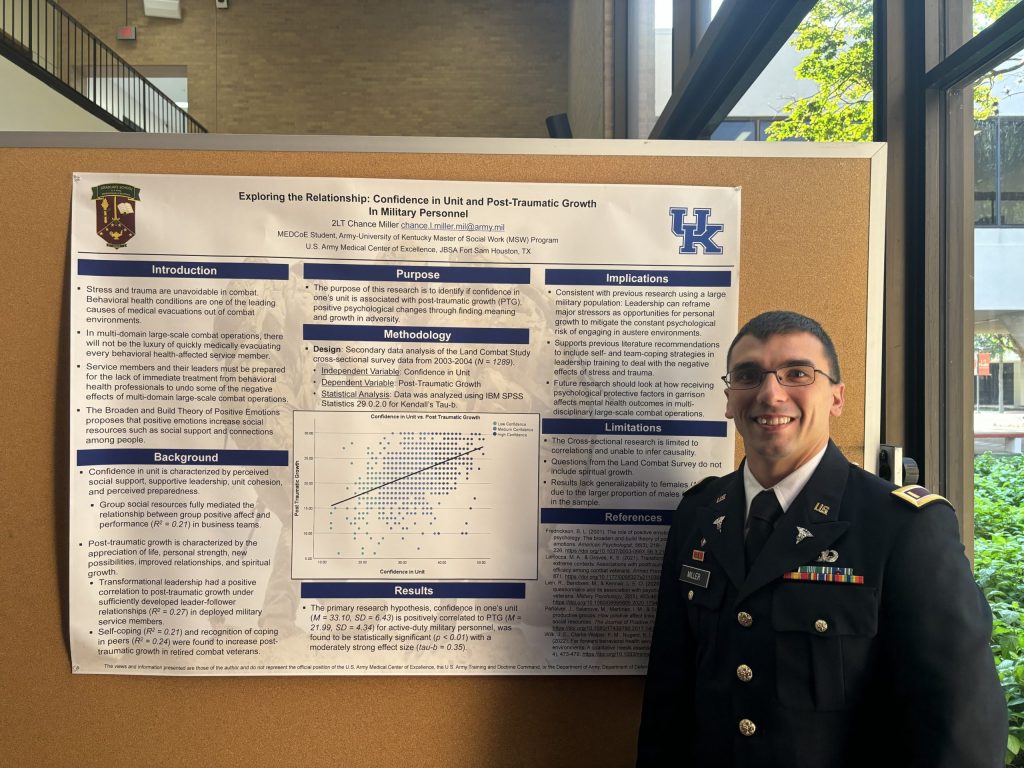
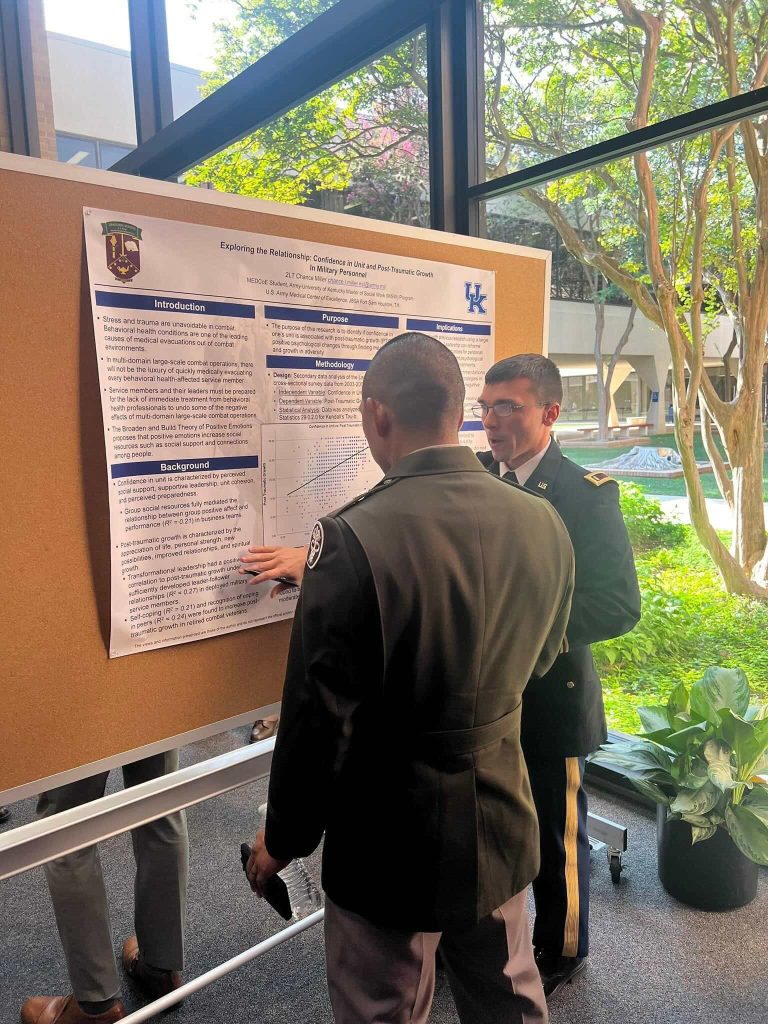
San Antonio, Texas (September 3, 2024) – Chance Miller, a student in the Army-UK Master of Social Work (MSW) program, was awarded at the U.S. Army Medical Center of Excellence’s Research and Education Symposium. Miller won best primary research poster in the student category for his work titled, “Exploring the Relationship: Confidence in Unit and Posttraumatic Growth in Military Personnel”. 

Miller’s research explores the concept of “confidence in unit,” which refers to a soldier’s perception and preparedness within their unit, including leadership and operational readiness. His work examines how this confidence positively correlates with posttraumatic growth—a process of positive psychological development that can result from experiencing stressful life events. Miller emphasizes that understanding and fostering posttraumatic growth is crucial, particularly in large-scale combat operations where aerial medical evacuation of psychological casualties are less likely to happen.

“This research is needed,” Miller said, emphasizing the evolving nature of military engagements and the growing emphasis on resilience among soldiers.  

Miller’s research has far-reaching implications, particularly in the role of military behavioral health providers, unit commanders, and frontline leaders. They must arm both troops and their leaders with the resources needed to cultivate resilience and foster posttraumatic growth—a concept that may help reduce the adverse symptoms of posttraumatic stress disorder (PTSD) in the ranks. 

Chance Miller presenting on posterboard

Miller attributes much of his growth as a researcher to the mentorship of Dr. Bicknell and Dr. Oliver, research professors at Fort Sam Houston. Their guidance and constructive feedback have been pivotal in broadening his viewpoint and refining his approach to both research and social work. 

 “What it comes down to is perspective,” Miller explains, elaborating on his belief in the power of understanding and empathy. “My guiding philosophy is this: orchestrate hope with people to honor our freedoms to be unique so that together we can live in positive harmony.”  

This principle is at the heart of both his approach in social work and his role in the U.S. Army. 

Miller’s journey to the Army-UK MSW program at Fort Sam Houston began after nearly three years of active-duty service in the Army, where he served as a logistics platoon leader—a role he fondly remembers. His company, the ROADRUNNERS, was a source of inspiration in his research. 

“My old command team exemplified the importance of a positive culture,” Miller shared. “They were open about behavioral health, actively supported programs for mental, physical, and emotional well-being, and fostered an environment where everyone could be their best. Their emphasis on heart, focus, and mental health inspired my research.” 

Before joining the U.S. Army, Miller earned a master’s degree in industrial-organizational psychology, which has greatly influenced his role as a military officer. While Miller was an undergraduate, a mentor encouraged him to pursue social work. Seven years later, Miller reflects that he’s found the perfect career. 

“I get to serve my country, help others, and consult with leaders,” Miller shared. 

As a behavioral health officer, Miller will be engaged in more than just clinical work—he will also participate in leadership training, change management, and provide recommendations on socio-environmental factors that impact unit effectiveness.  

He also acknowledges the unwavering support of his mother and his Nana, whose encouragement has been a cornerstone of his success. Miller fondly recalls a short note his mother sent during Basic Combat Training that reminded him he was “halfway there” and encouraged him to keep pushing forward. 

For those interested in learning more about the Army MSW program, you can find more information here. If you are interested in connecting with Chance Miller, he is open to sharing his experiences and insights. He embodies the belief that “it takes a village,” emphasizing the importance of community and support in both personal and professional endeavors. 

It is important to note that the views expressed in Miller’s research are his own and do not reflect the official positions of the U.S. Army, Department of Defense, or the military as a whole. 

Recognizing space as a HIV risk factor for older adults

Lexington, KY (August 28, 2024) – Researchers from the University of Kentucky College of Social Work (CoSW), including Dr. Laneshia Conner, Dr. Katie Showalter, and Ph.D. candidate Rujeko Machinga-Asaolu, have published a critical study on HIV risk behaviors among adults aged 60 and older. The study, titled “Geographic Patterns of Human Immunodeficiency Virus (HIV) Risk Behaviors Among Older Adults: A Strategy for Identifying Space as a Risk Exposure,” provides vital insights into regional disparities in HIV risk, particularly in the Southern U.S., where the burden is disproportionately high.

In the United States, approximately 1.2 million people are living with HIV, with the Southern U.S. accounting for about 52% of new diagnoses. This study highlights the significance of geographically targeted prevention efforts and policies, especially for vulnerable populations like Black/African American and Hispanic/Latino communities, who are disproportionately affected by HIV.

This research is particularly relevant for gerontologists, offering a rare examination of HIV risk at both the individual and regional levels among older adults. By utilizing a nationally representative sample, the study provides actionable insights for gero-focused practitioners, researchers, and policymakers.

As the aging population grows, understanding HIV risk behaviors through geographic patterns becomes crucial. Analyzing data by regions, census divisions, and other markers offers a unique ecological perspective that can fill important knowledge gaps about laws, policies, and challenges affecting older adults’ HIV prevention. Geospatial technologies and population-based surveys can identify areas with higher HIV risk, enabling targeted interventions to maximize public health impact.

Read the full article here: Journal Link.

Social work student experiences redemption through forensic advocacy 

LEXINGTON, Ky. (August 20, 2024) – Leah Wilson, an MSW student at the UK College of Social Work (CoSW), is exploring the intertwined spaces between social work and criminal justice through a unique practicum opportunity  with Sara Baldwin, LCSW, a  Mitigation Specialist in Jacksonville, FL Sara specializes in forensic social work.

Wilson’s practicum transcends education; it’s a powerful narrative of redemption, not just for the justice-involved individuals she supports, but for herself. As a survivor of intimate partner violence, her work is not only reshaping her clients’ outlooks on their futures but also transforming how she views her own past. 

Wilson’s practicum takes her beyond the traditional settings of clinical environments, such as hospitals or schools. Instead, Wilson spends her days meeting one-on-one with clients around Jacksonville, Fla. As a mitigation specialist intern, her responsibilities are diverse, ranging from conducting in-depth life history investigations to teaching practical life skills and providing support in therapeutic environments.  

“I currently work with an individual who was released from prison six years ago,” Wilson shared. “He was convicted at 14 and spent 43 years in prison.”

Drawing from her own struggles with addiction, Wilson’s career accelerated in juvenile justice, where she worked in psychiatric facilities for delinquent teenagers. “I stayed in this field because I found that my journey, more often than not, intersected with their own,” she explained. “As a teenager, the adults who impacted my life did so in a way that cannot be compared to any other life stage.” 

These impactful experiences propelled her toward pursuing licensure as a practitioner. “In our society, there is something known as the ‘school-to-prison-pipeline’ effect,” Wilson noted. “When early intervention fails, it’s likely that a young adult will become part of the criminal legal system. As a mitigation specialist intern working on adult-only capital cases, I have seen the reality of systemic failure.” 

Wilson’s goal is to eventually work as a juvenile mitigation specialist, using the experience she’s gaining now to help prevent criminality through proper early intervention. Her work often involves conducting thorough investigations into her clients’ personal histories, interviewing family and friends, and identifying trauma indicators from childhood. 

“As a survivor of domestic violence, this entire opportunity was very intimidating at first,” Wilson admitted. “I’m working with men who hold criminal records that include assault. I have had real ‘trigger’ moments.” With her supervisor’s guidance and personal therapy, Wilson has found her work to be ‘incredibly redemptive’, giving her the tools to truly find and extend forgiveness.  

Leah Wilson’s journey is a compelling testament to the transformative power of social work. “In helping others rebuild their lives, I discovered the strength to rebuild my own,” she shared, embodying the resilience that defines her path.

Save-the-date for Homecoming 2024

LEXINGTON, Ky. – The University of Kentucky College of Social Work is excited to celebrate Homecoming from October 6-13. Save-the-date and plan your trip to campus today.  

If you can’t make it to Lexington, no worries—we’ll be offering opportunities to celebrate virtually, too!  CoSW will participate in several Homecoming activities, including: 

Class of 1974 Golden Wildcat Reunion 
Thursday, October 10 
Gatton Student Center 
6 – 9 p.m. 

College of Social Work Hybrid Trivia Night 
Friday, October 11 
Old North Bar 
Time TBA 

Kentucky vs. Vanderbilt football game and tailgate 
Saturday, October 12 
Time and tailgate location TBA 

Please visit the UKAA website to learn more and see the full calendar of events. 

UK Researchers advance inclusive neonatal care for LGBTQ+ families  

CoSW assistant professor Aubrey Jones works with a team of UK researchers committed to understanding challenges and improving provisions for family-centered care. You can access their published work here.

Lexington, KY (August 8, 2024) – The stress of having an infant in the Neonatal Intensive Care Unit (NICU) can disrupt parent well-being, the transition to parenthood, and typical trajectories of infant and child health. For lesbian, gay, bisexual, transgender, queer, or other sexual and gender minority identity (LGBTQ+) parents, this stress may be compounded by health disparities and fear of stigma and discrimination.  

Enter Dr. Aubrey Jones and her team. 

Dr. Jones, an assistant professor at the University of Kentucky College of Social Work (CoSW), is leading a dedicated team of researchers in exploring and expanding the understanding of the experiences of LGBTQ+ parents with infants in the NICU. Their work aims to develop comprehensive care strategies to better support these families. 

Their research, published in Children (MDPI), focuses on understanding the challenges of stigma and discrimination, identifying sources of strength and resilience, and improving the provision of family-centered care. 

The team was comprised of researchers across a variety of disciplines:

Aubrey Jones: College of Social Work  

Olivia Swedberg Yinger: School of Music, College of Fine Arts  

Keisa Fallin-Bennett: Department of Family and Community Medicine, College of Medicine  

Chelsea Gibbs: School of Music, College of Fine Arts  

Rachel H. Farr: Department of Psychology, College of Arts and Sciences  

Background 

In the United States, approximately 5.5% of adults identify as LGBTQ+ (Flores & Conron, 2023). Of the 13.9 million LGBTQ+ adults, an estimated 29% are rearing children under 18 years of age (Williams Institute, 2019). LGBTQ+ parents may be more likely to have infants admitted to the NICU due to their diverse pathways to parenthood, including adoption, surrogacy, and assisted reproductive technology (ART), which are associated with higher NICU admission rates (Patterson, Farr, & Goldberg, 2021). This review examines the challenges faced by LGBTQ+ parents in the NICU, the contributing authors and their accolades, and the proposed solutions to improve care for these families. 

Challenges Faced by LGBTQ+ Parents in the NICU 

The integrative review identified several challenges faced by LGBTQ+ parents in the NICU: 

1. Stigma and Discrimination: LGBTQ+ parents often face stigma and discrimination, which can manifest in being denied access to their infants, not being recognized as legitimate parents, and facing heteronormative assumptions from staff (Sigurdson et al., 2020). 

2. Health Disparities: LGBTQ+ parents experience higher rates of health disparities compared to their cisgender and heterosexual counterparts, leading to increased stress and mental health challenges during the NICU experience (Medina-Martínez et al., 2021). 

3. Legal and Financial Barriers: Legal recognition of parental rights remains a challenge for many LGBTQ+ parents, particularly non-birthing parents. Financial strain is also a significant issue, especially regarding the cost of NICU stays and legal processes like second-parent adoption (Hudak, 2023). 

“Our research aims to shed light on the disparities that queer families face in NICUs and to advocate for changes that will make these critical care environments more inclusive and supportive,” said Jones. “Every family, regardless of their structure, deserves the highest standard of care, and our work is a step towards achieving that goal.” 

Proposed Solutions 

The integrative review suggests several solutions to improve care for LGBTQ+ parents in the NICU: 

1. Family-Centered Care (FCC): Emphasizing FCC can improve the NICU experience for LGBTQ+ parents. FCC principles include dignity and respect, information sharing, family participation in care, and family collaboration (Franck & O’Brien, 2019). Successful FCC involves inclusive practices such as acknowledging both parents, involving them in care decisions, and respecting their roles. 

2. Training and Policy Changes: Hospitals and NICUs need to implement training programs for staff that focus on inclusive care for LGBTQ+ families. This includes using appropriate language, recognizing diverse family structures, and avoiding assumptions based on heteronormativity (Jackson et al., 2022). 

3. Support and Resilience: LGBTQ+ parents often draw strength from chosen family, community belonging, and affirming environments. Recognizing and supporting these sources of resilience can help improve their NICU experience (Gooding & Yinger, 2023). 

4. Further Research: More rigorous and inclusive research on the experiences of LGBTQ+ parents in the NICU is needed, focusing on both challenges and sources of strength. Future studies should involve community-engaged methods to ensure the perspectives of LGBTQ+ parents are centered and respected (Gómez-Cantarino et al., 2020). 

Conclusion 

This integrative review highlights the unique challenges and experiences of LGBTQ+ parents in the NICU and underscores the need for inclusive and supportive care practices. Implementing the proposed solutions can improve the NICU experience for LGBTQ+ families, promoting health equity and well-being.  

“Every family deserves the highest standard of care, and our work is a step towards achieving that goal,” Dr. Jones said.  

The University of Kentucky College of Social Work remains committed to advancing research that promotes social justice and equity in healthcare, paving the way for more inclusive practices that benefit all families. 

You can read the original integrative review in Children by clicking here.

College of Social Work to host second annual recognition event, honoring outstanding contributions

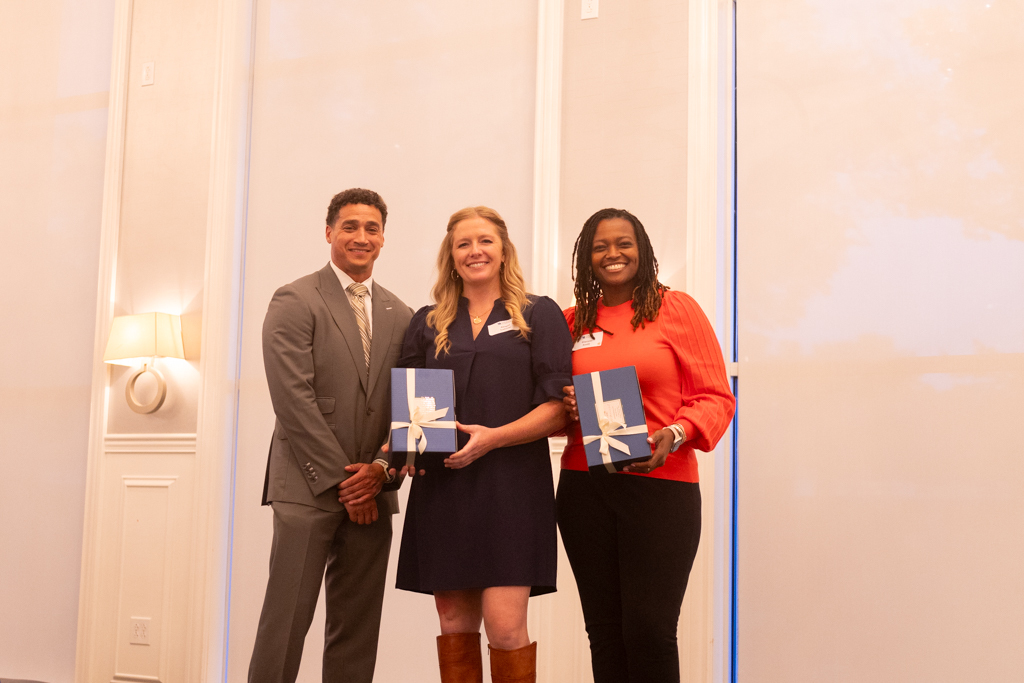
LEXINGTON, KY (August 2, 2024) — The University of Kentucky College of Social Work (CoSW) is excited to announce its Second Annual CoSW Recognition Event, set to take place on September 26th at the historic Carrick House. This highly anticipated event will honor the outstanding contributions and achievements of individuals across many units at the college. 

Following the success of last year’s inaugural ceremony, the event will again serve as a platform to celebrate excellence within the College. We are proud to recognize individuals and groups who have demonstrated unwavering dedication to social work and community service. 

Award Categories Include: 

  • People First, People Always Award Recipients: Honoring the impacts of our faculty and staff who have made significant contributions to the college through compassionate and innovative practices. 
  • SWAA Award Recipients: Celebrating the accomplishments of members of the Social Work Alumni Association and other outstanding social work professionals who support the college. 
  • CoSW Years of Service Milestones: Recognizing faculty and staff members who have reached significant milestones in their years of service at the College. 
  • SWAA Executive Advisory Committee Members: Acknowledging the leadership and guidance of the Executive Advisory Committee members of the Social Work Alumni Association. 
  • Dean’s Student Advisory Council Members: Highlighting the contributions of student leaders who provide valuable insights and feedback to the Office of the Dean. 

The celebration will include a formal awards ceremony, a reception with hors d’oeuvres, and an opportunity for attendees to network and share their experiences. The Carrick House, known for its elegance and historic charm, provides the perfect backdrop for this special evening. 

Looking Back, Moving Forward: Legacy and Expansion at the College of Social Work 

Legendary Beginnings: Frances Jewell McVey 

In 1938, as the nation emerged from the Great Depression, the University of Kentucky (UK) Board of Trustees established its first Department of Social Work, led by Frances Jewell McVey, a former Dean of Women and English professor with a long-held dream of bringing social work education to UK. 

McVey graduated from Sayre College and attended Baldwin School in Pennsylvania before receiving her BA from Vassar College in 1913. She earned a Master of Arts degree from Columbia University in 1918 and began teaching at UK as an English professor from 1915 to 1921. Appointed Dean of Women in 1921, her leadership culminated in the founding of the Department of Social Work, chaired by Dr. Vivian Palmer, formerly of Macalester College and the University of Chicago. Just four months later, the department’s programs were accredited by the American Association of Schools of Social Work. 

Expansion and Growth: Making a Name for Itself 

In 1969, the department evolved into the College of Social Professions and, in 1980, it was renamed the College of Social Work. This period marked significant growth and expansion under successive deans. Professor Ronda Connaway, appointed in 1974, initiated the off-campus master’s in social work program in Hazard, Kentucky, catering to full-time employees seeking part-time student status. This initiative expanded under S. Zafar Hasan, the third dean of the college. 

Those early programs exemplified the college’s commitment to accessibility and community-focused education in the Commonwealth and beyond, a commitment that continues today with the college’s flexible online degree offerings and workforce-focused partnerships

Kay S. Hoffman, previously the director of the Social Work Program at Radford University in Virginia, became the fifth dean of the College of Social Work in 1998. Under Dean Hoffman, the college expanded its research and intellectual inquiry components with the creation of the Training Resource Center (TRC), promoting the well-being of families, children, and communities through research, training, and service development. The TRC serves more than 50,000 individuals annually and is a nationally recognized leader in child welfare research and training. 

Centers & Labs: Expanding Beyond the Conventional 

Now, CoSW is home to several unique centers and labs in addition to the TRC, housed at the Coldstream Research Campus. This apparatus provides researchers, practitioners, academicians, and students with opportunities to conduct cutting-edge research and programs. The organizational structure fosters multidisciplinary, collaborative efforts to advance the college’s mission. Notable centers and labs include the Suicide Prevention Lab, Sport Social Work Lab, Self-Care Lab, Military Behavioral Health Lab, and the Interdisciplinary Research Center on Children and Families lab. 

Programs like Adoption Support for Kentucky (ASK), the Citizen Review Panels (CRP), the Kentucky Kinship Resource Center (KKRC), among others, demonstrate the college’s ongoing commitment to innovative, community-focused initiatives. Through partnership with the Kentucky Department of Community Based Services, these programs address the needs of foster, adoptive, relative, and fictive-kin caregivers, and support state child protective services systems through volunteer panels that review policies and make recommendations for improvement.  

Many of programs and initiatives from CoSW’s centers & labs are nationally recognized, state certified and award-winning

Recent Developments and Future Directions 

Under the leadership of the current dean, Justin “Jay” Miller, the college continues to expand exponentially. At his time of appointment, Dean Miller was the youngest dean in the Nation. His innovation and leadership continue to expand and support the college’s mission.  

In 2024, the College of Social Work launched new Criminal Justice programs, diversifying its academic offerings with a Bachelor of Arts in Criminal Justice (BACJ), a Bachelor of Science in Criminal Justice (BSCJ), and a Master of Science in Criminal Justice (MSCJ).  

Recently, CoSW became the new home of the Child Wellbeing Research Institute, expanding its impact through the Child Wellbeing Research Network (CWRN)

In February 2024, the online MSW program was among the first in the nation to be certified for quality, marking a significant milestone for the college.

Continuing the Legacy 

Throughout its history, the UK College of Social Work has remained steadfast in its mission: through rigorous research, excellence in instruction, and steadfast service, the CoSW works to improve the human condition. Always, in all ways.  

As it looks to the future, the college is committed to addressing contemporary social issues through innovative education, research, and community engagement. This dedication ensures a lasting, positive impact on the lives of individuals and communities in Kentucky and beyond. 

Moving forward, the College of Social Work will continue to honor the legacy of pioneers like Frances Jewell McVey while adapting to the changing landscape of social work and expanding its reach and influence. By fostering a supportive and dynamic learning environment, the college aims to empower future generations of social workers and criminal justice professionals to create positive change and uphold the values that have guided the college since its inception. 

Social Work alumna awarded “Emerging Social Work Leader” by NASW

LEXINGTON, Ky. (July 10, 2024) — Olymphia O’Neale-White, an esteemed alumna of the University of Kentucky College of Social Work (CoSW), was recognized by the National Association of Social Work (NASW) with the 2024 Emerging Social Work Leader Award.

 “To say I’m honored and humbled would be an understatement,” Dr. O’Neale-White posted on social. “I represent a lot of firsts. Standing on that stage as a first-generation Caribbean American, receiving this prestigious award in front of my father, made this moment even more special. N’ others SEEING ME being recognized in that way solidified something; we belong. Regardless of what that “WE” means.”

Dr. O’Neale-White was presented with her award on Juneteenth during the 2024 NASW National Conference in Washington, D.C. The Emerging Social Work Leader Award honors members of the NASW who have been in practice for five years or less and demonstrated outstanding contributions as a leader who is at the beginning phase of their social work career. NASW National Awards Committee members wrote, “Dr. O is a social worker who will make a lasting mark on the communities she serves.”

And that is certainly the case.

Referred to as “Dr. O” by her clients, O’Neale-White graduated from the UK College of Social Work DSW program in 2023. Dr. O’Neale-White shared that she was diagnosed with infertility and, following IVF treatment, experienced a silent miscarriage, which fueled her interest in reproductive mental health and career exploration for social workers. During her time as a DSW student, Dr. O’Neale-White researched reproductive healthcare challenges and social work education. She also served as President of the UKY NABSW Chapter, leading initiatives such as “Brave Spaces,” where participants engaged in dialogues on discrimination and racism and were encouraged to develop innovative solutions within their communities.

Balancing the roles of a military social worker, entrepreneur, and part-time professor for varying universities nationwide, O’Neale-White is a licensed clinician passionate about education, public speaking, professional development, and advocacy. Her consulting company, Through My Lense Consulting Services LLC℠, specializes in the business aspects of social work. It provides professional development services, specialized education, and career advice aimed at fostering success in the field.

Using her personal experiences as a guide, Dr. O emphasizes the importance of leading the next generation of social workers in “professional troublemaking” by asking hard questions, engaging in unapologetic self-care, promoting self-advocacy, and nurturing natural talents to create (and enter) non-traditional or competitive roles within the profession.

O’Neale-White’s career continues to be distinguished by her innovative approaches to addressing societal challenges and diversifying her educational and clinical impact. From her roles in mental health services to her initiatives in policy reform, “Dr. O” champions equity, inclusivity, and social change.

“I believe in empowering the next generation,” O’Neale-White said. “My goal is to inspire others, just as my mentors in Social Work inspired me. Now, we’d be here all day if I listed every social worker who was a part of my journey, but powerhouses like Dean Miller, Dr. Conner, Dr. Slay, and Dr. Pittman think outside the box to make a difference. The UK College of Social Work allows students to question the status quo and, in authenticity, drive meaningful change. I’m out here trying to do exactly that!”