SEARCH RESULTS FOR:

Search Results

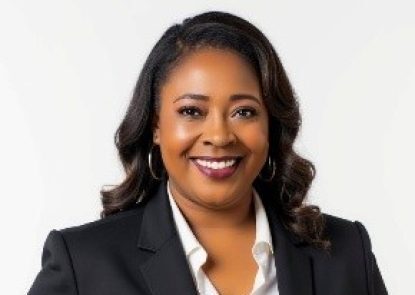
Karen Durham Joins the College of Social Work as Clinical Instructor 

LEXINGTON, Ky. — The University of Kentucky College of Social Work has announced the appointment of Dr. Karen Durham, LCSWas an Instructor in the Clinical Title SeriesDurham brings a rich background shaped by service across multiple states and countries, with clinical experience spanning medical social work, homeless services, outpatient care, and embedded practice within military environments. 

Growing up in Texas and later moving frequently as a military spouse, Durham has built a uniquely global social work practice. Her interest in perinatal mental health deepened during her work as a NICU social worker, where she saw firsthand the complexities and unmet needs faced by birthing parents.  

She has since developed specialized expertise in Perinatal Eye Movement Desensitization and Reprocessing (EMDR), birth trauma support, and maternal mental health, and is certified in Perinatal Mental Health. She additionally volunteers with Postpartum Support International, advocating for improved screening and access to mental health services for all birthing parents. 

“I love the intersection of theory, research, and the practical skills that shape effective clinical care,” Durham said. “I’m thrilled to return to the College of Social Work and contribute to training the next generation of social workers.” 

Durham earned her undergraduate degree from Louisiana State University, an experience shaped by living through Hurricane Katrina—a tragic event that solidified her commitment to helping others. After moving to Kentucky in 2010, she completed her Master of Social Work (MSW) at the University of Kentucky. She later joined UK’s inaugural Doctor of Social Work (DSW) cohort, where her capstone research explored postpartum depression among military spouses. 

“Karen’s depth of clinical expertise—particularly in military behavioral health and perinatal mental health—brings tremendous value to our college,” said Dr. Jackie Duron, associate dean for faculty advancement. “Her commitment to improving outcomes for birthing parents and military families reflects the heart of our mission. We are delighted to welcome her back to UK and into our faculty community.” 

Outside of her professional life, Durham is a proud mother of three, a devoted New Orleans Saints fan, an avid participant in multiple book clubs, and a committed fantasy football competitor—with five teams to her name. She and her family returned to Kentucky after living in Japan, where they were stationed for several years. 

Please join us in celebrating Karen Durham’s appointment and in welcoming her to the College of Social Work community. 

“The people I’ve lost motivate me” — MSW graduate ready to serve communities

Lexington, KY — Lexi Lucas knows what it means to step up for others. Shaped by lived experience and a deep commitment to others, she is now poised to enter the social work profession ready to make meaningful change in the lives of individuals, families and communities.

Originally from just outside Pittsburgh, Lucas grew up witnessing how substance use disorders can deeply affect individuals and the people who love them. When she lost two close friends to overdoses during her undergraduate years, her commitment to becoming part of the solution solidified.

“What motivates me is the people I’ve lost,” she said.

As a first-generation college student, Lucas learned to navigate academic systems largely on her own. Her determination to further her education — and turn pain into purpose — led her back to Lexington and to the University of Kentucky College of Social Work’s Master of Social Work program.

“The MSW program showed me that I am capable of achieving my goals,” Lucas said. “I had to figure out a lot on my own, and it taught me how hard I can work to overcome challenges.”

Throughout her time at UK, Lucas gained real-world practice experience supporting vulnerable populations through roles with Allegheny County Child, Youth and Family Services, Makin Wellness, and Westmoreland County’s Agency on Aging. Those opportunities helped her translate classroom knowledge into direct, person-centered care.

“Practicum education has showed me social work from different perspectives and helped me understand what I want to do in the future,” Lucas said. Seeing clients make progress reminded me why this work matters. I got into social work to help people.”

Balancing a full-time job while serving as the primary income earner in her household, Lucas relied on the MSW program’s flexibility — and the support of faculty who made sure she never had to push through alone.

“I’ve always felt able to reach out to faculty and get the support I needed,” she said. “That made a huge difference.”

As she prepares to graduate with her MSW, Lucas reflects with pride on the progress she has already made toward the career she dreamed of.

“When I started, helping people felt like a goal in the distance,” she said. “Now I can see that I’m already doing it.”

Looking ahead, Lucas plans to pursue a career in substance use counseling, supporting individuals on their recovery journeys.

“I know substance use disorders affect more than just the individual,” she said. “I want to be there for everyone involved.”

Her advice to future first-generation social work students is simple, but hard-earned:

“Ask questions,” Lucas said. “Even if it seems small… ask. There are so many people who want to help you keep moving forward.”

PREP-pared for impact: Holsclaw graduates ready to serve Kentucky families

LEXINGTON, Ky. — When Gerber Holsclaw began their academic journey at Bluegrass Community and Technical College as a psychology major, he knew he wanted to work with people. His early coursework strengthened that interest and gave him a foundation in understanding human behavior. As he explored career paths, Holsclaw realized he was drawn to a field that paired that knowledge with hands-on, community-centered practice.

That clarity led him to the University of Kentucky College of Social Work (CoSW), where he found a calling that felt unshakably right.

“I learned so much studying psychology,” Holsclaw said. “Social work lets me use that knowledge while supporting people in a way that considers every part of their life and environment.”

As a CW PREP scholar, Holsclaw describes the program as foundational to their growth. Faculty, fellow scholars and professionals at the Department for Community Based Services (DCBS) provided the support and mentorship that shaped every step of their education.

“Anytime I had a question, someone was there with an answer,” they said. “Everyone at CW PREP genuinely wanted to see me succeed.”

Through volunteer opportunities, CW PREP retreats, leadership development and practicum experience with DCBS, Holsclaw gained confidence and a clear commitment to child welfare. “PREP gave me the opportunity to prove to myself that I’m capable of creating positive change,” they said.

The Evalyn J. Black Memorial Fund also helped fuel that success. The scholarship eased barriers such as transportation costs, allowing Holsclaw to fully engage in classes, retreats, and practicum training.

“I am so grateful for the Evalyn J. Black Memorial Fund,” they said. “It made a real difference. I appreciate the committee for investing in my future.”

Holsclaw graduates with strong academic honors, including recognition on the Dean’s List. “My younger self would never have thought I could earn so much for myself,” they said. “These accomplishments represent perseverance and growth.”

Balancing coursework and fieldwork also taught them the value of self-care. Rock climbing, yoga, weightlifting, hiking and cooking became grounding practices throughout their studies.

With a solid foundation from CW PREP and meaningful experience at DCBS, Holsclaw plans to continue working in child welfare and is excited for what comes next.

“My experience gives me a strong advantage wherever I go,” they said. “I’m excited for my future because I’ve put so much into becoming the social worker I am today.”

First-Gen Social Work graduate steps into her calling 

Lexington, KY – From Louisville, Kentucky, Ta’Niya Rucker has always known what perseverance looks like.  

As the second youngest of nine sisters and the first in her family to attend and graduate from college, she carved a path that once felt out of reach. “A few years ago, I didn’t think college was possible,” she shared. “But I overcame so much, and here I am.” 

During the long months of pandemic isolation, Rucker began watching true-crime documentaries that examined complex human experiences and the professionals who respond in moments of crisis. What started as a passing interest grew into something more. She researched social work, learning how advocacy, compassion, and practical support can shape someone’s future. As she continued exploring, she recognized her own values reflected in the work and a calling started to come into focus. 

 “Growing up around the realities of addiction, homelessness, and mental health challenges, I saw firsthand how much competent care matters,” she shared. “And I want to do the work. I want to be part of the change.” 

During her time at the University of Kentucky College of Social Work (CoSW), she has done exactly that.  

As a CoSW Student Ambassador, she helped uplift student voices and worked with her cohort to drive meaningful program improvements. She also completed two deeply impactful practicums opportunities. Her first was at the Human Development Institute (HDI) supporting students with disabilities, and now she’s providing crisis support and safety planning on a 24/7 crisis hotline with the Lexington Sexual Violence Resource Center. 

“I’ve learned so much about myself through this program,” she said. “About empathy, boundaries, growth, resilience and what it really means to show up for someone.” 

One of the pivotal moments in Rucker’s journey was receiving the Ansari Scholarship. She describes the day she opened the award email as unforgettable. 

“I cried immediately,” she said. “It came at a time when I was stretched so thin—caring for my grandmother, trying to get reliable transportation for practicum, balancing so much at home. The scholarship gave me the stability to actually breathe. It allowed me to stay committed, stay focused, and stay here.” 

The scholarship also connected her more deeply with the College. The Ansari Scholarship is provided by Justin J. Miller, dean of the College, Louisville native, and a proud kinship and foster alum. She speaks with profound admiration about Dean Jay Miller and his own story of resilience. 

“Seeing someone who’s been through so much still choose to give back—to support students like me—it’s incredible. I’ll always respect him for that.” 

This December, Rucker will graduate with her BASW and immediately begin the Advanced Standing MSW Program, continuing her focus on mental health and substance use recovery. She has already applied for an internship with DCBS in Louisville, and she’s on track to complete her CADCA I credential as part of the CoSW’s training program in substance use counseling, with long-term goals of earning her LCSW and building a career supporting individuals and families facing addiction. 

“I’m so ready to start the work,” she said. “To be in the field and to help people.” 

Rucker’s journey is proof of what’s possible when talent meets opportunity, and when support arrives at exactly the right moment. 

“I’m proud of everything I’ve accomplished,” she said. “And I’m excited for what’s next.” 

UK social work researcher finds neighborhood amenities help people with dementia age in place

LEXINGTON, Ky. — University of Kentucky College of Social Work researcher Yeon Jin Choi is contributing new evidence on how communities can better support older adults living with dementia, helping them remain in their homes and maintain independence longer. 

In a recent article published in Innovation in Aging, Choi and collaborators examined more than 3,500 older adults with dementia using national longitudinal and neighborhood-level data. The study analyzed the relationship between community resources and the likelihood of entering a nursing home within two years. Findings showed that access to park areas, healthy food outlets, and home health services significantly reduced the risk of nursing-home placement.  

“Older adults overwhelmingly prefer to age in their homes and communities,” Choi said. “Our research shows that neighborhood amenities and services play a critical role in helping individuals with dementia maintain independence, reduce caregiver burden, and delay or prevent institutional care.” 

This new work builds on Choi’s broader research agenda on neighborhood environment and aging. In 2024, she co-authored a study demonstrating that perceived neighborhood poverty and disorder are linked to increased hopelessness among older adults — highlighting the profound ways community conditions influence mental health and well-being as people age. 

Taken together, Choi’s research emphasizes that where a person lives matters deeply for aging outcomes, and that creating supportive environments requires collaboration across community planning, individual responsibility, public health, and social services.  

“Dr. Choi’s scholarship powerfully illustrates how communities can be catalysts for well-being,” Dr. Jackie Duron, Associate Dean for Faculty Advancement said. “Her work continues to shape real-world solutions that support older adults, strengthen caregivers, and advance our commitment to improving lives in Kentucky and beyond.” 

Choi’s recent achievements also include national research on the impact of neighborhood social environments on older adults’ cognitive function and caregiver mental health, as well as a scoping review exploring the challenges and emotional realities of transnational family caregiving.  

Across all projects, Choi’s work is grounded in addressing disparities and ensuring that aging-in-place is not merely a preference but a practical possibility for all. 

“Neighborhood resources are a powerful protective factor,” Choi said. “By investing in amenities and supports, we can help ensure that aging in place is not only a preference but a realistic option.” 

Social Work PhD student Foysol Ahmed receives national pre-dissertation fellowship from AGESW

LEXINGTON, Ky. — A student in the University of Kentucky College of Social Work (CoSW) PhD program, Foysol Ahmed, has been selected as a pre-dissertation fellow by the Association for Gerontology Education in Social Work (AGESW). This competitive national program supports emerging scholars dedicated to the future of gerontological social work. 

Ahmed describes his commitment to aging-related research as both academic and deeply personal. Early in his career as a psychosocial counselor in Bangladesh, he worked closely with older adult returnee migrant workers who lacked access to formal support systems and specialized services. Witnessing the challenges older adults faced in meeting even their basic social and health needs inspired him to pursue long-term change through research, advocacy, and evidence-informed policy. 

These experiences ultimately led Ahmed to the University of Kentucky — where the College of Social Work’s research-intensive PhD program provides mentorship, methodological training, and interdisciplinary collaboration focused on addressing the most pressing social issues. 

At CoSW, Ahmed has contributed to impactful research initiatives alongside faculty mentors including Drs. Latimer and Bond on a hospital point-in-time count of housing-vulnerable older adults, and Dr. Yeon Jin Choi on disaster exposure and mental health disparities. These opportunities have helped him shape a research agenda that centers social and environmental gerontology. In particular, Ahmed is interested in research on how disaster exposure, climate-related risks, and housing instability affect older adults’ well-being. 

“Working with talented CoSW faculty has deepened my commitment to advancing research that prioritizes the needs of older adults who are most at risk,” Ahmed said. “My dissertation will continue building this path by exploring collective environmental exposures and their impact on aging populations.” 

He said gerontology has become “a personal calling,” and being named an AGESW Pre-Dissertation Fellow is a meaningful milestone on that journey: “Being selected for this fellowship is very affirming.” 

Ahmed’s fellowship selection follows a growing legacy of UK College of Social Work researchers recognized nationally for excellence in gerontological scholarship, including alumnus Rujeko Machinga-Asaolu (class of 2025) and CoSW PhD candidate Mohammad Sajjad Hossain.  

As an AGESW fellow, Ahmed will engage in advanced professional development, mentorship, and networking opportunities designed to support his dissertation and future career as a leader in aging-focused scholarship. 

Fighting to Be Seen

LEXINGTON, Ky. — For most of her life, Ally Meisner woke up with symptoms no one could explain—pain that left her unable to run on playgrounds, fatigue that blurred days, and sudden paralysis that frightened her and her family. For years, her symptoms remained unexplained. Many appointments came and went, but her chronic pain was consistently dismissed.  

“I remember sobbing in my dad’s arms, telling him I couldn’t take it anymore,” she said. “It felt like I was disappearing, and no one could see it happening.” 

As a teenager, Meisner received a partial diagnosis — postural orthostatic tachycardia syndrome (POTS) — a label that offered clarity but not resolution. “It was a relief, but I knew it wasn’t the whole picture,” she said. 

She pushed forward academically, eventually earning dual degrees in physiology and psychology, intent on becoming the kind of provider she never had: one who believed her. She later worked as a behavioral therapist, but her symptoms intensified. At her mother’s urging, she looked at social work and “saw herself in it immediately.” 

Meisner enrolled in the University of Kentucky’s online Master of Social Work program, allowing her to remain close to her family, community ,and her team of medical professionals. Eventually, with a “continuous amount of self-advocacy” specialists uncovered diagnoses that had been missing for years: dystonia, Nutcracker syndrome, and May-Thurner syndrome. 

In January 2025, on the same day she began her Spring semester practicum, she underwent major vascular surgery to place a 16-inch stent to save her life. 

“It was the hardest thing I’ve ever done,” she said. “But I finished the semester with a 4.0.” 

Somewhere in the process between appointments, exhaustion, and a classroom assignment that asked, “What’s one small action you can take today?” Meisner found her voice. 

She began sharing her experience online as @socialwork.ally, blending humor, vulnerability, storytelling and education around chronic illness and medical gaslighting. Messages poured in: This is my story. I’ve never told anyone. You made me feel less alone. 

“That changed everything,” she said. “My story wasn’t just mine anymore — it became a bridge.” 

Her story has since been featured on Peace in the Process and Beyoutiful Legacy, a top-ranked global podcast. Meisner is now a recently published author, featured in COPE Magazine, Issue 1, Volume 2 (October 12 release). 

Today her health has drastically improved. Set to graduate in 2026, she is working toward a career dedicated to advocating for people living with chronic pain. 

“I spent years trying to prove my pain was real,” she said. “Now I want to help build a world where no one has to.” 

Her message to anyone still searching for answers is simple: 

“You are not a burden. You are not invisible. Your story matters — even before anyone believes it. Do not give up.” 

Criminal Justice faculty to present at the 2025 Annual Meeting of the American Society of Criminology 

LEXINGTON, Ky. — The University of Kentucky College of Social Work (CoSW) is pleased to announce its inaugural participation at the 2025 Annual Meeting of the American Society of Criminology (ASC), taking place in Washington, D.C., Nov. 12-15, 2025. This marks an important milestone as the College broadens its scholarly footprint in criminal justice and criminological research while reaffirming its commitment to advancing justice, equity and social well-being. 

The ASC Annual Meeting draws thousands of scholars, researchers and practitioners from around the globe to engage in cutting-edge work on the measurement, etiology, consequences, prevention, control, and treatment of crime and delinquency. 

Representing the College are three distinguished faculty members whose research spans digital harm, state-corporate crime, carceral culture, gender-based violence, and youth justice: Dr. Paul Bleakley, Dr. Victoria Collins, and Dr. Nicole McKenna. 

Bleakley will chair the annual business meeting of the Division of Historical Criminology and present new empirical work exploring online deviance, cyberstalking, ideological grooming and gendered coercion in digital spaces. In a poster titled “Perspectives on Prison Conditions, Long-Term Sentencing, and Crime Attribution: The Impact of ‘The Visiting Room’”, he examines how media representations shape public understanding of incarceration and long-term sentencing. 

Collins, director of the CoSW Criminal Justice program, will participate in a range of scholarly engagements, including paper sessions, author-meets-critic panels and a roundtable on transformative justice praxis. Her presentations link environmental deregulation and techno-utopianism to expansionist narratives and structural harm, and she will serve as featured author of Space Expansionism and Criminology: The Emerging Terrain of Crime, Harm and Violence, a work that prompts criminology to rethink governance, extraction and new frontiers of harm. 

McKenna’s program of work addresses carceral culture, gendered systems, pedagogy and trauma-informed practice. Her panel presentations examine how reality-crime television normalizes punishment logics, how girls in detention navigate and resist structural labeling, and how anti-trafficking stakeholders implicitly implement (and sometimes fail to fully embody) trauma-informed principles. She will also take part in roundtables on reentry, youth justice, and the everyday normalization of surveillance and punishment. 

“Our faculty’s engagement at ASC 2025 reflects the deeply interdisciplinary nature of our mission,” said Dean Jay Miller. “The College of Social Work is proud to contribute to these national conversations that build knowledge, partnerships and solutions that work toward a more just and compassionate world.” 

The debut marks a significant expansion of the College’s scholarly reach, reinforcing its national presence as a leader in criminological research, and interdisciplinary social justice praxis. 

Finding a home: Bill Beaven leaves quiet legacy for communities across the southeast

LEXINGTON, Ky. — Bill Beaven doesn’t seek the spotlight, yet his influence runs through communities across Kentucky and much of the Southeast. A Union County native, he’s spent his life expanding access to education and care through a blend of social work, business and philanthropy.

Growing up in Uniontown, Beaven recalls a childhood defined by simplicity and grit. “We swam in the rivers, fished in the creeks, swung from the trees and came home when it got dark,” he said. A three-sport athlete and captain of his high school teams, Beaven graduated in 1965 and, like most of his peers, enlisted in the U.S. military soon after.

When he returned home three years later, Beaven went to work for the Job Corps while enrolling at Murray State University, where he earned his undergraduate degree. While working full time in halfway houses and research programs, he learned that Kentucky state hospitals were offering tuition support for employees pursuing graduate degrees in social work. That opportunity—and his growing interest in better serving individuals facing addiction, disability, and mental illness—led him to the University of Kentucky College of Social Work (CoSW), where he earned his master’s degree. Those experiences provided a foundation that would guide the rest of his career.

In the 1970s and 1980s, Beaven became a leader in deinstitutionalization, helping states move away from large facilities and into community-based homes. Through companies he founded, Normal Life and Community Homes of Louisiana, he opened thousands of beds across multiple states. His philosophy was straightforward: Smaller homes create better outcomes. 

“The focus was to get people out of institutions and into smaller communities,” Beaven said. “And the results really speak for themselves. I spent a lot of time helping institutionalized people get into something more like a ‘family’ unit, into something more like a home. It was very rewarding.”

That conviction later shaped programs for children in Lexington, Georgetown and surrounding areas through an organization called Key Assets Kentucky. The program created small, scattered-site homes for young people who are wards of the state and who may be coping with behavioral health challenges or autism. Instead of being placed in large, isolated facilities, these children live in homes of just three residents, supported by a wraparound team of youth care workers, social workers and counselors dedicated to helping them stabilize and build bright futures.

Key Assets operated for more than two decades as a private company before transitioning to a nonprofit in 2023. Today, the organization remains a critical resource in Kentucky’s child welfare landscape, offering an alternative to institutional care and a pathway to belonging for some of the state’s most vulnerable youth.

Another extension of this philosophy is Meadowthorpe Senior Living in Lexington, which Beaven designed around a cottage model, so seniors could receive more personal, intentional care. By applying the same small-scale approach to aging populations, Beaven hoped dignity in care would transcend age or circumstance.

Technology also became central to his approach. As computers entered the workplace, Beaven taught himself to program and began writing software to track clients and keep a record of case notes. “If you aren’t keeping up with your documentation, it’s the clients who suffer,” he said. His skill with data and systems led him to launch Eidetik, a company that provided back-office and software support to service organizations.

Beaven’s commitment to education runs as deep as his commitment to care. The first in his family to graduate from college, he’s made it his mission to open that same door for others. At the College of Social Work, he established three funds: the Beaven-Eidetik Doctoral Scholarship, Beaven Eidetik Graduate Scholarshipand the June Ashby Scholarship, named for his mother.

The scholarship honors Beaven’s mother June Ashby, who owned and ran a grocery store before becoming head accountant at the Job Corps. Despite severe arthritis, she worked into her 60s, raising her children while modeling strength and independence. “She was supermom,” Beaven said. “She worked all the time, cooked two meals a day and never complained. We didn’t know how lucky we had it.”

For all his accomplishments, Beaven insists he never set out to build a legacy. “It wasn’t a grand plan,” he said. “It was just seeing opportunities and doing something with them.” 

Still, the impact is unmistakable: from deinstitutionalizing adults and building homes for children to creating scholarships for future generations his life has been about opening doors and helping countless others to find their way home.

College of Social Work Alumni are making a difference in students’ lives, and you can too

Lexington, Ky. – The University of Kentucky College of Social Work (CoSW), in partnership with its College of Social Work Alumni Association (SWAA), is excited to continue the Alumni–Student Mentoring Program, launching in the Spring 2026 term.  

Now entering its fourth year, the program has already connected hundreds of motivated students with accomplished alumni mentors and is rapidly expanding. With a growing number of student applications already in hand, CoSW is calling on SWAA members to serve as alumni mentors who will help shape the next generation of students.  

The past five years have marked a period of substantial growth at CoSW. With the rollout of its Criminal Justice programs and expanded academic offerings, student enrollment has increased exponentially, reflecting the College’s ongoing commitment to advancing human well-being across multiple disciplines. 

The expansion has already created a growing need for mentorship. Students are eager for connection, guidance, and encouragement from alumni who have walked similar paths, whether in clinical practice, advocacy, educational settings or leadership roles. 

Since its inception, the SWAA Alumni-Student Mentoring Program has been designed to build meaningful connections between alumni and current CoSW students. Students benefit not only from classroom knowledge, but from the lived experience, professional wisdom, and personal support that alumni bring. 

For Willis Bright, class of 1966, longtime supporter of CoSW and recent inductee into the UK Alumni Association’s Hall of Distinguished Alumni, mentoring was simply an extension of that lifelong commitment: 

“As one who has been committed to doing what I can for the school—whether it’s our family providing scholarships or serving on advisory boards—this was just another opportunity to continue providing service to the College and to lift up the field of social work.” 

Paired with DSW student Olivia Yearns, Bright said the experience was mutually enriching: 

“It’s benefited me, too. Seeing how she leads—in her profession, her business, her family—has helped me become a better social worker, a better husband, and a better person.” 

For Yearns, that connection became something far deeper than a program requirement: 

“He has seen me cry, he has encouraged me, and I don’t know the criteria for linking two individuals together, but I can truly say there is no better person that could have been my mentor than Mr. Bright.” 

Bright hopes more alumni will follow his lead: 

“Go into it with confidence and humility. Be open. It’s not about impressing one another—it’s about sharing what you know, reinforcing the profession, and making one another stronger.” 

Alumni who choose to mentor have the opportunity to change a student’s life by offering stability, encouragement, and perspective during some of the most formative years of their academic and professional journeys. 

The Spring 2026 mentoring cycle runs January through May 2026 and involves periodic check-ins, suggested monthly interactions (in person, virtually or by phone), and a kick-off event and closing celebration.  

Matches are made based on areas of interest, professional background, and personal preferences to optimize fit. Training and support materials will be provided. 

To apply to be a mentor for the Spring 2026 cycle, please complete the online mentor application at by November 19th. For questions, alumni may reach out to the College at ukcosw@uky.edu.  

About SWAA and the College 
The College of Social Work Alumni Association (SWAA) of the University of Kentucky College of Social Work is dedicated to connecting alumni, students, and the profession to advance social justice, professional excellence, and lifelong engagement with the University. The College of Social Work prepares students to advance human well-being and help meet the complex needs of individuals, families, and communities.