



LEXINGTON, Ky. (June 29, 2026) — When Sarah Ellis moved to Honduras in 2019, she knew she wanted to continue serving communities in meaningful ways. She also knew that, someday, she wanted to earn a graduate degree that would help her do that work with greater knowledge, skill and confidence.
What she did not know was that, just months after her move, the COVID-19 pandemic would intensify many of the needs already facing the community around her.
Ellis, originally from Alabama, was working with Legacy Mission International, a new nonprofit organization in Honduras. As the organization grew, Ellis helped build programs and outreach efforts in response to the needs she was seeing each day.
“The pandemic exacerbated a lot of the social challenges that we were already facing,” Ellis said. “There was so much need, and there were not a lot of established resources. We had to learn how to start with something and move forward.”
Ellis saw that many women in the community were navigating violence, addiction, exploitation, poverty and limited access to support systems. Many also had children at home and few options for childcare or stable income.
In response, Ellis helped establish a Women’s Advocacy Center in 2021. What began as a point of contact for women in crisis grew to include skills workshops, legal advocacy, counseling, education and other forms of support. Workshops such as sewing offered women a way to build skills and pursue financial stability while still caring for their children.
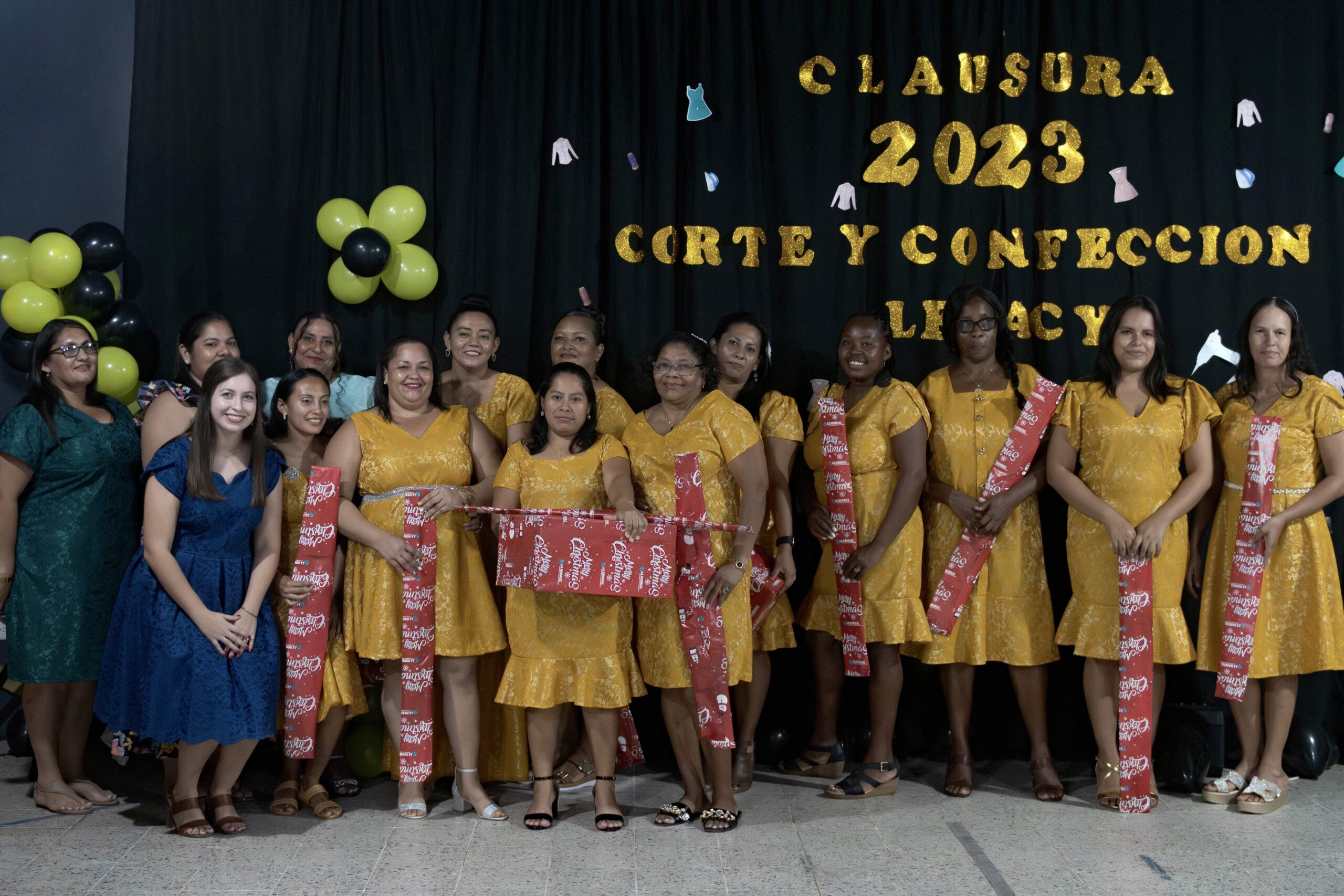
“We realized that if we wanted to address addiction, violence and exploitation, we also had to address basic needs”, Ellis said. “We also knew that connecting local women to each other would decrease isolation, a factor that had reinforced many of the problems we had been seeing. With each season, the center expanded to fit the needs of the women around us.”
The experience gave Ellis significant exposure to community advocacy and direct service, but it also clarified what she still wanted to learn. Her undergraduate background in Spanish and human development and family studies had given her a strong foundation for understanding people and systems, but she wanted more training in assessment, intervention and clinical practice.
“I had a good understanding of people, but I needed more intervention and assessment skills,” Ellis said. “That’s what led me to pursue a Master of Social Work.”
Because Ellis was living abroad, finding the right program required careful planning. She spent nearly two years researching programs that were reputable, flexible and able to support a student completing coursework from another country. The University of Kentucky College of Social Work’s online MSW program stood out.
“The program fit both of the things I needed,” Ellis said. “I needed a reputable program, and I needed one that would allow me to continue living and working abroad.”
While completing the program online, Ellis was able to immediately apply what she was learning in class to her work in Honduras. Concepts from coursework informed the way she approached advocacy, communication, assessment and program development.
“Being able to work and study at the same time was incredibly impactful,” Ellis said. “Even techniques I learned in class could immediately affect my work. I could tell a difference.”
The UK College of Social Work practicum education team also helped Ellis navigate practicum requirements while she was abroad. Because she did not have access to an MSW-level supervisor in Honduras, the college helped provide virtual supervision, allowing her to continue progressing through the program without stepping away from her community-based work.
“They made it where there were zero obstacles for me,” Ellis said. “It was exactly what I needed.”
Ellis moved back to the United States in time to complete her advanced practicum and gain experience in the U.S. social work system before graduation. She is now completing her advanced practicum at North Harbor Pavilion in Alabama, working in an inpatient psychiatric setting.
The experience has expanded her understanding of clinical social work and mental health care. In Honduras, much of her work focused on domestic violence, addiction, sexual trauma and community advocacy. In her advanced practicum, she is working with patients experiencing challenges such as drug-induced psychosis, suicidal ideation and acute mental health needs.
“It is a totally different culture and a totally different set of resources,” Ellis said. “But even still, I’ve been able to apply so much of what I learned in my classes, especially around assessment.”
Ellis will graduate in August 2026 and plans to work toward clinical licensure. As she looks toward that next step, she said her experience at UK has affirmed both her professional goals and the value of flexible, accessible graduate education.
“I would not have been able to do my master’s if UK had not made it possible,” Ellis said. “I’m so thankful for that.”
For Ellis, the College of Social Work’s fully online MSW program did more than allow her to earn a degree from abroad. It enabled her to continue serving a community she cared deeply about while gaining the professional preparation needed for long-term impact.