
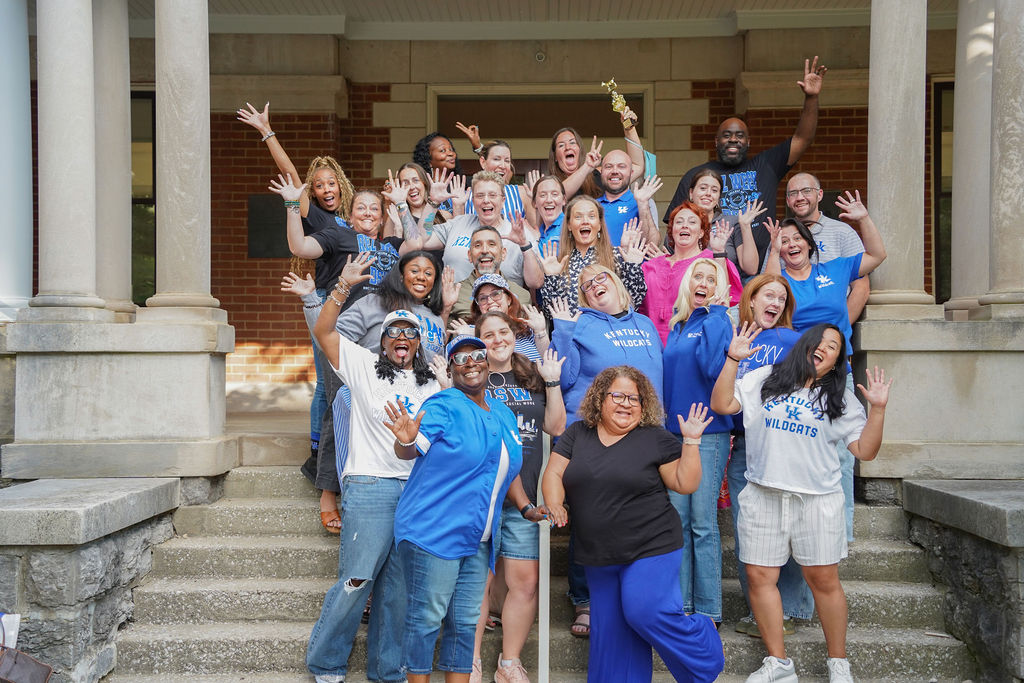



LEXINGTON, Ky. (July 17, 2026) — Students in the University of Kentucky College of Social Work’s Doctorate of Social Work (DSW) program may live and work across the country, but they are not completing their doctoral journeys alone.
The program’s 2026 Virtual Residency Week, held July 6-9, brought students, faculty, staff and alumni together for four days of connection, reflection and professional development. Through virtual sessions and optional activities in Lexington, participants exchanged advice, strengthened relationships and explored strategies for navigating each stage of the DSW program.
Residency Week is an important community-building tradition within UK’s online DSW program. The annual experience gives students opportunities to step outside their individual courses, connect with the broader College of Social Work network and reflect on their progress as doctoral students and social work professionals.
“What I love about our program is the passion our students and alumni have for sharing and giving back to one another and to the next cohort,” said Laura Escobar-Ratliff, DSW program director.
Support throughout the doctoral journey
Programming was designed to meet students at different stages of the program, from beginning core coursework to preparing for the concentration year and capstone project.
Current students Antwan Aiken, Amy Case, Marilyn Johnson and Charmaine Mattocks participated in “Surviving and Thriving in the DSW Program Your First Year.” The panelists shared lessons from their own experiences and offered guidance for adjusting to doctoral-level coursework while balancing professional and personal responsibilities.
Core-year students also participated in small-group “Temperature Check” conversations with College of Social Work faculty, staff and alumni. The sessions gave students space to discuss how their initial semester was progressing, ask questions and reflect on the transition into doctoral study.
Concentration-year students participated in similar “Coffee Chat” sessions with DSW alumni. These informal conversations allowed students to discuss their progress, receive advice and connect with graduates who understood the demands of the program’s later stages.
Students preparing for their final year heard from alumni Tahlisha Dorsey, Veronica Green, Timothy King and Patty Zavaleta during “You Got This! Thriving Your Concentration Year and Capstone Project.” Moderated by alumnus Dustin Roberson, the panel explored strategies for balancing coursework, professional responsibilities and progress toward completing a capstone project.
Together, the sessions encouraged students to speak candidly about the doctoral experience while learning from peers and professionals at different points in their journeys.
Learning beyond the classroom
Residency Week also offered professional development sessions focused on persistence, scholarship and the application of doctoral education.
Amanda Kern facilitated “The Science of Finishing: Grit, Growth Mindset and the Neuroscience of Doctoral Persistence.” The session examined strategies for maintaining motivation and continuing to make progress through the challenges of doctoral study.
Karen Durham, DSW, an alumnus of the program and clinical instructor in the College of Social Work, led “Grounding Your Capstone: Selecting and Integrating Theoretical and Conceptual Frameworks That Fit Your Topic.” Students considered how theoretical and conceptual frameworks can strengthen the connection between a capstone topic, existing scholarship and professional practice.
Recent graduate Sanjuanita De Luna returned to present her capstone project, “Emotional Preparedness as a Standalone Professional Competence: The Case of Adverse Childhood Experience in the Social Work Classroom.”
Students also heard from alumni Lila Elliott, Yolanda Ross, Chris Rakestraw, Carol Taylor and Gariy Livshits during “DSWs in Action.” The panelists discussed how completing the program influenced their practice, professional development and approaches to leadership.
Alumni participation provided students with examples of how a DSW education can be applied in classrooms, organizations and communities. It also reflected the lasting connections graduates maintain with the program and with the students following them.
Connecting online and in Lexington
Although the week’s academic programming was held virtually, the DSW student organization also coordinated an optional, multiday experience in Lexington.
Students traveled to UK’s campus for a campus tour, social gatherings at restaurants throughout Lexington and an in-person component of the DSW reception. The student-led activities gave classmates who typically connect through a screen the opportunity to meet face to face and experience the university community together.
Residency Week concluded July 9 with a hybrid reception. Students on campus gathered with faculty, staff and alumni, while those unable to travel joined virtually.
The combination of virtual and in-person programming reflected the broader purpose of Residency Week: building meaningful relationships while maintaining the flexibility and accessibility of an online doctoral program.
This year’s event also followed a significant milestone for the DSW program. The program recently achieved candidacy for accreditation from the Council on Social Work Education, an important step toward initial accreditation.
The achievement reflects the work of the program’s faculty and staff and its commitment to providing rigorous, practice-focused doctoral education that supports professionals serving communities across Kentucky and beyond.
Residency Week brought that mission to life by creating space for students to learn from one another, build professional networks and feel connected to a community invested in their success.