SEARCH RESULTS FOR:

Search Results

Supporting Kentucky’s Kinship Families: A Conversation with the Kentucky Kinship Resource Center

LEXINGTON, Ky. – Kinship caregivers—grandparents, relatives, and close family friends raising children—play a critical role in creating stability and love when children need it most. At the University of Kentucky College of Social Work, the Kentucky Kinship Resource Center (KKRC) is dedicated to walking alongside these families with care, compassion, and community.

In honor of National Kinship Care Month, we sat down with Sheila Rentfrow, KKRC Program Manager and Allison Pergram-Chambers from the Kinship Navigator Program to talk about the resources available, the importance of kinship care, and their advice for families beginning their journey.

Q: Tell me about the Kinship Navigator Program and what resources can it provide to kinship families?


Rentfrow: The Kinship Navigator program started as a vision to be able to connect with kinship caregivers very early on in their kinship journey when they are first identified by the state as a home for a child that they are either related to or have a significant relationship with. We wanted them to have a face that they could connect with, a person that they could connect with, rather than a website. Someone that could help them understand where they are in their journey, what options they have available to them, and what things might be out there that can help them.

Our goal is not only to support the caregiver, which is so essential, but by supporting them, we’re able to support the family, which leads to a more stable home environment for the child. Rather than trying to navigate that on their own, we started the Navigator program as a way to be able to meet some of those needs.

Q: How do kinship families get connected with their assigned kinship navigator?


Rentfrow: There are nine service regions within the state of Kentucky. In each of those service regions, we have at least one kinship navigator that provides support for that region. They’re able to connect with caregivers easily, simply because they’re in that same area and they become familiar with resources.

How the referral process works is we have an online referral form. The Cabinet for Health and Family Services will refer caregivers that they’re encountering early on in the journey. They’ll make the referral and then the system is set up to automatically forward that referral directly to their e-mail so that the caregiver can log into the portal system. The caregiver can review the information that’s been submitted and then they’ll reach out to that navigator.

Q: How do Kinship Navigators help families get connected to resources at the KKRC?


Pergram-Chambers: When we get a referral and we talk about the family’s needs, we’ll also introduce the KKRC support programs that are available. Part of the information that I send out includes the KY-KINS and KIN-VIP program.

We do a needs assessment of the family, save that, and send that on to make the KY-KINS or KIN-VIP referrals. And once those referrals reach Sheila and her staff, then they contact our families.

Q: What does National Kinship Month mean to you?

Rentfrow: For me, Kinship Month is a chance to honor and shine a spotlight on families who are taking the initiative. They’re taking the responsibility of raising children at a point in their life when they may not have anticipated doing it.

We know the outcomes are best when kids can remain with their family or with people that they know and love. It’s less traumatic. They’re able to adjust, they’re able to make healthier strides, and be able to work through some of the issues that they have been witness to.

Being able to highlight this during National Kinship Month for us at the KKRC is a chance to really put that out there so that not only the rest of the state is aware and understands that Kentucky has such a strong population compared to other states in the country. It’s a chance for us to really honor folks for what they’re doing.

Pergram-Chambers National Kinship Care Month for me is a time to reflect on advocacy and awareness of kinship caregivers in the state. This month, for me especially, is to be able to bring awareness to the kinship caregivers that are in the state and to be able to continue to offer and provide them resources and services to make sure they have a placement where the children are thriving. But also in their communities, where they’re able to maintain those connections with their parents and work towards reunification if that’s the goal.

The Kentucky Kinship Resource Center does an excellent job of keeping that awareness going and making sure those caregivers know that they’re not isolated, they’re not alone.

Q: What advice do you have for caregivers beginning their kinship journey?

Pergram-Chambers: My advice for caregivers is to seek help and not feel isolated—to know that there’s resources and programs and people out there that care about their journey, and every journey through caregiving is unique.

As navigators at the Kentucky Kinship Resource Center, we want to be that support for those caregivers. So, my advice is to ask questions, use your voice, don’t be afraid or worried about how it’s going to reflect on your role as a caregiver. Don’t try to do this journey on your own because we know it’s hard.

The Kentucky Kinship Resource Center is ensuring that no caregiver has to walk this path alone. By offering connection, care, and community, the KKRC is helping families thrive across the Commonwealth. For more information and to register for support, please visit the KKRC website.
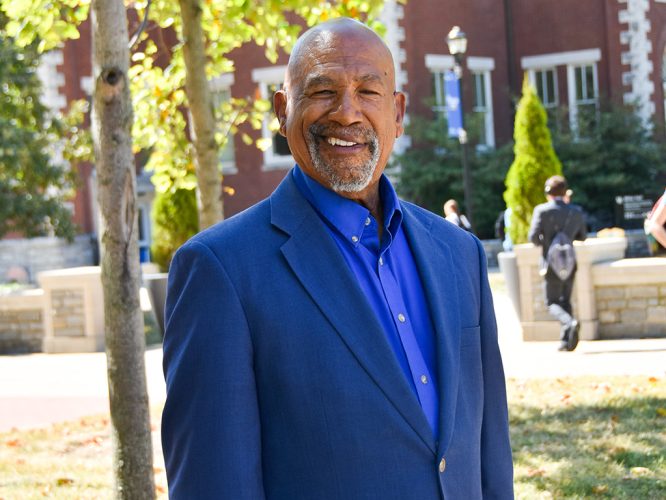
College of Social Work Celebrates Willis Bright, newest member of UK Hall of Distinguished Alumni

LEXINGTON, Ky. – The University of Kentucky College of Social Work (CoSW) is proud to announce that Willis Bright has been inducted into the 2025 UK Alumni Association Hall of Distinguished Alumni. A leader and a mentor, Bright embodies the true spirit of social work.

Held every five years, the Hall recognizes UK graduates whose achievements bring distinction to the university and inspire current students, faculty and fellow alumni through excellence across the arts, sciences, public service, business, education and beyond. With the addition of the 2025 class, a total of 353 alumni have now received this honor since its inception in 1965. 

“Willis Bright’s unwavering dedication to mentorship, community service, and the betterment of society exemplifies the highest ideals of our profession,” said Jay Miller, dean of CoSW. “Willis is incredibly deserving of this prestigious honor, and his legacy will continue to inspire future generations.”

Bright, who resides in Indianapolis, Indiana, has devoted more than 50 years to higher education, corporate leadership and philanthropy. His career began in student services, counseling and child development at Iowa State University, followed by a faculty appointment at the University of Minnesota. After six years with the Public Affairs and Honeywell Foundation, he joined the Lilly Endowment where he spent 27 years advancing major philanthropic initiatives until his retirement in 2017.  

Bright’s leadership and impact have been widely recognized, including being named Grantmaker of the Year by the Indiana Grantmaker Alliance and serving as the Ambassador James Joseph Lecturer for the Association of Black Foundation Executives. He is president of Bright Visions Inc., an organizational development consulting firm, and co-founder and chair of the African American Coalition of Indianapolis, a 20+ member alliance advocating for the city’s African American/Black community. Since 2021, he has codirected a $100 million grant initiative aimed at improving quality of life for the African American/Black community in Indianapolis.   

A dedicated UK alumnus, Bright received the Algernon Sidney Sullivan Medallion and has served on the UK College of Social Work Advisory Committee, UK Alumni Association Board of Directors and Leadership Advisory Council. His family supports future social work professionals through the Bright Family Scholarship Fund.   

Bright was inducted into the UK College of Social Work Hall of Fame in 2003 and received the UK Alumni Association Distinguished Service Award in 2019. Throughout his career, he has been recognized for his strategic vision, collaborative leadership and steadfast commitment to advancing educational and community opportunities for others.   

The CoSW celebrated the induction of Bright with a luncheon and “Coffee and Conversations,” a time for faculty, staff, students, and alumni to learn from and engage with Bright, and hear more about his legacy. His journey from a trailblazing student to a compassionate leader exemplifies the values and principles of the College of Social Work at the highest level.

Jay Miller to receive 2025 Wilson Wyatt Alumni Award from University of Louisville

LEXINGTON, Ky. – The University of Louisville and Louisville Alumni have announced Jay Miller, dean of the College of Social Work, will receive a 2025 Wilson Wyatt Alumni Award.

The prestigious award is the highest honor bestowed by Louisville Alumni, and celebrates the remarkable accomplishments and service of UofL graduates whose work exemplifies the mission and values of the university.

“I am extremely honored and humbled by this recognition,” said Miller. “My time at the Kent School was profoundly impactful, and I am grateful for the ongoing relationships and connections I have there.”

Miller received his PhD from the Raymond A. Kent School of Social Work and Family Sciences in 2013.

Miller was appointed as dean of the College of Social Work in 2019. Under his leadership, CoSW has undergone a profound transformation. In the last five years, student enrollment has grown nearly 400% and CoSW’s research portfolio has expanded 335%.  

Miller’s tenure has been marked by improving workforce access to quality, innovative academic and service programming. In 2020, CoSW opened the Kentucky Kinship Resource Center, a one-of-its-kind center that provides an integrated continuum of services for kinship providers. As part of the eService Initiative, CoSW started a series of virtual reality programs aimed at supporting adoptive caregivers and child welfare workers by leveraging advanced technology.

In 2022, CoSW launched a partnership with Martin-Gatton College of Agriculture, Food and Environment (Martin-Gatton CAFE) and UK Cooperative Extension Service to introduce the 4H Behavioral Health Fellow Program, which is designed to address mental health challenges through summer camps. Last year, the program enrolled its second cohort of student fellows. The College has established several other student workforce preparation partnerships, including the Rural Healthcare Fellow Program with Appalachian Regional Healthcare and the School Social Work Fellowship with Fayette County Public Schools, among others.    

Consistent with CoSW’s commitment to workforce, Miller announced the Investment in Ingenuity and Initiative Program (I3) in 2022. I3 provides CoSW faculty and staff with opportunities for upskilling or certification within specific skill domains critical to CoSW. I3 has expanded to include BRIGHT, which is a targeted leadership program for CoSW faculty and staff.  

In early 2024, CoSW’s online MSW program became among the first in the nation to be certified for quality, marking a significant milestone for the College’s Forward, Together Strategic Plan. Last fall, Miller announced the launch of undergraduate and graduate Criminal Justice (CJ) degree programs. Through these offerings, student can earn bachelor’s and master’s degrees in criminal justice.

The impact of Miller’s work has been recognized regionally, nationally and internationally. In 2023, he received the Council on Social Work Education’s (CSWE) Distinguished Recent Contributions in Social Work Education Award. In 2024, he received the International Trends and Services Community Champion Award from The Links, Inc. Additionally, Miller is a past recipient of the Paul Grannis Award, Sunny Andrews Award and the Supporting the Workforce Award from the U.S. Children’s Bureau, among other recognitions.

 “While at Kent I gained inspiration, knowledge, and an affirmed sense of purpose,” explained Miller. “I want to extend my heartfelt gratitude to the Alumni Association, Kent faculty and staff, and the University of Louisville for this honor.”

Miller will be recognized at the annual Wilson Wyatt Alumni Awards ceremony this fall, as part of UofL’s Homecoming week festivities on the Belknap Campus.

Kentucky Kinship Resource Center Hosts Live Webinar on Self-Care

LEXINGTON, Ky. – In honor of National Kinship Care Month and Self-Care Awareness Month, the UK College of Social Work (CosW) Kentucky Kinship Resource Center (KKRC) hosted a live, virtual webinar focused on creating space for caregivers to participate in self-care.  

“Rising While Raising – Finding Your Balance” explored ways to ease stress, set healthy boundaries, and honor the emotions that come with the kinship caregiving journey. The webinar shared practical tools and encouraged supportive conversation, with the goal for caregivers to feel more grounded, connected, and reminded that their well-being is just as important as the care they give. 

“While kinship care is earmarked by love and commitment, it can also come with unique challenges. Because family connections are at the heart of kinship care, they can also create added stress for caregivers,” said Sheila Rentfrow, KKRC Program Manager. “For all these reasons, self-care is not optional—it is a critical part of sustaining caregivers’ health and capacity to continue providing the love and stability children need.” 

The webinar was led by Arion Jett-Seals, MSSW , the founder of Holistic Rise, a consultancy and brand dedicated to supporting emotional laborers through resilience training, burnout prevention, and holistic well-being. She also serves as Associate Director of Student Basic Needs at the Kentucky Council on Postsecondary Education, leading statewide initiatives that strengthen economic mobility and student success.  

In addition to the tips and resources shared throughout the webinar, below are some tips for caregivers as they prioritize their self-care. 

  • Rest: Take time to recharge. Whether it’s a nap, quiet time with a book, or a hobby you enjoy, rest is essential to maintaining energy and balance. 
  • Utilize Support Systems: Lean on family, friends, neighbors, or community groups for help. Support might look like babysitting, sharing a meal, or simply listening when you need to talk. 
  • Ask for Help: Speak up when you need assistance. If you don’t have a strong personal support system, reach out to the Kentucky Kinship Resource Center for additional guidance and resources. 
  • Make Time for enjoyable activities: Schedule activities you enjoy, even if it’s only for 10 minutes a day. Doing something that relaxes or energizes you will lift your spirits and keep you grounded. 
  • Celebrate the Good: Notice the positives—whether it’s good grades, a child’s kindness, or a successful day. Celebrating small wins builds hope and gratitude. 
  • Develop Coping Skills: Try stress-relieving practices like deep breathing, meditation, journaling, or a walk outside. These tools help you stay calm and centered. 
  • Set Boundaries: Remember it’s okay to say “no.” Protecting your time and energy allows you to give your best to your family without burning out. 

Practicing self-care helps caregivers feel refreshed, supported, and better prepared to meet the needs of the children in their care. For more information on the KKRC and its programs like the monthly, live webinars, please visit the KKRC website. 
Michelle Keller Joins the College of Social Work as Clinical Faculty  

LEXINGTON, Ky. — The University of Kentucky College of Social Work (CoSW) has announced Dr. Michelle Keller, DSW, LCSW, will start an appointment as a clinical faculty member at the CoSW, bringing more than two decades of social work experience across clinical practice, public service, and leadership roles. 

A proud UK alumna, Keller earned her Bachelor’s, Master’s and Doctorate of Social Work from the University of Kentucky. She is also a Licensed Clinical Social Worker (LCSW) and holds a Public Child Welfare Certification (PCWCP). 

“Dr. Keller’s career reflects a commitment to children, families, and communities in Kentucky,” said Dr. Jackie Duron, Associate Dean for Faculty Advancement at CoSW. “Her wealth of experience in both practice and leadership will provide our students with invaluable insights in social work.” 

Over the course of her career, Keller has served as a therapist for a large school district, worked within Child Protective Services for the Commonwealth, and operated her own private practice as an LCSW. In addition, she has held multiple leadership and administrative roles, equipping her with a broad perspective on the profession. 

Outside of her professional work, Keller is the proud mother of five children, three in college and two in high school. She enjoys traveling, exploring new cultures, and spending time with her mini poodle, Cooper. 

“I look forward to equipping students with the tools and perspective they need to make a lasting difference in the lives of children, families, and communities across Kentucky and beyond,” said Keller. 

Please join us in celebrating Keller’s continued contributions to CoSW as she steps into this new role as a clinical faculty member.  

Kentucky Citizen Review Panels Host Annual Retreat

FRANKFORT, Ky. – Kentucky’s nine Citizen Review Panels (CRPs), facilitated by the University of Kentucky College of Social Work (CoSW) came together in Frankfort on Friday, September 5, for their annual retreat, sharing updates, strengthening child welfare knowledge, and planning for the future. The event was held at the Frankfort Country Club.

Citizen Review Panels are groups of volunteers that work to improve their state’s child welfare system. Kentucky has nine regional CRPs that tackle barriers impacting the well-being of children and families in their communities. CRPs work in partnership with the Department for Community Based Services (DCBS) to improve crucial child welfare concerns.

Each year, the panels identify issues in their region, design a project or initiative to help, and make recommendations to the state for system improvement.

The Annual CRP Retreat featured updates and a Q&A with the DCBS Commissioner Lesa Dennis and DCBS Assistant Director Cliff Bryant. The program welcomed DCBS Leadership at the event, highlighting their ongoing collaboration. The panels learned more about several DCBS programs, including Alternative Response, Subsidized Permanent Custody for kinship families, additional support for foster parents, and placement strategies for youth in out-of-home care, specifically youth with complex needs.

Additionally, the panels strategically planned their activities for the upcoming fiscal year. Focal areas include youth mental health and the continuity of care, youth substance use, addressing poverty, adoptive families in crisis, youth homelessness, educational challenges and truancy, foster parent recruitment and retention, high acuity youth, and prevention services. Each panel will solidify their plans and projects this Fall.

The University of Kentucky College of Social Work would like to recognize all the CRP members who make this work possible. If you’re interested in serving on your region’s CRP, please complete the application.

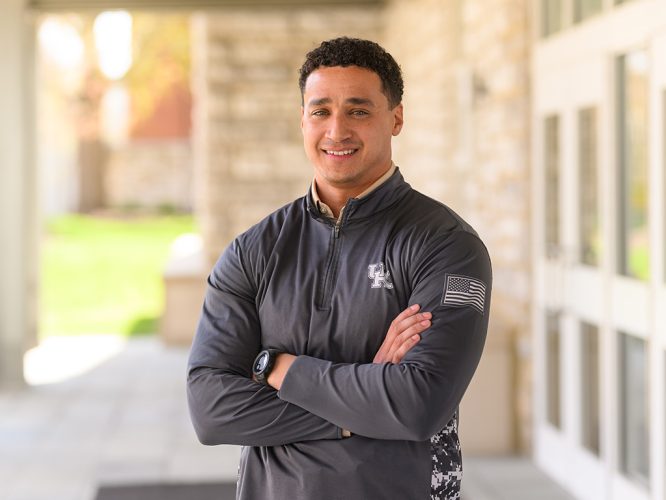
College of Social Work Welcomes Dr. Glenn Sterner as New Faculty Member in Criminal Justice 

LEXINGTON, Ky. — The University of Kentucky College of Social Work (CoSW) has announced Glenn Sterner, Ph.D., will join the college as an Associate Professor of Criminal Justice. 

An applied scholar, Sterner brings a deep commitment to community-based research and engagement, leading projects that span substance use, human trafficking, gambling, and public safety. He will also be tasked with developing and directing a new applied research center designed to enhance criminal justice and community safety in Kentucky, across the country, and internationally. 

“Dr. Sterner’s ability to bridge rigorous research with community-centered solutions—particularly around substance use and public health—will greatly enhance our college’s mission to serve Kentucky and beyond. We’re excited to welcome him to our CoSW community,” said Dr. Jackie Duron, Associate Dean for Faculty Advancement at the CoSW.  

Over the course of his career, Sterner has secured more than $12 million in local, state, and federal grant funding from agencies such as the National Institute of Justice, the National Science Foundation, the Department of Justice, and the Substance Abuse and Mental Health Services Administration (SAMHSA). Among his key projects are Elevate Pennsylvania, an initiative evaluating the impact of opioid settlement funding, and a National Science Foundation-funded project building AI-powered early warning systems for emerging drug threats. 

“I am eager to join the College of Social Work’s Criminal Justice Program, both dedicated to impacting lives and developing innovative ways to address community safety,” said Sterner. “The creation of the new center is an excellent opportunity to grow our collective impact within the Commonwealth and in communities across the country,” he said. 

Over the course of his career, Sterner has secured more than $12 million in local, state, and federal grant funding from agencies such as the National Institute of Justice, the National Science Foundation, the Department of Justice, and the Substance Abuse and Mental Health Services Administration (SAMHSA). Among his key projects are Elevate Pennsylvania, an initiative evaluating the impact of opioid settlement funding, and a National Science Foundation-funded project building AI-powered early warning systems for emerging drug threats.  

Sterner is a frequent presenter at national and international forums, including the American Society of Criminology, the Stockholm Criminology Symposium, and the International Network of Social Network Analysts. His work has been cited by CNN, The Hill, the Philadelphia Inquirer, and the Department of Justice, and published in journals such as The Milbank Quarterly, Substance Use and Misuse, and The International Journal of Drug Policy. 

In addition to research, Sterner has made significant contributions to public health policy and community infrastructure. He was instrumental in the development of Pennsylvania’s strategy for allocating opioid settlement funds and led statewide training initiatives on overdose death reporting. He also created the Story Powered Initiative to combat stigma and co-founded Pennsylvania State University’s Substance Use Stigma Reduction Collaborative. 

Sterner has received several accolades including the 2022 Rural Health Hero of the Year from the Pennsylvania Office of Rural Health, the Penn State Community Engagement and Scholarship Award, and recognition from the Philadelphia Business Journal as a voice for philanthropy. 

He holds a Ph.D. in Rural Sociology from Penn State University and both a B.S. and M.A. from Michigan State University. Prior to his work in Pennsylvania, Sterner served as a faculty member at Michigan State and led the Bailey Scholars Program within the College of Agriculture and Natural Resources. 

Outside the classroom, Sterner is an endurance athlete and outdoor enthusiast who enjoys trail racing, hiking, and camping with his husband, Dan. Raised on a small farm in Pewamo, Michigan, Sterner continues to draw on his rural roots as a guiding influence in his community-driven work. 

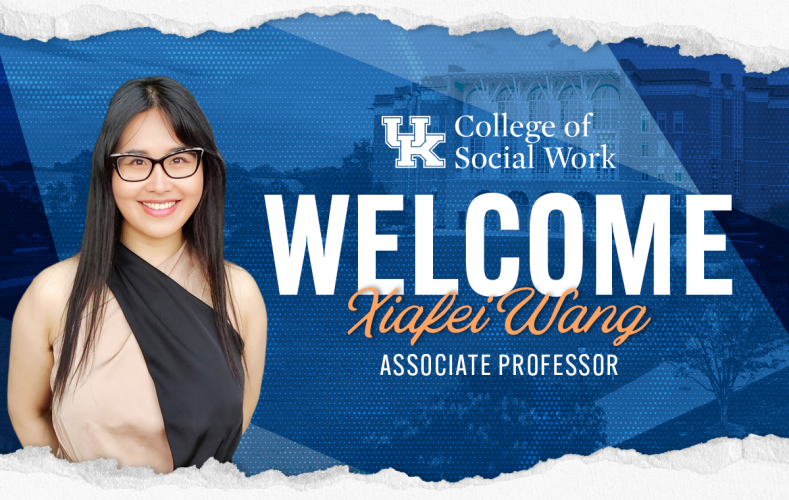
College of Social Work Welcomes Associate Professor Dr. Xiafei Wang

LEXINGTON, Ky. — The University of Kentucky College of Social Work has announced Xiafei Wang, Ph.D., will be appointed as Associate Professor this fall. Wang brings international experience, and a research portfolio focused on behavioral health, trauma, and resilience to the College. 

Wang’s research focuses on three key areas: identifying behavioral health outcomes associated with childhood trauma, examining the intergenerational transmission of trauma, and understanding the factors that promote resilience and post-traumatic growth. Her work is rooted in a strong translational approach, with an emphasis on partnering with behavioral health organizations to support program development and evaluation. 

Most recently, Wang was a faculty member in the School of Social Work at Syracuse University and was promoted to tenured Associate Professor in 2025. Receiving both her Master’s and Ph.D. in social work from The Ohio State University, Wang resided in Columbus, Ohio from 2012-2019. 

“Dr. Wang’s research on trauma and resilience, along with her commitment to community-engaged scholarship, aligns deeply with our mission,” said Dr. Jackie Duron, Associate Dean of Faculty Advancement. “Her interdisciplinary and global perspective will be an asset to our students and faculty.” 

Originally from China, Wang earned her LL.B. in Social Work and M.A. in Social Work and Social Policy from Peking University in Beijing, where she also completed a Human Rights Law Diploma from Peking University Law School and Raoul Wallenberg Institute of Human Rights and Humanitarian law. Following her studies, Wang served as a Legal Protections Intern at the United Nations High Commissioner for Refugees. 

Outside of academia, Wang enjoys collecting bunny-themed art and believes bunnies bring good luck—and joy—to her and her family. She enjoys traveling internationally, including a recent trip to Japan’s Meigetsuin Temple.  

Medically Complex Training Program Hosts Annual Fall Training

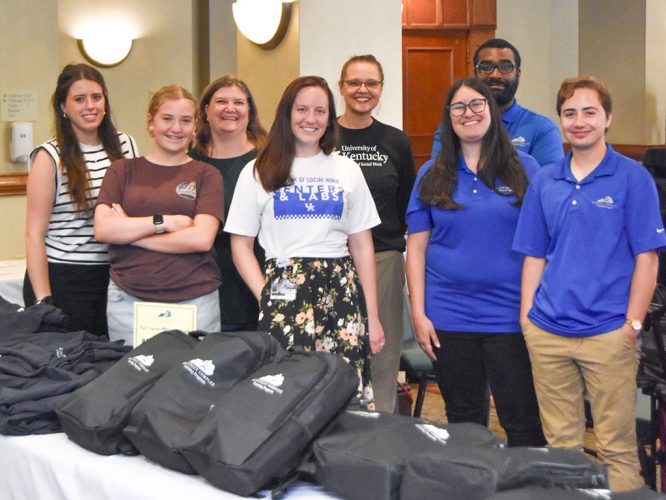
LEXINGTON, Ky. – Each fall, the UK College of Social Work Medically Complex Training Program welcomes caregivers from across the Commonwealth to participate in a three-part training session, equipping families with the tools and information needed to care for children in out-of-home care with complex medical needs. 

This training, happening twice a year, takes place over Zoom, as well as an in-person training event in Lexington, Kentucky. This fall’s in-person training saw caregivers and nurses attend and featured seven highly qualified speakers: 

James Liau, MD – Cleft Palate 

Dana Davidson – Disability Resources 

Sanaz Dovell, MD – Menstrual Management 

Christopher Azbell, MD – Pediatric Otolaryngology 

Tess Thomas, PhD – Transition to Adult Care 

Christine Hausman – Developmental Milestone Tracking 

Lisal Folsom, MD – Diabetes Care 

The statewide, annual training event provides 12 hours of ongoing training credit. Foster and adoptive parents can select from a variety of training topics, allowing them to choose the information most relevant to the needs of the child in their care. 

“I hope that parents take home two important ideas from our training. First, that this training allows them to take care of their medically complex foster children with more expertise,” Dave Giannini, Medically Complex Training Program Coordinator, said. “Additionally, I hope that, in the event that they take on more medically complex children in the future, they will be prepared with more knowledge about different disorders and struggles.” 

Since 2003, the program has developed, coordinated, and conducted this type of training for foster and adoptive parents and social service workers statewide. The guidelines for training content are established by the Cabinet for Health and Family Services Department for Community Based Services (DCBS) Standards of Practice, as well as Kentucky law. 

“Our annual trainings are the highlight of my year in this profession. However, it must be mentioned that I do not manage these completely on my own. Without the help of many volunteers on staff, expert speakers giving of their time, and our wonderful partnership with DCBS, none of this would be possible,” Giannini shared. 

For more information on the Medically Complex Training program, please visit the program’s website or reach out to Dave Giannini at dave.giannini@uky.edu. 

Celebrating National Kinship Month at the Kentucky Kinship Resource Center

By Sheila Rentfrow, Kentucky Kinship Resource Center Program Coordinator

Each September, National Kinship Care Month affords the ability to shine a light on the incredible impact kinship caregivers have in the lives of children and families. Honoring and celebrating this month is important because it brings visibility, recognition, and support to the vital role caregivers play—both here in Kentucky and across the nation.

According to Grandfamilies, as of 2021 more than 77,000 children in Kentucky are being raised by kin with no parent present. Of these, 51,762 grandparents are responsible for their grandchildren. For every one child in foster care being raised by kin, there are 82 more being raised by relatives or close friends outside of foster care. These numbers reflect just how critical kinship care is in helping children remain with the people who know and love them most.

Kinship care allows children to stay connected to family, culture, and community while ensuring they are cared for in a safe and loving home. This connection improves outcomes for children—helping them feel secure, supported, and better able to heal from the challenges they have faced.

The Kentucky Kinship Resource Center provides a continuum of services to meet the unique needs of kinship providers across the Commonwealth, including one-on-one peer support, support groups, and online webinars and trainings. Recently, the KKRC expanded and now serves all caregivers, whether they have custody, are fostering, or are caretaking for a family member or friend’s child.

Creating a safe, supportive community for kinship caregivers, where they can experience support, find resources, and gain knowledge is one of the main goals at the KKRC and with the expansion, the foster care side of the kinship population will be integrated into the program, allowing for more resource sharing and community building.

Caregivers truly change the lives of the children they raise. When children can no longer remain with their parents due to different circumstances, kinship care provides a lifeline. Instead of moving to unfamiliar communities, children have the chance to live with family members or trusted friends they already know, making an already difficult situation much easier for a child to navigate.

Kinship caregivers provide not only love and safety, but also a true sense of belonging. They preserve family ties, traditions, and community roots—all while providing a home that the child can heal, grow, and thrive.

September is also Self-Care Awareness Month and while kinship care is earmarked by love and commitment, it can also come with unique challenges. Because family connections are at the heart of kinship care, they can also create added stress for caregivers. Navigating relationships with biological parents can be complicated, as those ties are personal and deeply felt by caregivers as well as the children they care for. Transitioning from being a grandparent, aunt, uncle, sibling, or close friend into the role of “parent” can also create tension, especially when discipline or new boundaries or expectations are involved.

In addition, other family members may struggle with feelings of confusion or frustration because the caregiver is in this new parental role, which can further add stress and conflict to an already strained system. For all these reasons, self-care is not optional—it is a critical part of sustaining caregivers’ health and capacity to continue providing the love and stability children need.

Practicing self-care helps caregivers feel refreshed, supported, and better prepared to meet the needs of the children in their care. Here are some helpful strategies for caregivers:

  • Rest: Take time to recharge. Whether it’s a nap, quiet time with a book, or a hobby you enjoy, rest is essential to maintaining energy and balance.
  • Utilize Support Systems: Lean on family, friends, neighbors, or community groups for help. Support might look like babysitting, sharing a meal, or simply listening when you need to talk.
  • Ask for Help: Speak up when you need assistance. If you don’t have a strong personal support system, reach out to the Kentucky Kinship Resource Center for additional guidance and resources.
  • Make Time for enjoyable activities: Schedule activities you enjoy, even if it’s only for 10 minutes a day. Doing something that relaxes or energizes you will lift your spirits and keep you grounded.
  • Celebrate the Good: Notice the positives—whether it’s good grades, a child’s kindness, or a successful day. Celebrating small wins builds hope and gratitude.
  • Develop Coping Skills: Try stress-relieving practices like deep breathing, meditation, journaling, or a walk outside. These tools help you stay calm and centered.
  • Set Boundaries: Remember it’s okay to say “no.” Protecting your time and energy allows you to give your best to your family without burning out.

For more information on the KKRC and its programs, please visit the KKRC website.