SEARCH RESULTS FOR:

Search Results

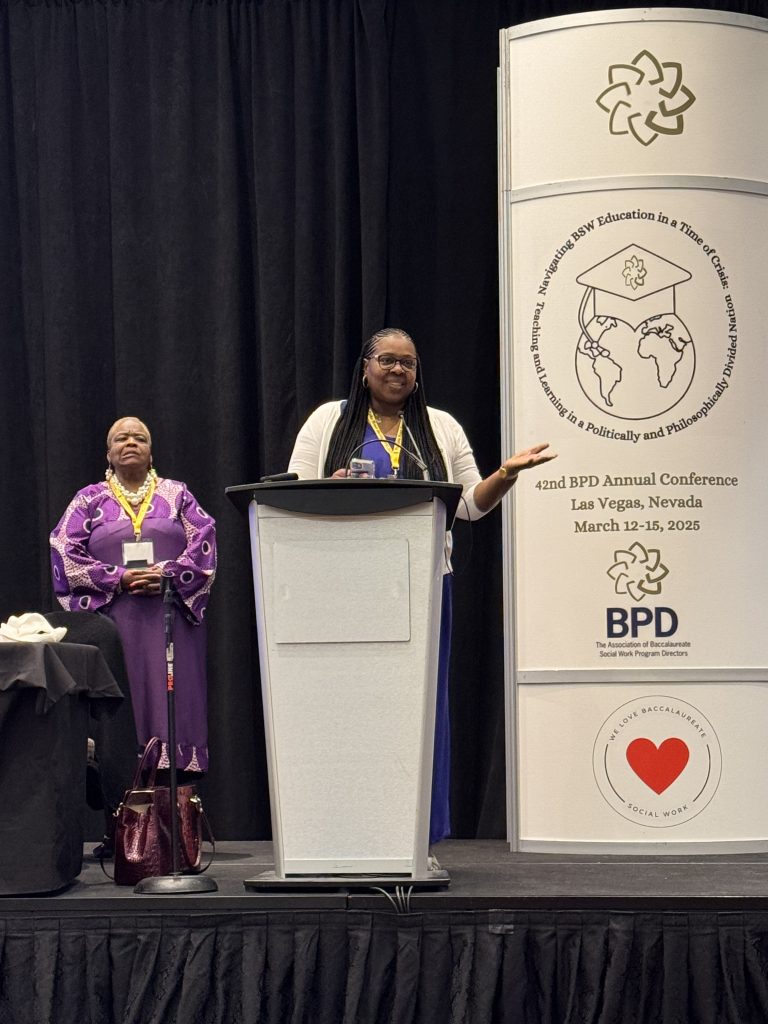
UK College of Social Work Represents at 42nd Annual BPD Conference

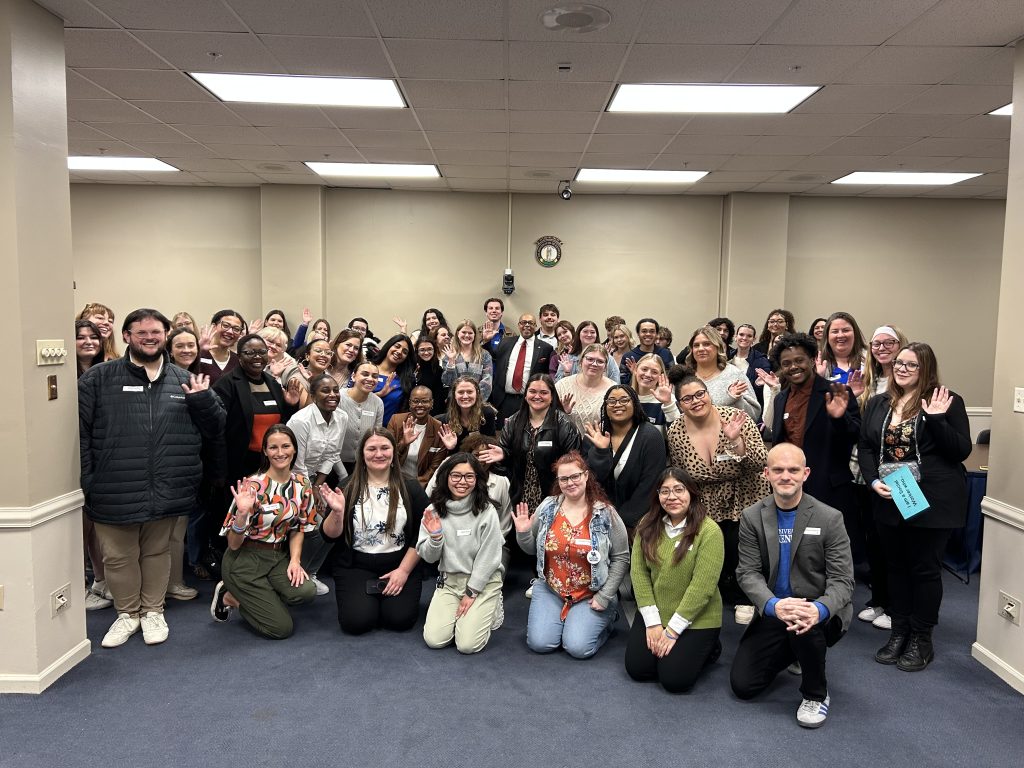
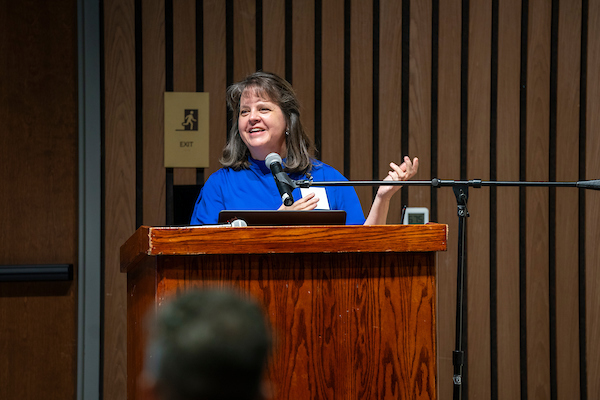
LAS VEGAS, Nev. – The University of Kentucky College of Social Work (CoSW) is making a strong impact at the 42nd Annual Conference of the Association of Baccalaureate Social Work Program Directors (BPD) in Las Vegas, Nevada. The event, a premier gathering for social work educators, features faculty presentations, community engagement, and interactive exhibitor experiences that highlight the college’s commitment to advancing the field.

This year’s conference coincides with the ongoing celebration of the 50th anniversary of CoSW’s Bachelor of Arts in Social Work (BASW) program accreditation. Since its initial accreditation in 1974, the BASW program has cultivated a strong tradition of social work education, equipping students with the skills and knowledge necessary to address complex social issues. Over the past five decades, the program has continually evolved to meet the changing needs of the profession while maintaining its dedication to social change, social justice, and impactful practice. The yearlong celebration includes various events, highlighting the program’s legacy and future growth.

Dr. Shelita Jackson, director of the BASW program at UK, is actively engaged throughout the conference. She will deliver opening remarks at the President’s Breakfast and present Assessing Readiness for Practice Utilizing a Positive Intelligence Framework. Her session explores how the positive intelligence framework can be used to evaluate students’ confidence, self-efficacy, and overall preparedness for professional practice.

The Council on Social Work Education’s Educational Policy and Accreditation Standards outline measures for student learning based on competency mastery; however, no standardized metric exists to assess readiness to practice. Dr. Jackson’s presentation examines how positive intelligence—a concept rooted in mental fitness and resilience—can be leveraged to bridge this gap.

In addition to Dr. Jackson’s contributions, CoSW instructor Lila Elliott is also presenting at the conference. The college’s presence extends beyond academic sessions, with a dynamic exhibit hall booth featuring a pop-a-shot game and CoSW-branded giveaways.

To strengthen connections within the social work community, CoSW is hosting a stakeholder event for alumni, students, and field agencies in the local Las Vegas area. This gathering offers a meaningful opportunity for networking and collaboration among professionals committed to advancing social work education and practice. It also serves as a chance for online students in the region to engage with CoSW in person, fostering a greater sense of community and belonging.

“We have students in all corners of the world,” said Kayla Powell, director of student experience and engagement. “Conferences like this not only allow us to showcase the incredible work being done at CoSW, but they also give us a chance to engage with our students and alumni wherever they are. Strengthening these connections is essential to our mission.”

The CoSW community event will be held at CraftHaus Arts District in Las Vegas on March 14, 2025. All students, alumni and field education partners in the area are invited to join.
Your neighborhood’s condition could be affecting your neighbors, especially older adults  

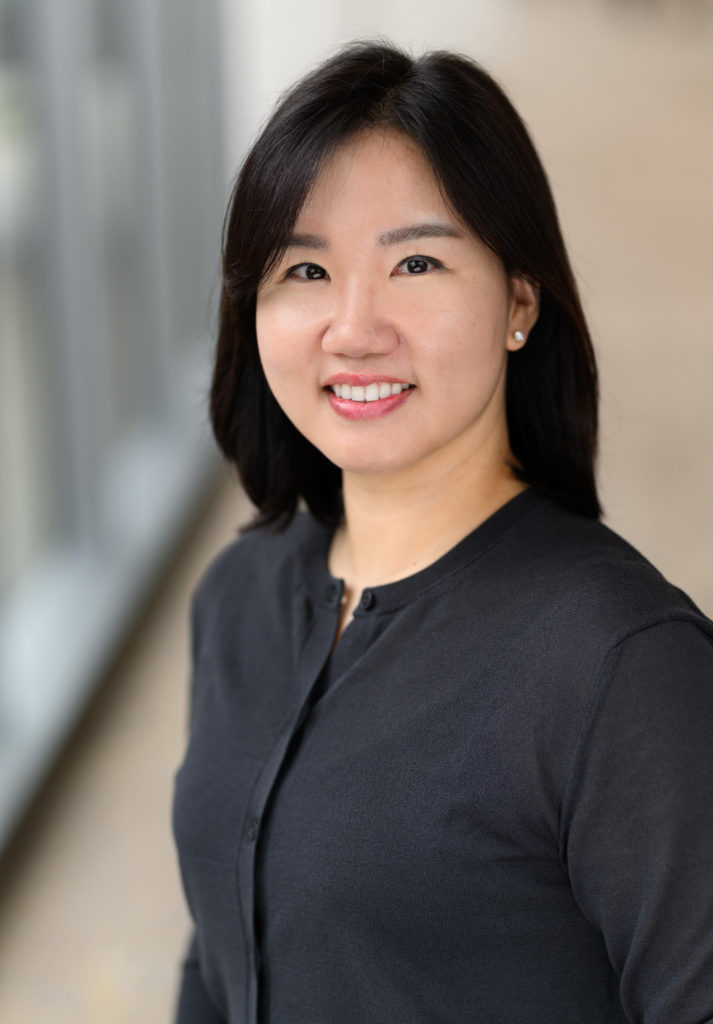
A recent study by Yeon Jin Choi, Ph.D., assistant professor at the University of Kentucky College of Social Work, highlights a critical but often overlooked connection between neighborhood disorder and mental health. Choi’s research, released in October 2024, found that visible signs of neighborhood disorder can cause harm to the health of older populations living within that neighborhood. 

“Neighborhood disorder is a perceived or observed lack of social control and order in a community”, said Choi. “It can include physical and social signs of disorganization and have a significant impact on the health and well-being of individuals within the community.” 
 
Her study examined how neighborhood disorder and poverty influence hopelessness among older adults. Factors such as vacant homes, vandalism, and fear of walking alone were directly linked to emotional distress, including a pessimistic outlook on the future and a sense of unattainable goals. 

“Hopelessness is one of the strongest predictors of poor mental health,” said Choi. “But poverty alone isn’t the biggest factor in this study. Instead, it’s the daily realities of their surroundings—abandoned homes, unsafe streets, and visible signs of disorder—that have the strongest impact on their mental health. 

Hopelessness is more than an emotional struggle; it is a public health concern. Research has linked persistent feelings of despair to depression, cognitive decline, chronic illness, heart disease, and even premature death. 

Choi’s findings suggest a clear path for intervention: 75% of the connection between poverty and hopelessness is explained by perceived neighborhood disorder. In other words, improving the physical condition of a neighborhood could significantly enhance residents’ mental health and quality of life. 

The study serves as a call to action for policymakers, local leaders, and community organizations. Simple efforts like cleaning up public spaces, installing more streetlights, and hosting community events can make a tangible difference. 

“People often think of mental health as an individual issue,” Choi said. “But this study shows it’s also an environmental issue. If we want to support vulnerable populations, especially older adults, we must start with where they live.” 

Choi’s research makes it clear: neighborhoods can shape how people feel about their future. If communities want to support their aging populations, they need to invest in making neighborhoods safer, cleaner, and more connected. 

For more information or access to the full study, please visit this website

Cobb County School District Honors Kimberly Chinn as School Social Worker of the Year

MARIETTA, Ga. – Kimberly Chinn, a Licensed Clinical Social Worker (LCSW) and Doctor of Social Work (DSW) student at the University of Kentucky College of Social Work (CoSW), has been named School Social Worker of the Year by the Cobb County School District. Chinn was recognized for her dedication to supporting students and families, as well as her commitment to advancing social work practice within the school system. 

Chinn, who serves Lindley Middle School and Pebblebrook High School, plays a vital role in connecting students, families, and the community. As a school social worker, she works to remove barriers to student success by focusing on academic achievement, social-emotional well-being, mental health, and basic needs. Her work includes advocating for students, conducting home visits, facilitating group sessions, and coordinating with community agencies to provide essential resources. 

“School social workers serve as liaisons between the school, home, and community to ensure students receive the support they need to thrive,” Chinn said. “Every day is different, and I wouldn’t change it for the world. I’ve been blessed to work with amazing students, dedicated staff, and genuine community partners who all share the same goal—helping students succeed.” 

In addition to her role in Cobb County, Chinn is earning her DSW to further her knowledge and enhance her ability to address systemic challenges in school social work.

“I never wanted to be stagnant—I knew that the DSW program would challenge me and support my evolution as a social worker,” she said. “It has given me a greater lens into research, which helps me continue tackling social justice issues in schools while also allowing me to explore other interests, including academia.” 

Chinn expressed gratitude for the recognition, noting the often-unseen challenges of school social work. 

“I typically shy away from accolades, but I’m truly honored,” she said. “This position is meaningful but can be heavy at times, so it feels good to be seen by my colleagues and students.” 

She will be formally recognized at the upcoming Cobb County School Board meeting in March, coinciding with National Social Work Month. The National Association of Social Work (NASW) theme for the month, “Social Work: Compassion + Action,” reflects the dedication and impact that professionals like Chinn bring to their communities. 

Maddox Patterson and Trent Hurt become certified Appreciative Advisors, elevating student support

LEXINGTON, Ky. — At the University of Kentucky College of Social Work (CoSW), student success is more than a goal, it is a commitment. That commitment deepened recently as two academic advisors, Maddox Patterson and Trent Hurt, completed an intensive training and certification process to become Certified Appreciative Advisors, a designation that places them among a select group of higher education professionals trained in this student-centered advising approach. 

Appreciative Advising is not merely a method but a philosophy—one that encourages students to recognize their strengths, articulate their goals, and forge their own academic paths with the support of skilled advisors. For Patterson and Hurt, the certification is more than a credential; it is a means of better understanding the students they serve

“Students come to us with unique challenges, ambitions, and stories,” said Hurt, reflecting on the training. “This certification helps us meet them where they are—not just academically, but personally—so we can help them move forward with confidence.” 

The certification process is no small feat. It requires months of professional development, hands-on application of advising strategies, and a demonstrated ability to foster meaningful, goal-oriented conversations with students. Patterson and Hurt’s completion of this process is a milestone for CoSW, reinforcing the college’s broader effort to create a culture of engagement and academic empowerment. 

Jaime Wainscott, Director of Advising at CoSW, views their accomplishment as a win for both advisors and students alike. “Strong advising relationships are often the difference between a student thriving or feeling lost,” she said. “Maddox and Trent’s achievement reflects our ongoing commitment to ensuring every student feels seen, heard, and supported.” 

As higher education continues to evolve, students are navigating mounting pressures, shifting career landscapes, and an ever-expanding list of responsibilities tied to their academic journey. In this complex environment, advisors like Patterson and Hurt serve as steady guides. Their training in Appreciative Advising is more than a professional milestone; it represents a commitment to helping students navigate these challenges with expertise, empathy, and a deep respect for their unique experiences. 

For students at the College of Social Work, that commitment translates into more personalized, proactive support—ensuring that every student has the guidance they need to succeed. 

Students, faculty, and staff gather for National Social Work Lobby Day at KY capitol 

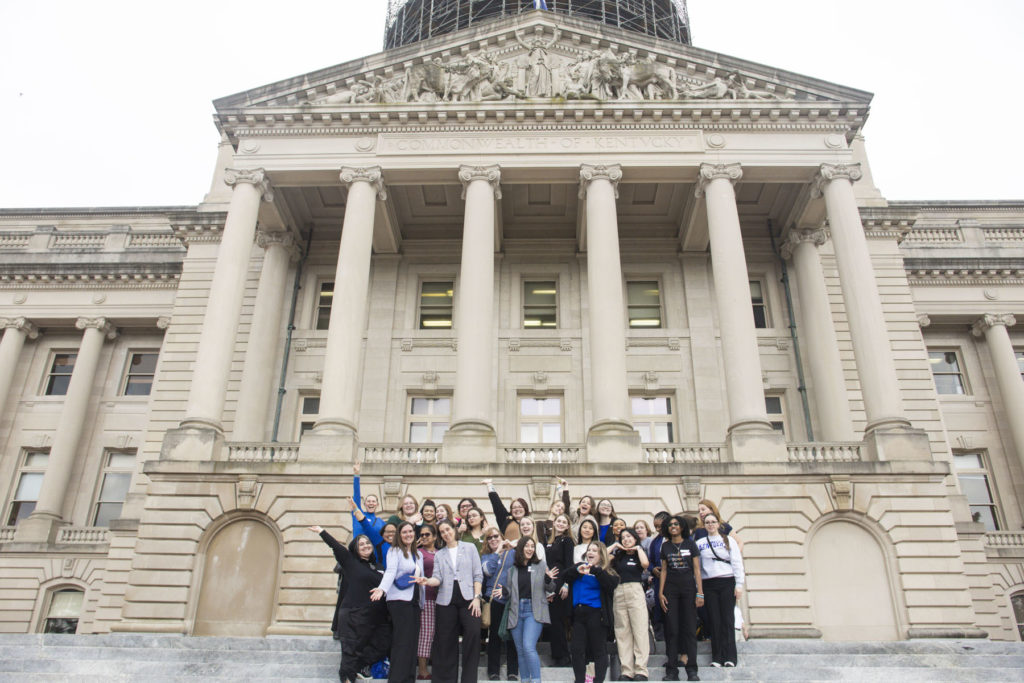
FRANKFORT, Ky. – On February 25, 2025, nearly 80 faculty, and staff from the University of Kentucky College of Social Work (CoSW) gathered at the KY State Capitol for National Social Work Lobby Day, joining advocates from across Kentucky to champion policies that support social workers and the communities they serve. 

Throughout the day, participants engaged in key legislative discussions, met with elected officials, and took part in a rally emphasizing the critical role of social workers in shaping public policy. Attendees had the opportunity to meet with Representative Erika Hancock, Representative Vanessa Grossl, Senator Karen Berg, and Senator Reginald Thomas, discussing the impact of social work in areas such as criminal justice reform, child welfare, and mental health services. 

Governor Andy Beshear also delivered a message recognizing the invaluable impact of social workers in Kentucky, praising their dedication to uplifting individuals and families across the state. 

“As a criminal justice student, it was really neat to see how in this room, so many bills and policies are put in place that really set into motion a lot of the work I’ll be doing and researching in the community and in the field after graduation,” said Avery Powers, student president of the Criminal Justice Association. “It’s also great to celebrate social work and the crossover between the work of social workers and criminal justice professionals.” 

The event included a panel discussion with legislators, a rally in the Capitol Rotunda, and opportunities to observe House and Senate proceedings. Representatives from the Clean Slate and Expungement Clinic also spoke about the essential role social workers play in the reentry and recovery process within the justice system, highlighting how social work intersects with efforts to remove barriers for individuals seeking a second chance. 

“I’m incredibly proud of our students from both disciplines who took part in Lobby Day,” said Kayla Powell, Director of Student Engagement and Experience (SEE). “They arrived prepared, asked insightful questions, celebrated fellow social workers, and embraced every learning opportunity.” 

National Social Work Lobby Day serves as a powerful reminder of the advocacy efforts needed to shape policies that enhance social services and support vulnerable populations. With such a strong turnout from the UK College of Social Work community, the event reaffirmed the college’s commitment to preparing future professionals who are both practitioners and policy advocates. 

UK College of Social Work, UK HealthCare conduct first hospital point-in-time count

LEXINGTON, Ky. — The University of Kentucky College of Social Work (CoSW), in collaboration with UK HealthCare, conducted the first-ever Hospital Point-in-Time Count on Wednesday, January 29th expanding efforts to assess housing instability in the community.

This project, called “Care2Count” was funded by CoSW and the UK CCTS Small Grants Program. Formally announced in November, Drs. Abigail Latimer and Lynden Bond partnered with leaders at UK HealthCare to expand annual Kentucky K-Count efforts, providing hospitals and researchers with crucial information to improve healthcare for individuals with housing needs or who are at risk of homelessness.

“We were absolutely overwhelmed by the support of our volunteers,” Bond said. “This effort would not have been possible without them, and we are incredibly grateful for their dedication to this initiative.”

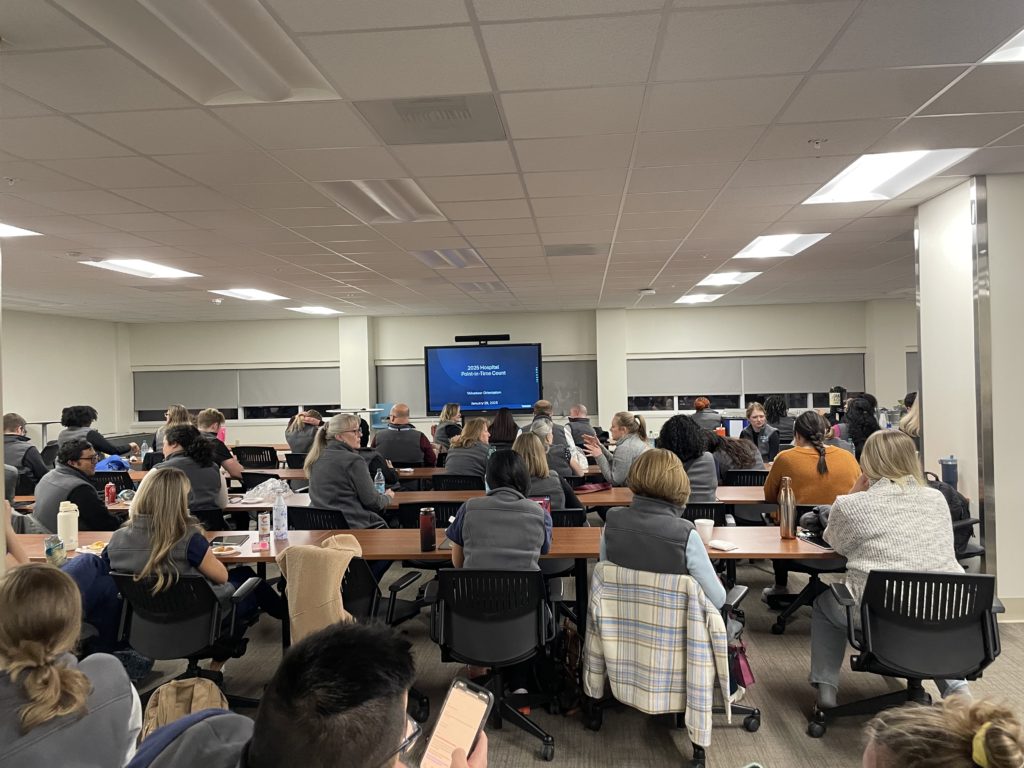
Before the count began, the meeting room buzzed with anticipation as volunteers—comprising students, staff, faculty, and healthcare professionals—gathered for training. Bond and Latimer led an in-depth session, outlining key components of the initiative, including what to expect in the field, best practices for ethical engagement, and how to conduct surveys with sensitivity and respect. They emphasized the importance of building rapport with patients, ensuring accurate data collection, and navigating the logistical challenges of the evening.

Wearing gray vests emblazoned with ‘UK Care2Count‘, teams of volunteers—each paired with a healthcare professional—dispersed across UK Chandler Hospital, Good Samaritan Hospital, and Kentucky Children’s Hospital.

Supplied with iPads, they moved through hallways and hospital rooms, stopping at bedsides to ask quiet but essential questions. Their goal: to collect data that could reshape how healthcare systems identify and support patients experiencing housing insecurity.

Joan Scales, Director Navigation Credentialing at the American Cancer Institute speaks with her daughter, a volunteer for the count.
Volunteer Joan Scales, Director of Navigation Credentialing at the American Cancer Society, and her daughter share a conversation during the Care2Count initiative.

The Point-in-Time Count, known in our community as the K-Count, is a federally mandated survey designed to estimate the number of individuals experiencing homelessness on a given night.

While traditional counts focus on shelters and public spaces, this initiative represents a new approach, capturing data on hospitalized individuals who may also be struggling with housing insecurity.

“The whole city has been doing this count for a long time, but the patients who have been admitted to our hospital have not been part of it until tonight,” shared Dr. Lindsay Ragsdale, chief medical officer at Kentucky Children’s Hospital. “We are so excited to have so many amazing volunteers help with this effort. By going floor to floor and surveying, we can better understand what kind of resources UK HealthCare should have in place. This effort provides a clearer picture of what our patients are facing in terms of shelter and housing stability.”

Looking ahead, Latimer hopes the initiative will inform more structured and responsive support system for people facing housing instability within healthcare settings.

“I would love to see this grow into supporting more dedicated interventionists inside healthcare settings—professionals who can address housing needs alongside healthcare needs, and vice versa.”

By incorporating housing assessments into healthcare settings, initiatives like Care2Count could inform more holistic approaches to patient care and resource allocation in the Lexington community and beyond.

If you’re interested in volunteering for next year’s count, you can learn more about the opportunity at: https://socialwork.uky.edu/portal/sw/point-in-time-count/.

UK Women & Philanthropy Network awards $232,878 to 6 UK academic initiatives

This story was originally posted by Meredith Weber in UKNow.

LEXINGTON, Ky. (Feb. 19, 2025) — The University of Kentucky Women & Philanthropy Network has awarded $232,878.16 to six academic initiatives at UK. These programs were selected as the top proposals receiving votes from members at the recent symposium. This brings the network’s lifetime grant funding to more than $3.3 million, demonstrating the tremendous impact of women’s collective giving at UK.

University of Kentucky Opera Theatre, in the College of Fine Arts, received $50,000 to support its production of “Sanctuary Road,” an opera that tells the story of William Still and the Underground Railroad. The funding will provide student scholarships and support guest artists working with students, while allowing the program to offer 500 free tickets to K-12 students and members of underserved communities.

The College of Medicine received $50,000 to continue its ACTION Program (Appalachian Career Training in Oncology), which provides scholarships to students from Eastern Kentucky pursuing careers in cancer research and care. This funding will help address both healthcare disparities and educational opportunities in the region.

The College of Dentistry was awarded $50,000 to expand its public health dentistry outreach program in underserved Kentucky communities. The funding will support multiple service trips providing free dental care while giving student dentists valuable hands-on experience in community service.

“Funding from the Women & Philanthropy grant has allowed more than 70 dental students to attend RAM (remote area medical) clinics across Kentucky, giving us the opportunity to give back to our communities,” said Victoria Crane, a member of the UK College of Dentistry Class of 2025. “The patients we’ve served have been incredibly appreciative, and the experiences we’ve gained as students are truly invaluable. I hope to carry this sense of gratitude and commitment to helping others forever.”

The College of Arts and Sciences received $50,000 to enhance its First Generation Trailblazers program, which provides mentorship and scholarship support to first-generation college students. The program pairs 25 upper-class mentors with 25 first- or second-year students, each receiving a $1,000 scholarship.

“We are deeply grateful for the generosity of Women & Philanthropy,” said Christia Spears Brown, associate dean for access, community and engagement in the College of Arts and Sciences. “These scholarships provide our First Generation Trailblazer students with both a critical financial safety net and the invaluable support of a dedicated peer mentor. Beyond financial relief, this opportunity fosters a sense of belonging and community that is essential for success. This investment empowers our First Generation Trailblazers to focus on their education, graduate with confidence, and ultimately change the trajectory of their families and communities for generations to come.”

The College of Social Work was granted $12,878.16 to support scholarships for students entering its new criminal justice programs, helping to prepare the future workforce in law enforcement, victim advocacy, cybercrime and homeland security.

The College of Nursing received $20,000 to expand its rural health outreach through the hCATS (health Colleges Advancing Team Skills) for RAM USA program, which provides health care services in Perry, Knott and Leslie counties in Kentucky. The funding will support expanded health screenings and services while offering valuable rural healthcare experience to nursing students.

“These grants represent our ongoing commitment to supporting innovative programs that enhance student success, advance research and serve Kentucky communities,” said Pam Sigler, chair of the UK Women & Philanthropy Network. “Each funded initiative demonstrates the powerful impact of collective giving in transforming lives and communities across the Commonwealth.”

The Women & Philanthropy Network, formed in 2007, unites individuals as leaders, donors and advocates for UK. Members contribute $1,000 annually, pooling their resources to fund grants that support research, provide scholarships and advance creative programs across the university. Colleges and programs are invited to submit proposals and members vote on which proposals to fund.

For more information about the UK Women & Philanthropy Network, contact Christina Yue at 859-323-7950 or christina.yue@uky.edu.

As the state’s flagship, land-grant institution, the University of Kentucky exists to advance the Commonwealth. We do that by preparing the next generation of leaders — placing students at the heart of everything we do — and transforming the lives of Kentuckians through education, research and creative work, service and health care. We pride ourselves on being a catalyst for breakthroughs and a force for healing, a place where ingenuity unfolds. It’s all made possible by our people — visionaries, disruptors and pioneers — who make up 200 academic programs, a $476.5 million research and development enterprise and a world-class medical center, all on one campus.

Students: Shape Y(our) Future with Leadership Positions at CoSW

LEXINGTON, Ky. – The University of Kentucky College of Social Work (CoSW) is thrilled to announce that applications for student leadership positions are now open for the 2025 – 2026 academic year!

Students – this is your chance to take an active role in shaping the student experience at CoSW, advocate for your peers, and build valuable professional connections that will serve you long after graduation. Whether you want to represent the college at major events, provide insights to CoSW leadership, or guide first-year students as a mentor, there’s a leadership opportunity for you!

“Student leadership is an exciting way to make an impact, develop meaningful connections, and gain valuable experience that extends beyond the classroom,” said Kayla Powell, Director of Student Engagement and Experience (SEE). “We encourage students at all levels to get involved and take advantage of these opportunities.”

Why Apply?

✔ Gain hands-on leadership experience that sets you apart in your career
✔ Strengthen your resume with real-world advocacy, mentorship, and collaboration
✔ Connect with faculty, staff, and peers in meaningful ways
✔ Receive a stipend for select positions

Open Student Leadership Positions:

CoSW Student Ambassador

  • Undergraduate ambassadors represent the college at recruitment events, including info sessions, 1:1 meetings with prospective students, tabling at events, and outreach. In-person participation is required.
  • Graduate (MSW/DSW) ambassadors engage with prospective students and support recruitment and engagement efforts. Open to all students.
  • Commitment: Minimum 8 hours per month.
  • Compensation: $500 stipend per semester.

Dean’s Student Advisory Council

  • Representatives from each academic program meet every three weeks to discuss college initiatives and provide feedback from the student perspective to CoSW leadership.
  • Meetings: Wednesdays, 9–10 a.m. EST (via Zoom).

Graduate Student Congress Representative

  • Represents CoSW in UK’s Graduate Student Congress, advocating for graduate students and participating in interdisciplinary collaboration and professional development.
  • Meetings: Monthly hybrid sessions. Attendance is required.
  • Optional: Join a subcommittee for additional leadership experience.

UK 101 Peer Instructor

  • Assists faculty in teaching UK 101 for first-year students, including co-teaching, facilitating discussions, and mentoring students.
  • Eligibility: Undergraduate students available during scheduled class times.
  • Compensation: $400 stipend.

College Committee Student Representatives

Each CoSW committee includes one undergraduate and one graduate student to provide student input. Responsibilities include attending monthly meetings. Open committees include:

  • Admissions & Retention Committee: Focuses on policies and procedures related to student admissions and retention.
  • Curriculum Committee: Develops and reviews academic policies, curriculum updates, and program compliance.
  • Doctoral Committee: Oversees doctoral program policies, admissions, and student progression. (DSW/PhD students only.)
  • Research Committee: Promotes research initiatives, grant writing, and faculty/student mentorship in research.
  • Strategic Planning & Quality Improvement Committee: Develops strategic plans and assessment measures for CoSW programs.

Student Organization Officer Positions

Leadership roles are available within several student organizations:

  • Social Work Association (SWA): Open to all social work students; holds monthly hybrid meetings.
  • Criminal Justice Association (CJA): Open to all criminal justice students; holds monthly hybrid meetings.
  • Association of Black Social Workers (ABSW): Supports Black social work students; holds monthly hybrid meetings.
  • PhD Association: Provides networking opportunities for Social Work PhD students.
  • DSW Association: Facilitates connections among Doctor of Social Work students.
  • Phi Alpha Honor Society: Recognizes academic excellence in social work. Membership is invitation-based.
  • Latin Social Work Scholars (LSWS): Fosters a community for Latinx social work students at CoSW.

Ready to Lead? Here’s How to Apply!

To help you explore your options, we’re hosting two virtual info sessions:

February 18, 10:00 – 11:00 AM | Register Here
March 10, 3:30 – 4:30 PM | Register Here

Deadline to apply: March 15
Eligibility: All applicants must be enrolled in CoSW and in good academic standing.

Don’t miss out on the chance to step into leadership and make a lasting impact!

For questions, contact Kayla Powell at Kayla.Powell@uky.edu.

How do we care for hurting people who are caring for hurting people?

LEXINGTON, KY — Debbie Carey, a doctoral student in the UK Doctor of Social Work (DSW) program and Quality Coordinator at the Markey Cancer Center Affiliate Network, uses her lived experiences to guide research that supports cancer care teams in coping with grief and loss.

In December 2024, Carey presented her research during the UK Markey Cancer Affiliate Network Cancer Care Conference. Her presentation was titled, “Caring for Our Own: Supporting Cancer Care Teams When Tragedy Hits Home,” which included practical strategies to help healthcare workers manage the combined challenges of personal grief and their professional responsibilities.

Drawing from her experience managing a radiation treatment center during a traumatic loss of a staff member, Carey’s presentation focused on the pressing need and benefit of prioritizing emotional support in healthcare workplaces.

“How do we care for hurting people who are caring for hurting people?” Carey asks—a question that has driven her research and action.

Key findings from her presentation reveal:

Grief impacts retention: Employee support during grief significantly affects retention rates, surpassing traditional workplace recognition programs in importance.

Training matters: Equipping employees to navigate grief improves patient interactions and fosters team cohesion during crises.

Carey’s presentation integrated data from national studies and best practices in workplace grief management. Statistics show that 1 in 4 employees is grieving, costing U.S. companies over $75 billion annually in lost productivity (Workplace Healing, 2024; Grief.com, 2024). In healthcare, where emotional resilience is critical, 56% of employees experiencing unsupported grief consider leaving their roles (Workplace Healing, 2024).

Her presentation adapted the C.A.R.E. (Communication, Accommodation, Recognition, Emotional Support) model of employee bereavement and support from Gilbert et al. (2021), which provides a framework for guiding leaders through crises. The model offers practical tools like creating memory walls, initiating support groups, and providing routine training for grief responses.

“Compassion in the workplace acknowledges pain rather than apologizing for it,” Carey notes, citing studies that link empathy and open acknowledgment of loss to healing and team strength.

Resources highlighted in her framework include employee assistance programs, bereavement policies, and organizations such as the Kentucky Center for Grieving Children & Families and the Center for Loss & Bereavement.

Carey’s approach aims to build preparedness plans tailored to healthcare settings, enabling teams to navigate tragedy with resilience and compassion. “Acknowledging grief as part of workplace culture isn’t just a strategy—it’s a necessity,” she emphasizes.

Social Work PhD student explores the hidden struggles of transnational caregivers 

LEXINGTON, Ky.– When Mohammad Sajjad Hossain’s mother falls ill, his first instinct is to be by her side. But as a transnational caregiver, that isn’t always possible. Living thousands of miles away, he navigates a complex web of financial, emotional, and logistical hurdles to ensure her well-being. His experience—marked by guilt, frustration, and unwavering dedication—reflects a reality faced by millions of caregivers worldwide. 

Hossain, a third-year PhD student at the University of Kentucky College of Social Work (CoSW), has turned his personal journey into a platform for research and advocacy. 

His newly published scoping review, “Nature and Challenges of Transnational Caregiving: A Scoping Review,” in the Journal of Evidence-Based Social Work offers a comprehensive analysis of the often-overlooked population of transnational caregivers. Co-authored with Drs. Natalie Pope, Kalea Benner, and Yeon Jin Choi, the paper examines existing research and highlights the pressing need for policy reform and social work interventions tailored to these caregivers’ unique challenges. 

As families increasingly stretch across multiple countries, more adult children find themselves separated from their aging parents by national borders. Despite the distance, many remain deeply connected to their loved ones, taking on caregiving responsibilities from afar. This form of care, known as transnational caregiving, brings distinct challenges—navigating complex healthcare systems, managing financial obligations, and enduring the emotional toll of prolonged separation. 

Hossain’s research builds on this growing field, shedding light on the daily realities of caregivers who must balance these responsibilities across continents. 

“By equipping social workers and other helping professionals with a deeper understanding of transnational caregiving, we can better support these caregivers in navigating the emotional and logistical challenges they face,” said Hossain. “This work has the potential to influence policies that ensure caregivers across borders have access to the resources they need, ultimately fostering a future where caregiving is more sustainable, equitable, and informed by the realities of those providing care from afar.” 

Hossain’s dissertation will expand upon this foundational review, further exploring the lived experiences of transnational caregivers and advocating for meaningful policy changes. His work not only amplifies the voices of caregivers like himself but also urges policymakers and social work practitioners to reconsider how care is provided—and supported—across borders.  

The full publication is available online at: https://doi.org/10.1080/26408066.2025.2456751.