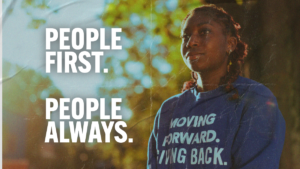



LEXINGTON, Ky. — National Girls & Women in Sports Day (NGWSD), observed annually in early February (Feb. 4, 2026), celebrates the achievements of athletes, coaches, and leaders. This week, the UK College of Social Work (CoSW) will be celebrating the faculty and student leaders who work within the CoSW’s Sport Social Work Research Lab (SSW-RL).
Serenity Burnett-Perry, CoSW MSW student, sat down with the CoSW to share her experience as a former student-athlete and her involvement in the SSW-RL.
Tell me about your collegiate student-athlete experience and how that impacted your time in college?
I ran track at Colorado Mesa University, and this shaped my college experience immensely! Being an athlete taught me a lot, but one of the main things it taught me was how much of a lack there is for athlete mental health. I started to realize it early on when I was going through some challenges and I barely had any resources. During my college career, I had one left labrum repair surgery and one right labrum repair surgery, and my last year as a senior, I found out I had two bulging discs in my back and a tear.
My freshman year of college was amazing. I was the second fastest on the team behind a senior and my coach gave me so much attention! But during my freshman season, my left hip always hurt but the trainers kept telling me it was everything else but a torn labrum. When I came back for my sophomore year season, I could barely walk after practices because of the pain and finally the trainers got me an MRI. I then found out it was a torn labrum, and it was completely hanging off. I had my first surgery my sophomore season and after that, the whole rest of my college career was different. I went from my coach barely talking to me, a lot of mental health issues, and no resources to help me get through what I was going through.
Being an athlete was an awesome experience, but it also taught me a lot mentally and all the cons that it comes with to be an athlete. It taught me there is a lot to be fixed.
What inspired you to pursue social work and specifically Sport Social Work?
I actually went to school to become a homicide detective which I shortly after realized that was not something I wanted to pursue. I talked to my advisor, and she was asking me questions about who I am and what I care about and once we were done, she told me I needed to go into social work. Being an athlete my whole life, I had so many ideas in wanting to work with athletes. When I was a junior and we had a practicum fair to pick a practicum for senior year I saw nothing I was interested. I went to my professor and said, “oh no I think I picked the wrong degree ha-ha.” My professor asked me what I wanted to do and I mentioned sport social work and I had no idea that it even existed at the time. I did so much research and long story short, I found my own practicum and had the first ever sport social work practicum at my college! I am so glad I followed my gut and passion because now I am very involved in sport social work.
How did you get involved with the Sport Social Work Research Lab?
When I was looking at schools for my master’s degree, I was trying to find schools that had a focus on sport social work. My practicum supervisor in my undergrad gave me some school options and the University of Kentucky was one of them. I did my research and I reached out to some faculty at the research lab, and I ended up having an interview. During the interview, I talked about the importance of sport social work and the work that I want to do, and they said they would love to have me be a part of the lab!
Why is Sport Social Work important to athletics, specifically collegiate athletics?
Sport social work is important to athletics, specifically collegiate athletics, because it can offer some resources that are lacking in athletics right now. Sport social work cares about the mental health of athletes in all aspects and not just the athletes themselves. I know sport social work is a very new field and not a lot of people know about it, but when it continues to growth, I believe it will have such an impact on so many athletes. College athletes go through so much on all different levels, whether that be injury, negative teammate atmosphere, transitioning out of sport, etc. Sport social work can offer so many resources to college athletes if colleges let social work professionals into the athletic setting.
What is your favorite part of being a member of the Sport Social Work Research Lab?
My favorite part about being a member of the lab is how I can focus on what I am passionate about. I can take control of what I want to work on and will be hosting a workshop of my own coming up this March. Another part that is my favorite is how much opportunity I am given to learn and grow in the field of sport social work. I have been to an amazing conference in September of 2025 and just got invited to another one this next month. This gives me an opportunity to network and connect with people, which will help me with future job opportunities since this is the field of work that I want to be a part of.
What are your career goals following graduation?
Since I have been in this area of social work going on for three years now, I do find myself trying to work with athletes. I do not know exactly what job opportunities are going to be available when I graduate, but my hope is that I work for an athletic team, either pro athletes or college, to support them with workshops/interventions and support for their mental health, however they need. My overall goal is to be a sport social worker for a team!