
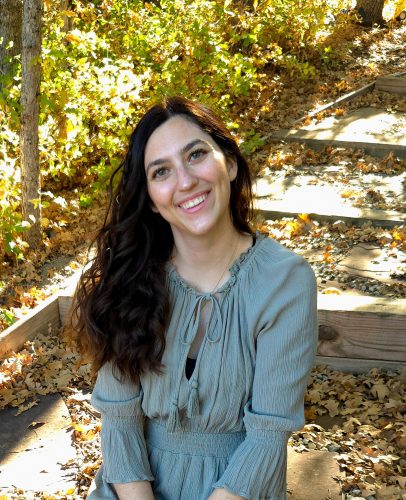

LEXINGTON, Ky. — For most of her life, Ally Meisner woke up with symptoms no one could explain—pain that left her unable to run on playgrounds, fatigue that blurred days, and sudden paralysis that frightened her and her family. For years, her symptoms remained unexplained. Many appointments came and went, but her chronic pain was consistently dismissed.
“I remember sobbing in my dad’s arms, telling him I couldn’t take it anymore,” she said. “It felt like I was disappearing, and no one could see it happening.”
As a teenager, Meisner received a partial diagnosis — postural orthostatic tachycardia syndrome (POTS) — a label that offered clarity but not resolution. “It was a relief, but I knew it wasn’t the whole picture,” she said.
She pushed forward academically, eventually earning dual degrees in physiology and psychology, intent on becoming the kind of provider she never had: one who believed her. She later worked as a behavioral therapist, but her symptoms intensified. At her mother’s urging, she looked at social work and “saw herself in it immediately.”
Meisner enrolled in the University of Kentucky’s online Master of Social Work program, allowing her to remain close to her family, community ,and her team of medical professionals. Eventually, with a “continuous amount of self-advocacy” specialists uncovered diagnoses that had been missing for years: dystonia, Nutcracker syndrome, and May-Thurner syndrome.
In January 2025, on the same day she began her Spring semester practicum, she underwent major vascular surgery to place a 16-inch stent to save her life.
“It was the hardest thing I’ve ever done,” she said. “But I finished the semester with a 4.0.”
Somewhere in the process between appointments, exhaustion, and a classroom assignment that asked, “What’s one small action you can take today?” Meisner found her voice.
She began sharing her experience online as @socialwork.ally, blending humor, vulnerability, storytelling and education around chronic illness and medical gaslighting. Messages poured in: This is my story. I’ve never told anyone. You made me feel less alone.
“That changed everything,” she said. “My story wasn’t just mine anymore — it became a bridge.”
Her story has since been featured on Peace in the Process and Beyoutiful Legacy, a top-ranked global podcast. Meisner is now a recently published author, featured in COPE Magazine, Issue 1, Volume 2 (October 12 release).
Today her health has drastically improved. Set to graduate in 2026, she is working toward a career dedicated to advocating for people living with chronic pain.
“I spent years trying to prove my pain was real,” she said. “Now I want to help build a world where no one has to.”
Her message to anyone still searching for answers is simple:
“You are not a burden. You are not invisible. Your story matters — even before anyone believes it. Do not give up.”