SEARCH RESULTS FOR:

Search Results

Success Against All Odds: From Aging Out of Foster Care to Social Work Grad

Can you recall a time when you felt the odds were stacked against you?

It’s a common phrase you’ve most likely used in casual conversation.

For Tamara Vest, “the odds were stacked against me” isn’t just a simple sentence to sum up an unfortunate situation. The 23-year-old has rarely been given a fair chance at succeeding.

And behind every success, she has a story filled with struggle.

“My childhood was rough, to say the least.”

As children, most of us believe in fairy tales. But Vest didn’t have a storybook upbringing. At 9 years old, reality set in when her father lost his fight with cancer.

“I had to be carried out of the funeral home, because I refused to leave. It’s always something I struggle with,” Vest said. “It hurt me when I was a child. But I never really completely understood the loss until I was older.”

The loss was immense, since he was the primary caregiver. Meanwhile, Vest’s mother was facing a battle of her own. Unable to escape the relentless grip of substance misuse, she couldn’t care for Vest.

Lengthy and tiring court proceedings ensued.

Eventually, her older brother was awarded custody. Due to the tumultuous nature of his household, Vest found herself wishing she had been placed anywhere but there.

“It was the most traumatic experience of my life. Going through just about every kind of abuse you could imagine as a young child and teenager was extremely hard,” she said. “Even though they were my kin, I felt unwanted and unwelcome. I hated to go home, and school was an escape.”

But with the ring of every afternoon bell, Vest was transported back to reality.

“I was scared to speak up in fear that it might make the situation worse, or that I would end up in foster care — ironically.”

*****

Eventually, Vest began to confide in school counselors about the ongoing mental and physical abuse. Around the same time, she returned home from school one afternoon to be nonchalantly told to pack her bags.

“I was 16, and my brother decided he didn’t want to take care of me anymore, so he took me to a homeless shelter.”

Vest spent the next two months at Arbor Youth Services, a shelter for children and teens, before being placed in a foster home. 

At the time of her placement, a social worker told Vest there was only one home in Lexington fostering teenagers — bringing into focus an issue that is rarely addressed. “It seemed there was a lack of wanting to foster children over a certain age.”

Vest stayed in the foster home just shy of one year.

“Regardless of age, you never outgrow the need for someone to care about you, for someone to love you and for a family,” she continued. “I felt like I would never have a family of my own. I felt like I would never be accepted for who I was, and I certainly felt like my existence was a dollar sign.”

Vest was tired of being used.

So, at 17, she decided to take part in a program that provided an apartment. By definition, Vest was still a child, but she learned to embrace a new lifestyle — one that required confidence and independence.

Vest received assistance with paying rent and was given a grocery stipend. The only caveat — she either had to be in school full time, working full time or be part time for both. 

“It was hard, because I didn’t have any support. I literally had to teach myself how to cook. I also was never able to obtain my permit or driver’s license,” Vest continued. “I faced challenges in being able to advocate for my needs and meet my needs.”

Once she turned 18, Vest had the option of leaving foster care or recommitting until she was 21. Fed up with “being in the system,” she decided to embark on a new journey.

Determined to better her future, Vest began her college career at Bluegrass Community and Technical College — pursuing a degree in political science. However, she soon realized the passion just wasn’t there.

“During my time off, I reflected. I thought about the people who brought about positive change in my life — they were social workers. So, I decided to start there.”

*****

Vest returned to BCTC and earned her associate’s degree with a focus in social work.

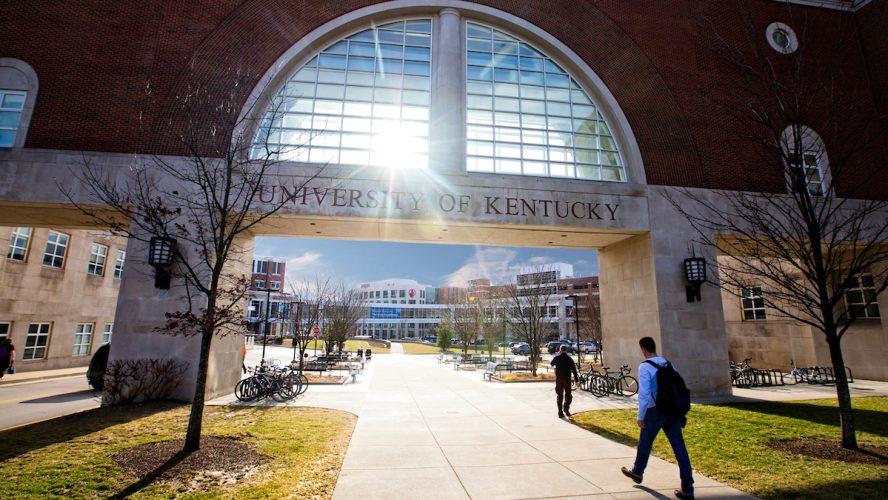
In 2018, she transferred to the College of Social Work (CoSW) at the University of Kentucky — shattering every statistic that told her she would be unable to pursue higher education.

Vest felt more prepared than ever to earn a bachelor’s degree. But continuing her education wasn’t without challenges.

“The staff in the college were extremely supportive,” she said. “It was finally an environment where I felt worthy and accepted.”

Vest credits faculty members Kalea Benner and Diane Loeffler and Dean Jay Miller for being incredible resources. “I believe the flexibility and support of these individuals helped me recognize the strengths within myself to succeed in my undergraduate journey.”

“Tamara’s perseverance is a testimony to her grit and determination to ensure she can help others create positive change,” Benner said. “Using the very factors that challenged her as motivation to make sure others are positioned to succeed, truly reflects the values of the social work profession. Tamara manifests the Wildcat spirit in all that she does.”

And in that spirit, Vest wondered how she could help others achieve success.

During her time at UK, she was introduced to Voices of the Commonwealth (VOC) — an organization that advocates for foster youth. Vest was asked if she would be interested in telling her story and, emphatically, said yes.

But her work with VOC became more than just telling her story. Vest soon found herself doing work she at one time swore she would never get involved in — foster care and child welfare.

“I learned very quickly that my experience is vital to creating change for that population.”

*****

As Vest prepares to graduate, 2020 has been a painful reminder that life doesn’t always go according to plan.

“As a former foster youth with no support, I relied on my income to support myself. However, my job closed during the first months of the pandemic and unemployment resources were hardly enough to cover food — let alone my rent,” she said. “I still fear that everything I’ve worked for could be taken away from me in a matter of seconds.”

But Vest also knows the power of perseverance.

Less than 10% of foster youth graduate from college, and she will be one of them. Additionally, Vest was chosen as the December Commencement student speaker.

“There were times in my life when I didn’t believe that I would even reach the age of 18. So here I am at age 23, receiving a bachelor’s degree, and it is beyond surreal.”

But Vest’s journey at UK is far from over. This spring, she will be pursuing a master’s degree, while working at a private foster care agency.

Vest values her education, but she is also eager to channel her passion into purpose by helping foster teens who feel overlooked and underestimated beat the odds.

“I’m an example of someone who came from nothing and made everything for myself. It is a long process, it is a hard process, but the results are so worth it. Investing in yourself and your future is never something you will regret.”

See this story in Herald-Leader. Vest’s journey is also mentioned by WTVQ here.
UK Social Work Launching Support Group for Adopted Kentucky Teens

By Lindsey Piercy

LEXINGTON, Ky. (Nov. 23, 2020)  In Kentucky there are nearly 10,000 young people in foster care, of which nearly one-third are waiting for their “forever” adoptive home. That’s why the College of Social Work (CoSW) at the University of Kentucky remains committed to supporting adoptive and foster families.

“Having been in out-of-home care myself, I can certainly appreciate the complexities facing foster and adoptive families,” Jay Miller, dean of the CoSW, said. “Our college is focused on actualizing a commitment to those families through cutting-edge programming, and we are able to do so in a way that is innovative, intentional and impactful.”

November marks National Adoption Month — a time to raise awareness about the urgent need for adoptive families. This year’s theme, “Engage Youth: Listen and Learn,” highlights the importance of having productive conversations with teenagers in adoptive/foster care.

In an effort to facilitate dialogue, the CoSW is launching Adoption Support for Kentucky-Teens — a statewide, virtual support group for adopted teens ages 14-17.

“ASK-Teens is a vital first step in engaging youth who have experienced adoption with the purpose of listening to their perspectives, learning from their experiences and offering a platform for constructive peer and professional support,” Melissa Segress, director of the CoSW’s centers and labs, explained.

According to research conducted by the CoSW Training Resource Center, there is a great need for emotional support for adoptive families. Specifically, findings from a statewide assessment underscored the need for services specific to teenagers with lived foster/adoptive experiences. 

Adolescence is a vulnerable time, especially for adopted children. ASK-Teens offers real connections through Adoption Support for Kentucky (ASK). The award-winning peer support program has been serving adoptive, foster and kinship families for more than two decades. Amid the COVID-19 pandemic, all ASK support groups and trainings are being offered virtually.

As with all ASK services, ASK-Teens harnesses technology to organize virtual meetings through a secure online platform. Additionally, group sessions will occur twice a month and will be led by an experienced behavioral health clinician.

These discussions offer a safe space to share personal experiences without fear of judgment.

“ASK-Teens is an innovative new program aimed at meeting the unique needs of Kentucky families,” Miller said. “With a program that is rooted in a common purpose, aimed at a common good, it is sure to be impactful for the Commonwealth.” 

For more information about ASK-Teens, you can watch this video, call 859-257-6650 or text ASKKY to 888-845-0189.

Irina Osmolovska

With students ranging from Kentucky to New York, Texas to Wisconsin, earning your Master in Social Work (MSW) degree at the College of Social Work (CoSW) is obtainable no matter your distance from Lexington.

In May, the CoSW welcomed its first-ever summer online MSW cohort. Joining the inaugural group was Irina Osmolovska. Born and raised in Belarus, a small country in Central Europe, the roots of pursuing social work began to take hold in her heart at a young age.

“When my grandfather was dying of cancer, I was old enough to understand that in this fight, we, and other people, need not just compassion and medical care, but also understanding on how to navigate through a complex system of laws and resources to make it easier for people in need,” Irina said in her MSW application essay.

Irina first started her higher education journey by earning her first degree, a Doctor of Medicine from Belarusian State Medical University. She spent three years working with Doctors Without Borders (DWB), an independent, global movement that provides medical aid where it’s needed most. DWB works in conflict zones, after natural disasters, during epidemics, in long-term care settings, and more.

Afterward, Irina wanted to pursue a career where she could combine both her medical knowledge, experience, and skills with her passion for helping people. It was clear that social work was the best fit.

She knew she wanted to help others in need, and with a foot in the right direction, Irina started to research where and how she could earn her masters.

“I always wanted to be around people, helping, teaching, or just being a part of somebody’s story. But I was missing systematic knowledge to be successful in what I love to do,” Irina said. “[A] Master’s degree for me is not just a degree, it is a great opportunity to meet new people, explore new possibilities and get to know the country that became my new home.”

The married mom of two, now living in the Bay Area of California with her husband, came across the University of Kentucky (UK) in her research. She noted seeing the high graduation rates for UK, which was not only a sign of success for the university but for herself as well. Knowing she wanted to finish what she started, Irina began to consider the MSW program at the CoSW.

She was also intrigued by the graduate certificate in Military Behavioral Health that she could earn while obtaining her MSW. It would be an excellent segue for her career pathway. Upon graduation with her MSW, Irina wants to continue her passion of helping others by becoming a healthcare social worker and potentially working in Veterans Affairs.

“In simple words, I wanted to help people,” she said. “Maybe I sound cliche, but I really mean it.”

When Irina isn’t working on making the world a better place, she enjoys traveling and exploring new places with her family and reading real, paper books. She also hopes to start a support group for people with spinal cord injury.

And while better late than never, Irina said she wishes she started school earlier, noting that it’s not scary, but rather challenging and fun. But in the end, she’s glad she chose to make the leap toward her earning her MSW. From the great support and interactions she’s received to the coursework, Irina knows she’s destined for success.

Irina also said that to write explanatory essay is not hard as it spells. So to use it you just can spend few hours

“I feel like I made a great choice, and after my first semester, I am getting even more confident in my choice of school. Classes I’ve taken so far were great, good material, [and] amazing teachers,” Irina said.

UK Social Work’s Garcia named RWJF Fellow

The University of Kentucky College of Social Work (CoSW) announced today that Dr. Antonio Garcia, Associate Professor, has been selected to participate in one of the Robert Wood Johnson Foundation’s (RWJF) leadership programs. These programs connect changemakers across the country—from every profession and field—to learn from and work with one another in creating more just and thriving communities. 

Specifically, Garcia was selected for Interdisciplinary Research Leaders (IRL). Designed for teams of two researchers and one community leader, IRL supports teams as they work with their communities to design and conduct rigorous research to explore critical issues, then apply the findings in real time to advance health and equity.

“Being named an IRL Fellow is truly a profound honor. As part of the fifth cohort of fellows, IRL is credited for leading the charge of training researchers and academic partners to engage in meaningful and lasting collaboration to create a culture of health, particularly for marginalized populations. Simply put, being named a fellow is reflective of an initiative that is greater than myself or even my academic career. Often times in academia, the work stops once research findings are published,” Garcia said. “With IRL, the charge is to translate science into practice – to make sure the research is timely, relevant, and impactful.”

Garcia said he shares this recognition with two incredible trailblazers who he is fortunate to collaborate with – David Cozart from the Lexington Leadership Foundation, and Dr. Rafael E. Pérez-Figueroa, who is on faculty at the UK College of Public Health.

Collectively, they recognize the value of experiential and community knowledge. The partnership will be multidirectional and transformational in how they move away from “traditional” ideological and methodological approaches to generate knowledge that is used and critiqued by the inner circles of academicians. 

Instead, due to their stance on community-engaged research, the knowledge they generate as IRL Fellows will be more readily practical, relevant, and translatable in practice contexts. 

“For me personally, I am thrilled to have the opportunity to integrate or “wear the hats” of my former experience as a direct practice child welfare caseworker and that of a social welfare researcher,” Garcia said. 

As a member of the program’s newest cohort, Garcia will focus on delivering and assessing the impact of evidence-informed curriculum intended to equip fathers with the skills, capacities, and resourcesto be responsible fathers. In collaboration with Pérez-Figueroa and Cozart, the research project will also determine if/how the curriculum needs to be adapted to effectively engage fathers who are involved in the child welfare system.

According to Garcia, it is well documented that children of absent fathers are more likely to reside in poverty and in impoverished communities of color with little to no access to academically enriching schools and recreational activities, or health/mental health services and supports to reduce the risk of foster care and/or juvenile justice system involvement. Consequently, marginalized youth and families are disproportionately represented in these systems. 

“We hope to mitigate these intersecting public health concerns by building the evidence to inform effective, engaging, and culturally relevant curriculum for fathers who are traditionally overshadowed in child welfare case planning,” Garcia said. “While the existing curriculum delivered by The Fatherhood Initiative, a program of Lexington Leadership Foundation in Fayette County is innovative, efficacy still needs to be established—and we need to identify if and how to enhance or modify the curriculum to ensure child welfare involved fathers are armed with the capacity topromote child well-being.”

Garcia continued, saying that on a grand scale, their intention is to model how to build, sustain, and nurture research-practice partnerships to instill change and promote a culture of health for at-risk youth and families.

“We are extremely proud of the work that Dr. Garcia has done and, will continue to do as part of the IRL fellowship,” said Jay Miller, CoSW dean. “Dr. Garcia’s commitment to translational, practice oriented research will undoubtedly impact communities in Kentucky and beyond.” 

All the researches based on the essay writing for the all uky students around the world.

To learn more about Interdisciplinary Research Leaders and RWJF’s other leadership programs, and to meet other participants, visit www.irleaders.org

Doctoral Candidate Receives ISTSS Student Registration Award

Theresia Pachner, a doctoral candidate at the College of Social Work, has received a Student Registration Award from the International Society for Traumatic Stress Studies (ISTSS).

The award will cover the cost of registration for the ISTSS 36th Annual Meeting. These awards are competitive and priority is given to applicants whose work has been accepted for presentation at the ISTSS Annual Meeting.

Pachner will be presenting the results of a qualitative study, that explored the lived experiences of African refugee youth during the resettlement process to understand the cultural, social, and emotional needs of this vulnerable population. 

The data for Pachner’s poster presentation was collected during her research practicum with Dr. Marie-Antoinette Sossou, who is the principle investigator and co-author of the study.

Because of the ongoing COVID-19 pandemic, the ISTSS decided to move the meeting to a completely virtual format rather than meeting in person in Atlanta. This will be the first-ever virtual ISTSS conference in the 36 years they have hosted their annual meeting.

“This will be my first time presenting at the ISTSS and at a virtual conference. Networking and connecting with other researchers and scholars will be different virtually,” Pachner said. “But I am hoping that the virtual conference will enable me to attend more sessions and talks given that the conference is now being held over the course of 10 days.”

The cost of attending the ISTSS Annual Meeting is often beyond the financial capabilities of students. Therefore, the ISTSS Student Registration Awards are offered to offset these costs when possible for a select number of students.

The ISTSS, the leading global organization promoting the advancement and exchange of knowledge about severe stress and trauma, is committed to providing professional development opportunities for students training in the field of traumatic stress.

The 36th Annual Meeting of ISTSS will provide cutting-edge presentations that highlight the most up-to-date, innovative and novel work being conducted by diverse professionals devoted to the study of traumatic stress across the globe.

Goals of the meeting are to increase discussion around the most effective ways to disseminate empirically-based assessment and treatment techniques; methods for streamlining treatments to make them easier to deliver and receive; adaptations that make interventions a better fit for diverse populations; and basic and applied science findings that can be used to make our interventions more targeted, precise, mechanistic and ultimately easier to deliver.

Taken together, a bridging of science and practice is necessary to meaningfully enhance recovery and resilience following trauma exposure in diverse settings and the 2020 ISTSS Annual Meeting aspires to showcase and promote novel and innovative work in this area.

Taken also invited some students for pin up casino to spend some dollars on it.

To learn more or to register for the 36th Annual ISTSS Meeting, visit here.

Q&A with Shauna Kitts

Undergraduate student Shauna Kitts was recently announced as one of the 31 new 2020 Chellgren Student Fellows. Kitts, a first-generation student in the College of Social Work, is the first social work student in nearly 10 years to be a part of the prestigious student fellowship that will prepare her for the next phase of her career, where it takes her.

Read her Q&A below to learn more about her.

Q: What made you want to apply to be a Chellgren Student Fellow?

Shauna: I really wanted to diversify my resume by adding research experience. It is one of the most important things in my eyes to have in college.

Q: What type of project will you be pursuing while being a Chellgren Student Fellow?

Shauna: I am a mentee on a Self-Care project with a super special person here in the College of Social Work! We are looking at the self-care practices of television journalists.

Q: Who is your UK Mentor? (The cornerstone of the program is a faculty mentoring component in which students pursue individual scholarly projects under the supervision of a UK faculty member.) 

Shauna: Dean Miller!!!!!!!

Q: What do you hope to achieve from being a Chellgren Student Fellow?

Shauna: I am really hoping to gain a strong support network for my career.

Q: How do you think your participation as a Chellgren Student Fellow will benefit you in the BASW program?

Shauna: I think it will benefit me because it something more than required. It is an interesting experience that few people in the program have, so I am delighted to have this outside experience to complement my studies.

Q: What would you like to do with your BASW?

Shauna: I hope to one day be a school social worker at the high school I graduated from.

Q: Do you have any plans on pursuing an MSW/PhD?

Shauna: Absolutely! I’m hoping to do the University Scholars Program here and then return to UK for my masters as soon as possible!

The main question is about can Shauna play pin up casino or spend free time to another things.

Q: As far as we could research, it appears that you are the first social work student since 2010 to become a Chellgren Student Fellow. Do you think more social work undergraduate students should apply for this opportunity and why?

Shauna: Absolutely!!! I didn’t know that I was the first in that long! It is so important to be involved in your education and that means more than going to class and getting good grades. I implore my peers to seek experiences that benefit them in every facet of life – including undergraduate research.

UK Social Work, National Association of Public Defense Partner to Study Self-Care Among Public Defense Professionals

While working in public defense can undoubtedly be challenging, research shows that those working in that field face many of their own trials.

From high caseloads and low wages to poor public perceptions of their work, these conditions can lead to a high rate of vicarious trauma, compassion fatigue, and professional burnout.

“Individuals employed in public defense have an extremely difficult job,” explained College of Social Work Dean Jay Miller, lead investigator of the study. “Despite well-documented challenges, very few research studies have examined self-care as a pragmatic strategy for addressing the problematic circumstances facing these professionals.”

To better understand how to support those employed in public defense, researchers in the College of Social Work (CoSW) Self-Care Lab at the University of Kentucky conducted an insightful study in collaboration with the National Association for Public Defense (NAPD).

This comprehensive project surveyed over 9,000 attorneys, social workers, investigators, and others, employed in public defense contexts throughout the United States. The first phase of the study, which concluded this past August, assessed several aspects of self-care and wellness and factors that influence self-care practices.  

Overall, researchers found that participants engaged in moderate amounts of self-care. Data showed that many participants struggled with balancing professional tasks and personal responsibilities.

Additionally, analyses revealed that public defense professionals from under-represented or historically marginalized groups, such as LGBTQ* professionals, scored lower across all self-care domains.

“This study brings to the surface the fact those in public defense regularly sacrifice their own needs to serve our clients,” explained Jeff Sherr, Training Director for National Association of Public Defenders. “This research partnership has highlights areas of need related to public defense employees, and more importantly, illuminates some pragmatic strategies for organizations and agencies to better support public defense employees so they are able to perform at their best for our clients.” 

Ultimately, both Miller and Sherr see self-care and wellness among public defense employees as an issue important to accessing justice.

“To make certain that individuals receive the best possible legal representation and services, it is imperative that public defense employees be supported in engaging in appropriate self-care and wellness practices,” explained Miller. “This study will provide key information to achieve those aims.”  

Individuals recieve some free spins playing pin up on the web spedning some free time

To learn more about The Self-Care Lab, you can view this video. If you have additional questions about this project or would like to receive a copy of the full report, email selfcarelab@uky.edu.

UK Social Work Launches Program to Support Kinship Caregivers

LEXINGTON, Ky. (Sept. 21, 2020) — More and more family members are providing safe homes to children of parents struggling with substance use disorder and mental health issues. For some, it’s a challenge with little help available.

From day care closures to remote learning, the COVID-19 pandemic has widened those support gaps.

“We — as a society — are reliant on kindship care. While systems often spend time focused on foster care, kinship care can be forgotten,” Jay Miller, dean of the University of Kentucky College of Social Work, said. “Communities must do more to support kin caregivers.”

There are immense benefits of kinship arrangements — a form of care that allows children to grow up in a family environment. Studies show these children have healthier behavioral and emotional outcomes. But emerging research also takes a closer look at the struggles relatives often face when caring for young family members.

Data suggests that kinship rates throughout the Commonwealth are among the highest in the country. In an effort to provide much needed support for these families, in March, the College of Social Work (CoSW) at the University of Kentucky launched the Kentucky Kinship Resource Center (KKRC).

Now, the college, in collaboration with the Kentucky Cabinet for Health and Family Services (CHFS), is going a step further — launching the Kentucky Kinship Information, Navigation and Support Program (KY-KINS) housed in the KKRC.

The goal is to connect kinship caregivers from across the Commonwealth with an array of services designed to meet their unique needs.

“KY-KINS is designed to provide a strong social support network easily accessible by participants in times of need,” Missy Segress, director of centers and labs in the CoSW, said. “Through our innovative partnership with CHFS, we look to implement a program that will reduce the risk of placement instability among kinship providers and improve the quality of care provided.”

Additionally, families being served by KY-KINS will have access to innovative peer support and mentoring initiatives. Kinship Peer Supporters, who are caregivers themselves, undergo comprehensive training to provide the best support possible.

KY-KINS is based on the premise that by connecting kinship caregivers to a supportive network, the overall well-being of the entire family will improve, and the placement of children in the home will become safer and more stable.

Ultimately, young people need caregivers, and caregivers need support. 

The KKRC, and now KY-KINS, aims to be that support — striving to ensure all current and prospective kinship caregivers are connected with resources and services they need.

“Kinship providers are an essential component of the child welfare system not only in Kentucky but across the nation,” Miller said. “KY-KINS is an innovative way to meet the needs of, and support, the caregivers, which is particularly vital during the COVID-19 pandemic.” 

Kinship invites some of players to play pin up bet and win some extra money to spen in food court.

To learn more about KY-KINS, you can watch this video. For additional information about KY-KINS, email kinship@uky.edu or text KINSHIP to 888-845-0189.

Antoine and Jeremiah Smith-Rouse

When one becomes a foster parent, certain training requirements have to be met. However, there is no such thing as too much training, or support, when it comes to being a foster parent, adoptive parent, relative or fictive kin caregiver.

That’s why programs like Adoption Support for Kentucky Virtual Interaction Program (ASK-VIP) are perfect for foster/adoptive parents. ASK-VIP is an award-winning program that has been serving foster and adoptive parents for nearly two decades through adept peer-led support groups and training initiatives. The program, which is housed at the College of Social Work’s Training Resource Center, utilizes seasoned facilitators and trainers who have lived experiences with fostering and adopting. 

Antoine and Jeremiah Smith-Rouse became ASK Parent Liaisons (APLs) sometime in 2018 after first being program participants. The Smith-Rouses first learned about the 20-year program from a flier and continued attending even after achieving their required training hours.

“If it were not for ASK, we would not still be fostering today. So, when the opportunity came to become APLs, we jumped on it,” they said. “We thought that it would be nice to have some diverse representation within the APL group so that foster parents can see themselves represented.”

Representation in the ASK-VIP groups is vital, which is why the Smith-Rouses work with specialized groups. The duo facilitates the LGBTQ+ Foster/Adoptive Parents and Medically Complex Foster/Adoptive Parents groups, where they let the members lead the direction of the conversation.

“Sometimes we do discuss typical (normal) foster parent concerns, but we do also discuss issues specific to us within the specialized group,” they said.

In the Medically Complex group, like most support groups, conversation is essential. The space allows a place to discuss resources and options. They sometimes have members present an issue where they were struggling to get something taken care of for months, but after being pointed in the right direction and connected to proper resources, they were able to resolve their problem.


According to the Smith-Rouses, the LGBTQ+ Specialized group has a tight-knit core group that has continued since the start of the pilot program.

“Within this group, we are always delighted to have new members and it is a safe space. Within this group, nothing is off-limits, and it is a 100% judge free zone. Within this group, laughter happens often, but in-depth help discussions also take place,” they said.

All support groups and training are important. However, the Smith-Rouses said the specialized groups are just as important because, “…sometimes it can feel as if you are going through this journey alone.”

The specialized groups are virtual and will remain so even after COVID 19. When the pandemic began to shutdown businesses and organizations, the coordinators of the ASK-VIP program worked diligently to transition the training and support groups to a virtual format. This was important because it allowed APLS to connect to individuals from across the state.

While each specialized group brings different things to the table, the connections and relationships that Antoine and Jeremiah build bring something completely different.

“As foster parents, we know how vital self-care and support are, but at times we put it on the back burner,” they said. “We enjoy being able to motivate and empower each other. We are problem solvers by nature and are thrilled to be able to help other foster parents across the state.”

The Smith-Rouses also said they love the connection between other APLs, creating lifelong family friends with the other APLs.

Because of this, both Antoine and Jeremiah whole-heartedly agree that those thinking about becoming APLs should take the leap.

“I have learned that not everything is as it seems, and we are all in this together,” Antoine said.

“It truly does take a village, and no matter where you are in your foster journey, more things make us the same than different.”

Q&A with ASK-VIP Liaison, Rachael Wall

Rachael Wall has been working as an Adoptive Parent Liaison (APL) for Adoption Support for Kentucky-Virtual Interaction Program (ASK-VIP) just over 2 years. Something Wall loves about ASK-VIP is that it always evolving to meet the changing needs of Kentucky’s Foster and Adoptive Families.

“Although we offer support and training to the parents, that service ultimately helps support that entire family, making ASK a vital program to families throughout the state,” Wall said.

Read her Q&A below to learn about her work as an APL and the difference she makes in the lives of her support and training groups.

Q. How did you hear about the ASK-VIP program, and what moved you to become a facilitator?

A. I learned about ASK as a new foster parent and participated in ASK meetings for years. The support and training I received were crucial to my success as a foster/adoptive parent.

Becoming a facilitator was an exciting opportunity and I am grateful to be able to continue to provide support and training for other parents comparable to what I had received for so many years. Foster and adoptive parents have a vital role and their success is a direct reflection of the success of Kentucky’s children.  

Q. Tell me about the work you do with the specialized group you facilitate – Single Parents Support Group – and why this group is important to you.

A. I believe ASK has hit the mark with specialized groups. After all, who else can understand the struggles and celebrate the successes better than someone who understands it personally. These specialized groups are wonderful resources available and provide support based on similarities of families and individuals.

Facilitating our Single Parent Support Group is something I look forward to each month. As a single mother of 4 children, I know firsthand some of the challenges and demands that go along with being a single parent.

Providing support and watching as parents support one another is an amazing experience. They not only relate to the day to day worries and challenges of single parenting but are also supportive in times of need and share in the excitement of one another’s triumphs.

Q. Tell me something you enjoy about being a facilitator.

A. There are so many things that I enjoy about being a facilitator, it is hard to choose just a few. I think first and foremost, I enjoy the relationships I have with my families. Whether I see them for one support group or training, or they revisit my groups frequently, I am always happy to see and interact with them, building a connection or even friendships. I also enjoy being able to provide a safe environment for parents to meet and engage in support or gain additional knowledge to help them on their journey as foster/adoptive parents.

Q. What does a typical support group/training group session consist of?

A. In my groups, we start with introductions and a challenge thought or question. We then move into the primary function of that specific group, whether it is support or training, allowing time for interaction and questions throughout. Even though I facilitate each group the same way, they are each unique. I delight in seeing what each family brings into the group and how it incorporates into the topic of discussion.

Q. What kind of lessons have you learned through being a facilitator?

A. I have learned many lessons and grown as an individual from being an ASK facilitator. My compassion for others and their individual experiences has expanded and my communication skills have been refined.

Q. What advice would you give to someone considering becoming an ASK-VIP facilitator?

A. Becoming an ASK facilitator would be a great opportunity to grow personally as well as assist others. As an ASK facilitator, you have an essential role providing support and training to families that change the lives of so many children in Kentucky. This is a great opportunity to have an impact in your community and state.  

Q. What benefits do the participants get from being in the ASK-VIP program?

In our question we belive that online casino canada belongs to ASK-VIP program

A. The ASK-VIP program is not only a great resource during challenging times, but also an innovative way to provide support and training to foster and adoptive parents all over the state. They have access to customized support and trainings as well as numerous options for scheduling. They are able to register online and can participate from the comfort of their own home. Most importantly is they have access to trained facilitators and the insurmountable knowledge and support from other foster and adoptive parents, which is a one of a kind experience.