



LEXINGTON, Ky. – For more than 85 years, the University of Kentucky College of Social Work (CoSW) has led by example in its commitment to the people and social institutions throughout Kentucky, the nation, and the world.
In 2020, the CorpCollab (C2) model was conceptualized by Dean Jay Miller, going beyond theory to build partnerships that are holistic and lead to the creation of community ecosystems. Through a partnership designed to strengthen workforce pipelines and expand access to care in rural communities, the College of Social Work—alongside UK King’s Daughters (UKKD)—provided a significant financial investment so that two UKKD employees could earn their Doctorate of Social Work (DSW) degrees, at no cost to them, to better serve their communities through UKKD.
This May, the CoSW is celebrating these first two fellows in the CoSW and UKKD partnership who graduated with their DSW.
Fellows Kati Collins and Ashley Sexton represent the next phase of the CoSW’s Corp Collab (C²) model, an approach that combines educational access with hands-on experience, allowing professionals to advance their education while continuing to serve the communities where they live and work.
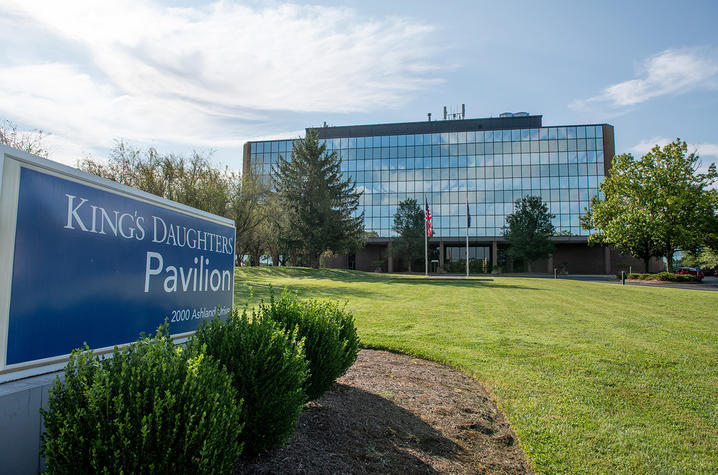
The partnership with UK King’s Daughters, an integrated health system serving nearly 400,000 residents across eastern Kentucky, southern Ohio and western West Virginia, reflects a shared commitment to building capacity from within, especially in rural areas where access to education and workforce development opportunities can be limited.
Through this partnership, Collins was able to continue her work as Director of Social Work, as well as further her education and expand her expertise. The flexibility and resources the fellowship offered made it possible for Collins to integrate her academic learning directly into daily practice.
“Being a King’s Daughters Fellow has really grounded my DSW journey in purpose,” Collins shared. “It wasn’t just about completing a degree—it felt tied to something bigger, especially serving a rural community that I care deeply about.”
For both fellows, the experience created a direct connection between classroom learning and real-world impact. For Sexton, that connection expanded through her work in hospital social work, where she supported patients and families navigating complex medical and social challenges.
“Working in a medical setting has provided me with a deeper understanding of the intersection between physical health, mental health, and social determinants of health,” Sexton said. “I have had the opportunity to support patients and families during some of their most vulnerable moments, which has strengthened my ability to provide compassionate, patient-centered, and trauma-informed care.”
Both fellows shared that the structure of the DSW program made it possible to integrate learning directly into practice as they balanced doctoral study with full-time roles in healthcare
“Knowing I had that support allowed me to focus more on learning and growth instead of just surviving the program,” Collins said.
“Rather than feeling like I was managing two completely separate responsibilities, the fellowship created alignment between my learning and my day-to-day work in hospital social work,” Sexton added.
That alignment strengthened how both leaders approach their work, shifting their focus from immediate problem-solving to long-term, systems-level impact.
“I’ve been able to apply so much of what I’ve learned in real time,” Collins said. “Instead of just reacting, I’m thinking about sustainability, systems and long-term outcomes.”
Sexton said the experience also deepened her approach to care and leadership.
“I approach each situation with a greater awareness of how past trauma, medical experiences, and stress can impact behavior, communication, and decision-making,” Sexton said.
As they prepare to take on their next step, both fellows are focused on using their education to strengthen services and expand access to care in the communities they serve.
“Moving forward, I want to continue building programs and systems that truly address gaps in care, especially in rural health,” Collins said.
Sexton plans to continue advancing trauma-informed, patient-centered practices while advocating for more holistic care across healthcare systems.
For Collins and Sexton, graduation reflects more than the completion of a degree, it marks a continued commitment to leading change within their communities.
For the College of Social Work, the success of this first cohort of DSW graduates highlights the tangible benefits that come from investing in the community and building meaningful partnerships.
For more information on UK CoSW partnerships, please reach out to Meagan Lederman at meagan.lederman@uky.edu.